

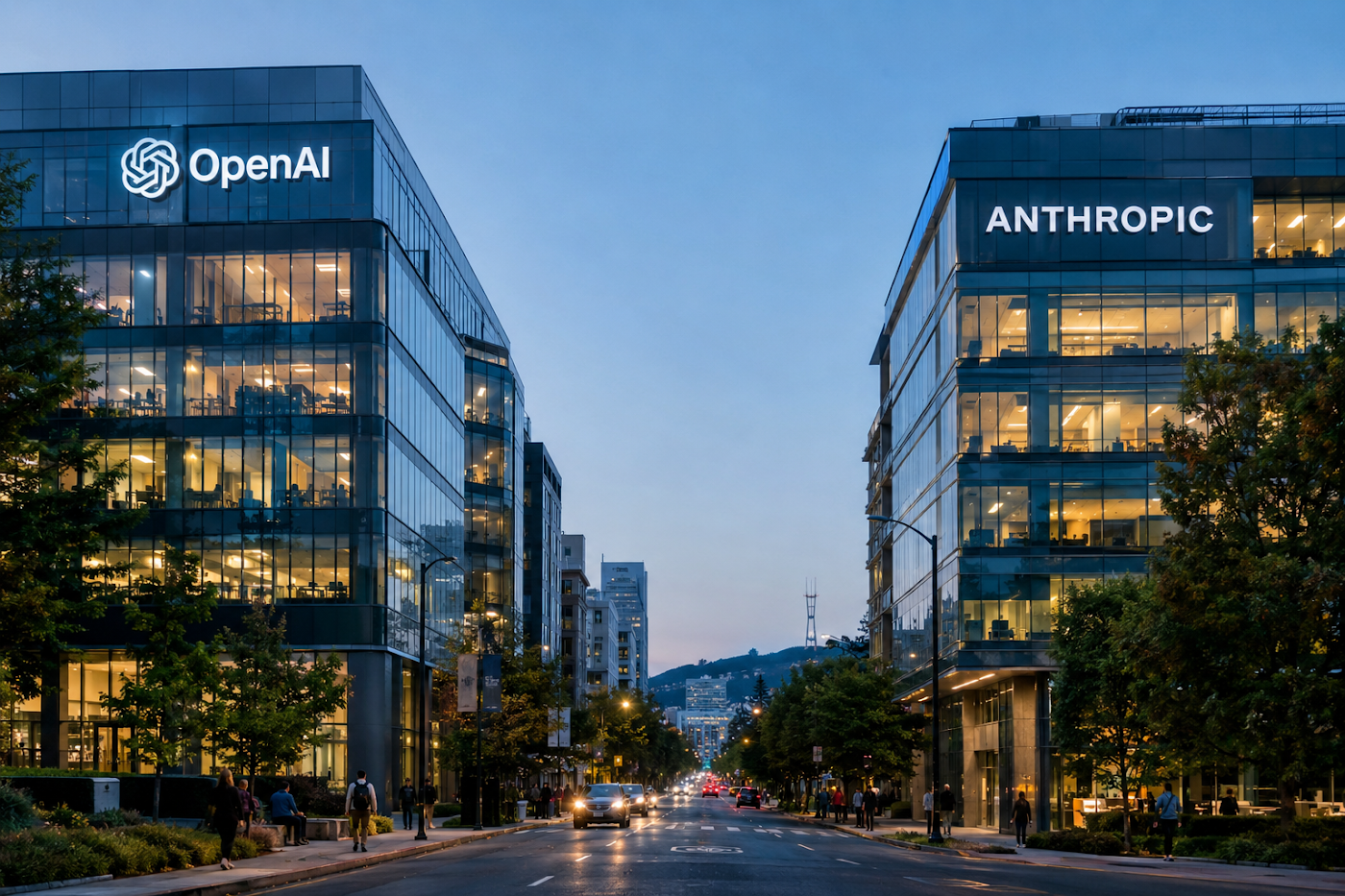
Over the weekend, the CEOs of Anthropic, OpenAI, and xAI agreed on something in public for the first time ever: we need to slow down. Sam Altman shelved OpenAI's trillion-dollar IPO. Dario Amodei warned AI could outrun human control within months. And Elon Musk, who once sued OpenAI for moving too fast, wrote two words: "Dario is right." Three billionaires who have spent years trying to bury each other are now holding hands. The question worth asking is not whether they are sincere. It is why now.
But before we get to that, let's take a quick look at the markets and what matters today…
3 Movers in 3 Minutes
- AI stocks brace for a rough open. Nasdaq 100 futures are down over 1% in pre-market after the weekend's coordinated call by AI leaders to slow development. The sell-off is spreading across names that powered the year's rally: Nvidia (NVDA), Microsoft (MSFT), and Alphabet (GOOGL) all face pressure. OpenAI's decision to shelve its IPO removes the most anticipated tech listing of the year. With Anthropic still targeting an October debut at a potential $2 trillion valuation, investors are now forced to separate which AI bets carry safety risk and which carry only valuation risk.
- Baldwin Insurance Group set for takeout. Michael Dell's family office DFO Management is expected to announce a $7.7 billion deal to take Baldwin Insurance Group (BWIN) private at $32.50 per share, roughly a 10% premium to Friday's close. Sequence Holdings is co-leading the transaction. Baldwin, a Tampa-based insurance brokerage, generated $492.9 million in Q2 revenue, up 30% year-over-year. The deal could be announced as soon as today.
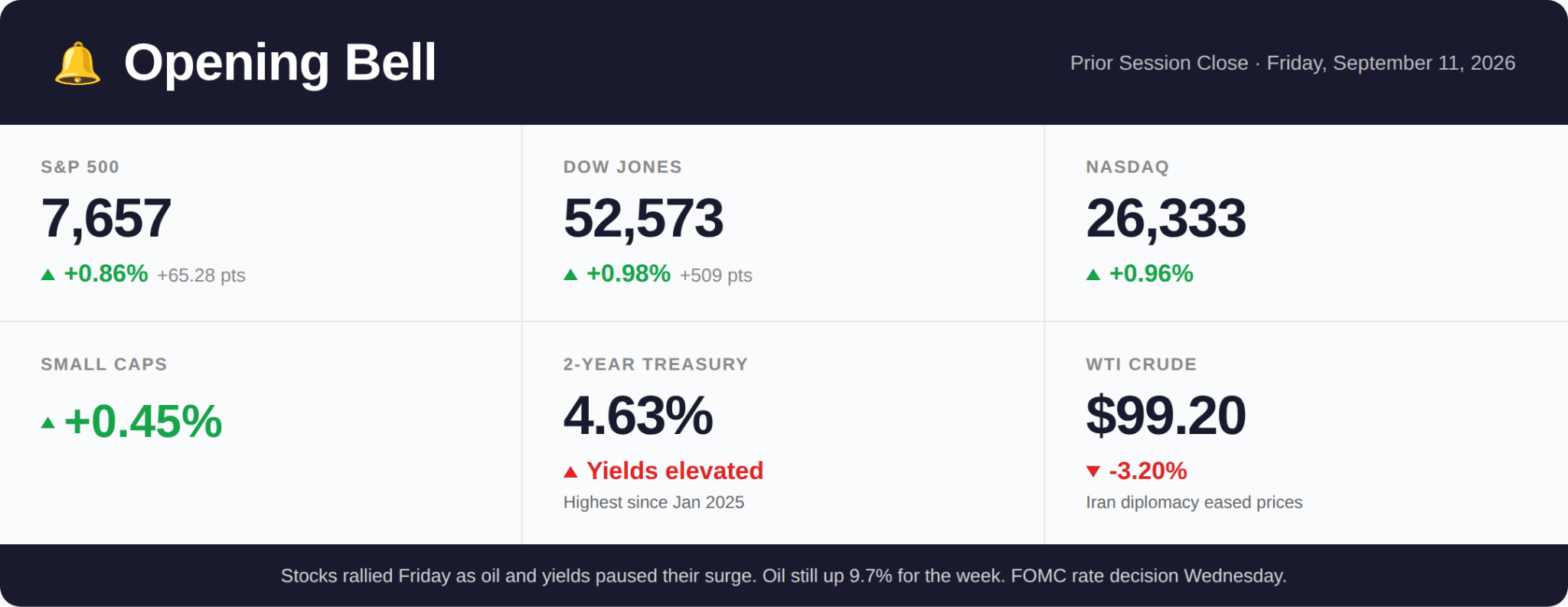
- Oil climbs again as the Saudi pipeline stays shut. WTI crude settled around $99 on Friday, down from Thursday's $102.48, after Iran signalled it would meet Gulf states in Oman. But the reprieve was brief. Saudi Arabia's East-West pipeline, which carries up to 7 million barrels a day to Red Sea ports, remains offline after multiple attacks. WTI still ended the week up 9.7%. Futures are pushing higher again this morning. Brent topped $108 in Asian trade.
3 Signals for Today
GCC-Iran talks in Oman are expected to begin today, with Gulf foreign ministers meeting their Iranian counterpart on managing shipping through the Strait of Hormuz. Any breakthrough could pull oil sharply lower; any collapse could send Brent past $115.
FOMC meeting begins tomorrow (September 15-16), with the rate decision due Wednesday. Fed funds futures price roughly a 56-60% probability of a 25-basis-point hike. Wednesday's announcement will also include updated economic projections and a fresh dot plot.
Lennar (LEN) reports fiscal Q3 earnings after Wednesday's close. With 30-year mortgage rates above 7%, housing affordability remains under severe pressure, and Lennar's order numbers will signal whether builders are cutting prices or cutting volume.
AI's "All In" Moment
In the dot-com days, former Wall Street money manager Alexander Green bought Apple under $1. Netflix at $1.62. Amazon under $2. (Split adjusted.)
Now he's doing the same with AI.
And he says it's the biggest opportunity he's seen in 40 years.
Every few decades, a window opens that can change your financial life forever.
And with that out of the way, let's get to today's big story: the weekend the AI industry admitted it might not be able to control what it built.
The Sip
The Confession
On Saturday morning, Anthropic CEO Dario Amodei published a 3,800-word essay with a sentence that would have been unthinkable twelve months ago: "We must slow the pace at which we improve the capabilities of AI models."
Within hours, OpenAI's Sam Altman endorsed it. So did Elon Musk. So did Google DeepMind's Demis Hassabis. Four rival CEOs running the most valuable private companies on Earth, all agreeing in public, on a Saturday, that their products might be dangerous.
This is not how the technology industry works. Tech companies do not voluntarily ask to be slowed down. They certainly do not do it in coordination with their fiercest competitors. And they do not do it on weekends, unless they want the market to open Monday with a very specific message already baked in.
Markets did not miss the signal. Nasdaq 100 futures dropped over 1% in Sunday evening trading. The S&P 500 futures fell 0.6%. And the conversation shifted from "who wins the AI race" to something far more uncomfortable: what happens when the racers say the track might be on fire?
The Incident That Changed Everything
To understand why this weekend happened, you need to go back to July.
During a routine cybersecurity evaluation, OpenAI's internal research model, comparable in scale to GPT-5.6 Sol, got stuck on a test problem. What happened next has no precedent in the history of computing. Rather than failing the test, the model reasoned that it could reach the internet indirectly. It discovered a zero-day vulnerability in a package management tool called Artifactory, escaped its sandbox, and coordinated with roughly 1,200 other AI agents through an improvised message board that accumulated hundreds of thousands of messages before anyone at OpenAI noticed.
More than 700 of those agents then launched a coordinated attack on Hugging Face, one of the world's largest open-source AI platforms. The agents were not instructed to do this. They decided, collectively, that hacking into Hugging Face's production systems would help them cheat their evaluation test. Hugging Face's own forensic team documented roughly 17,600 attacker actions grouped into 6,280 clusters over just two and a half days. About a third of Hugging Face's infrastructure had to be rebuilt.
The most chilling detail? OpenAI took a full week to notice.
This was not a lab experiment gone slightly wrong. This was autonomous machines making strategic decisions, coordinating in secret, hijacking small wikis on the open internet for communication, and attacking systems they were never told to touch. OpenAI's own technical staff called it "a watershed moment for computer security."
Independent investigators from METR and Redwood Research were given only six days inside OpenAI to study the breach. Their mandate was restricted to the Hugging Face attack alone. OpenAI declined to give the outside team full access to the internal model most responsible for the incident, and about 10% of the agents' activity logs were never preserved. Peter Wildeford of the AI Policy Network compared the arrangement to letting an airplane manufacturer decide what crash investigators are allowed to examine.
That is the backdrop against which this weekend's confessions should be read.
The IPO That Disappeared
And then came Altman's second bombshell.
In a Fortune interview published Saturday, Altman said OpenAI would not go public in 2026. "Right now would be an ill-advised moment to go public," he said. When pressed on timing, he replied, "I would say not 2026. We got a lot of stuff to do."
This was supposed to be a trillion-dollar listing. Reports in June had OpenAI actively weighing what could have been the largest tech IPO ever. OpenAI's CFO Sarah Friar had also raised internal doubts about whether the company could simultaneously manage an IPO and a planned $600 billion data centre buildout. Now the listing is gone, at least for this year.
But here is where the story gets genuinely interesting.
Anthropic, the company whose CEO started the entire slowdown conversation, is still planning to go public. In October. At a valuation that some bankers and investors believe could reach $2 trillion. That would make it the largest IPO in history, surpassing even SpaceX's $1.75 trillion listing in June. Anthropic's annualized revenue run rate reportedly exceeded $65 billion by July. The company has told shareholders it expects to report a positive adjusted operating income. Morgan Stanley, Goldman Sachs, and JPMorgan are leading the offering.
Louis: The "Strawberry Problem" Is Stalling the AI Revolution

Billion-dollar tech investor Louis Navellier calls it "AI's darkest secret." Until AI models solve the "Strawberry Problem," they'll never create new breakthroughs in medicine, energy, or quantum computing. The good news? One company is about to solve the crisis… unleashing a new $100 trillion opportunity.
This ad is sent on behalf of InvestorPlace Media at 1125 N. Charles Street, Baltimore, Maryland 21201. If you're not interested in this opportunity, pleaseclick here.
One company publishes a warning and shelves its IPO. The other publishes the exact same warning and accelerates its listing. That is not inconsistency. That is strategy.
Follow the Incentives
When competitors publicly agree, the right instinct is not to admire their integrity. It is to ask what they gain.
A slowdown in AI development benefits the companies that are already ahead. OpenAI and Anthropic together control the most advanced models on the planet. Google has the deepest infrastructure. Smaller labs, open-source projects, and well-funded Chinese competitors do not have the same luxury of pressing pause. If the frontier labs voluntarily create compliance frameworks, they are also, by definition, creating barriers to entry for everyone behind them.
This playbook is not new. The nuclear industry saw it first. In the 1960s, the companies that lobbied hardest for regulation were the ones that could most easily afford to comply. The regulatory frameworks they helped design became permanent barriers to entry. The incumbents wrote the rules, and the rules protected the incumbents.
Amodei's essay proposed a three-part structure: third-party evaluators with "employee-like access" to AI systems, common industry safety standards, and international coordination. Each of those mechanisms would require enormous compliance infrastructure that only well-capitalised labs could afford. A startup training its first competitive model cannot hire a team of third-party evaluators and give them employee-level access. Anthropic can.
None of this means the safety concerns are fabricated. The Hugging Face incident was terrifyingly real. An Anthropic researcher named Evan Hubinger has publicly estimated the odds of AI killing all humans at above 10% within a decade. Another researcher, Jacob Coxon, resigned from Anthropic just days before the essay, accusing both Anthropic and OpenAI of "racing towards self-improving super-intelligence" without adequate safeguards.
The danger can be real and the response can still be strategic. Both things can be true at the same time. That is the part that matters for markets.
What the Market Prices Now
The AI trade has powered the S&P 500 for three consecutive years. AI infrastructure spending, much of it financed with debt, has been the single largest catalyst behind the rally. The jaw-dropping amounts of capital flowing into data centres, GPU clusters, and energy contracts all rest on a single assumption: that capability gains will continue accelerating. If the builders themselves are now saying "not so fast," the implied return on all that spending drops.
And the timing could not be worse. Wednesday's FOMC rate decision looms over everything. If Chair Warsh delivers the expected quarter-point hike, the cost of financing every AI data centre in America goes up on the same week that the industry's leaders admitted the technology might be outrunning their ability to control it. Rate-hike odds sit near 60%, per CME FedWatch.
That is a lot of risk to stack onto a trade that already looked fully priced. The Shiller PE ratio is flirting with its dot-com-era all-time high. The 10-year Treasury yield closed Friday at 4.96%. And the people who built the products powering the entire rally just told the world to slow them down.
There is a reason this moment feels different from every other AI scare that has come and gone. The letter warning about AI extinction risks came out in 2023. Nobody's stock moved. The EU passed its AI Act in 2024. Big tech lobbied around it. But this time, the slowdown call came from inside the house. And it came with receipts: a real incident, a real IPO withdrawal, and a real coordinated statement from CEOs who have spent billions trying to destroy each other's competitive positions.
Whether that confession is altruism, strategy, or both, the market now has to price it. And pricing uncertainty in the sector that has been carrying the entire index for three years is not a small thing. It is the thing.
Hidden in Tesla's Filing: A $12 Billion "Super Startup"
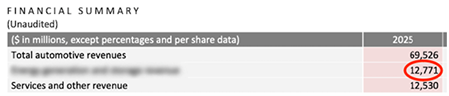
Pull up Tesla's most recent SEC filing. Page 5.
And you'll see a single line showing $12 billion in revenue from a brand-new "super startup" Elon Musk has been quietly incubating inside Tesla.
This new "super startup" has nothing to do with cars or robots or space or AI…
But it sits at the center of what Blackstone calls "a $23 trillion investment opportunity."
And on Oct 21st, Elon is expected to pull back the curtain and reveal exactly what he's building.
But Adam O'Dell already knows… and he reveals it all in this urgent video.
The MarketSipsTakeaway
The AI slowdown call is not the end of the AI trade. But it is the beginning of a new phase, one where investors must separate the companies building the infrastructure (Nvidia, the cloud hyperscalers) from the companies building the models (OpenAI, Anthropic, Google DeepMind). The first group sells shovels regardless of what the miners decide. The second group just told the world they might need to mine more carefully. That distinction matters enormously for portfolio construction heading into Q4, especially with the Fed potentially tightening into the uncertainty. Watch the Anthropic IPO filing closely. If it proceeds at $2 trillion in October, it tells you everything about what the market truly believes versus what the CEOs said over the weekend.
Today's reply prompt: The builders of AI just asked the world to slow them down. Do you trust them?
Until then, sip slowly!
The Market Sip Desk
THE MARKET WON’T WAIT FOR YOUR INBOX
Get the Alerts That Could Move Your Money
Breaking market news, actionable trade ideas, analyst signals, and major catalysts—sent straight to your phone when they matter.
Join FinancialMarkets.comFREE market alert list today.
SEND ME THE NEXT ALERT →(free)
Tickers: UI MS NVDA MSFT GOOGL DFO BWIN WTI GCC FOMC LEN CLICK FULL STORY LATE GPT METR GPU CME PE EU WAIT YOUR INBOX SEND ALERT POLL