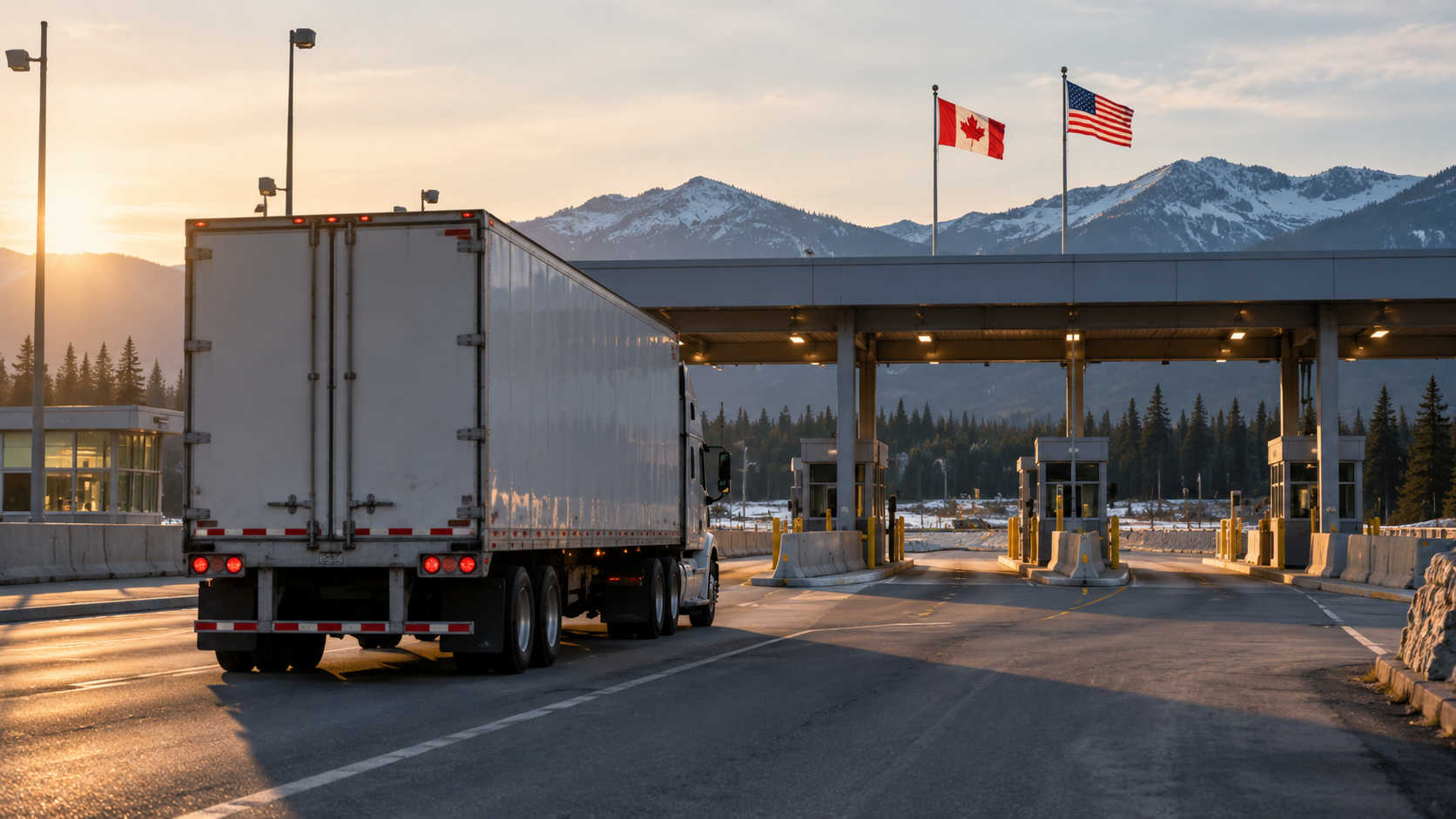
The White House puts Canada's retaliation at about $20 billion. Canada has put the disputed trade at $27.6 billion. The gap sits underneath a dispute now scheduled to escalate twice more this month.
FINANCIALMARKETS.COM | AFTERNOON EDITION
The White House has published the legal architecture behind this week's escalation of the trade dispute with Canada, and it comes with a number that does not match Ottawa's.
President Trump signed five proclamations under Section 338 of the Tariff Act of 1930, according to a fact sheet dated September 8. Two of them impose import bans, on certain Canadian alcoholic beverages and on certain Canadian dairy products, both categories already subject to 50% tariffs. The others modify the covered product lists, removing rock salt and cement while adding all-terrain vehicles and additional dairy products, and continue to target motor vehicles. The 50% rate applies regardless of USMCA origin status and stacks on top of existing Section 232 tariffs.
Two dates matter more than the announcement. The product-list changes take effect September 15. The import bans take effect September 29. Neither has bitten yet, which means the cost has not yet reached a single invoice.
The fact sheet states that Canada "maintained and in fact increased its discrimination against U.S. commerce" after trade talks broke down, and values Canada's retaliatory tariffs at approximately $20 billion, targeting steel, dairy and agricultural equipment. Canada's own figure for the disputed trade has been $27.6 billion. A $7 billion divergence between two governments describing the same tariff schedule is not a rounding difference, and it usually means the two sides are measuring different things, whether that is import value versus tariff-inclusive value, a different product set, or a different base year. Neither government has published the reconciliation.
For investors the gap is less important than what it signals about the state of the negotiation. Two parties that cannot agree on the size of the disagreement are not close to settling it. The Section 338 route also matters procedurally, because it is a rarely used authority and its use here indicates the administration is reaching past the tariff instruments it has relied on for most of this year.
Canada is the largest foreign buyer of American-made cars, which puts US automakers among the most exposed to how the next three weeks go. September 15 and September 29 are the dates on which the dispute stops being an announcement.