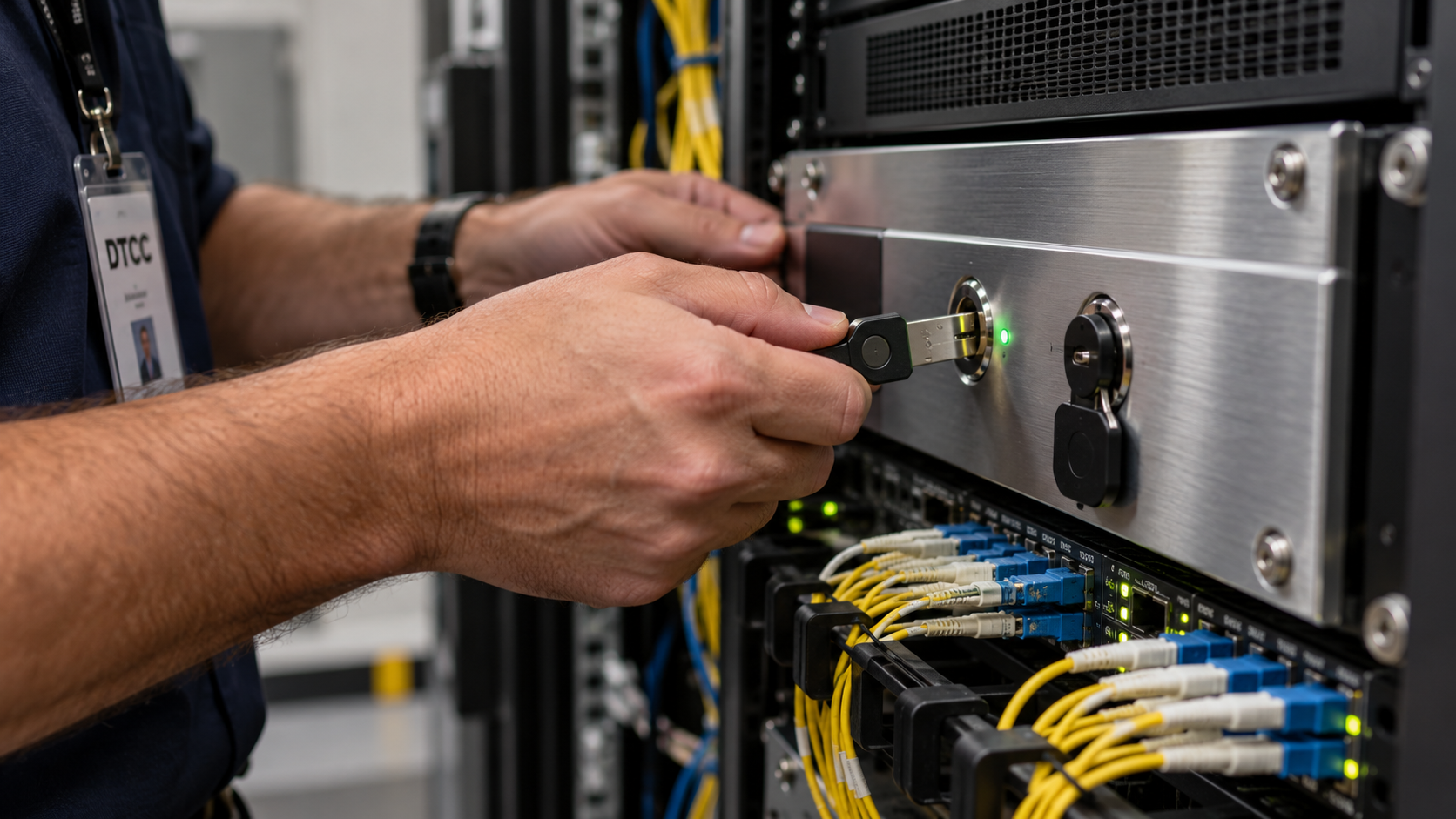
The Depository Trust Company launched a service that converts DTC-held securities into tokens and back, with 20 banks and brokers signed up, including JPMorgan, Citi and Morgan Stanley. Tokens run on the Canton Network and DTCC's private Besu network, and DTC stays the official record.
The depository at the center of U.S. securities settlement has put some of what it holds on a blockchain. It did so on terms that keep it in charge.
The Depository Trust & Clearing Corporation launched the DTCC Tokenization Service on Wednesday, allowing participants in its Depository Trust Company subsidiary to convert securities held at DTC into blockchain tokens and back. DTC holds more than $114 trillion of assets in custody.
The tokens, which DTCC calls digital twins, "retain the ownership rights, investor protections and economic entitlements" of the underlying securities, DTCC said. DTC remains the official record of ownership.
Who signed up
Twenty DTC participants have signed agreements: Alpaca, Apex Clearing, Barclays, Bank of America, BNP Paribas, Brown Brothers Harriman, Citadel Securities, Citi, Clear Street, DriveWealth, Edward Jones, Fidelity Investments, Interchange Clearing, J.P. Morgan, Marex, Mirae Asset Securities (USA), Morgan Stanley, State Street, UBS and Velocity Capital. BitGo Bank & Trust, Broadridge, DRW, Fireblocks, Ondo, Tradeweb and Virtu are working with DTCC on the service.
Eligible assets are drawn from the Russell 1000, major index ETFs and U.S. Treasuries, under a no-action letter the Securities and Exchange Commission issued in December 2025.
How it works
The service runs on the Canton Network and on DTCC's own private network built on Besu, an Ethereum-compatible software client, with more networks to be added in 2027. DTCC's product materials say conversion orders are accepted from 2 a.m. to 6 p.m. Eastern on business days, with a target of 15 minutes or less, and that tokens can move between DTC-registered wallets around the clock on the same chain. Tokens keep the same CUSIP identifier as the underlying security and carry built-in transfer restrictions.
That means the tokens can change hands at any hour, but only between approved wallets, and moving between token and traditional form follows business hours.
Permissioned by design
The launch is a milestone for tokenized securities, but its design matters as much as its scale. The first networks are a permissioned blockchain and DTCC's own private network. Public chains are on the road map, not in the launch. Ownership stays recorded at DTC, and wallets must be registered.
That approach brings the largest banks and brokers on board because it fits existing rules and controls. It also positions DTCC to keep its central role as tokenization grows, rather than ceding it to crypto-native issuers that have built tokenized stock products on public blockchains.
Disruption or defense?
The disruption view: with the core U.S. depository, 20 major participants and Treasuries, index ETFs and large-cap stocks eligible, tokenized securities have moved from pilots to production, and the infrastructure for around-the-clock collateral and settlement is now in place.
The defense view: the service is permissioned, intra-chain, limited to business-day conversions and anchored on DTCC's own ledger, which makes it an upgrade to existing plumbing more than a break from it, and a competitive answer to public-chain tokenization.
What to watch
The full list of eligible securities, first-month conversion volumes, whether tokens can be used as collateral at DTCC's clearing subsidiaries, the addition of other networks in 2027, and the response of crypto-native tokenized-stock providers.