Nasdaq 100 futures rose more than 1% early Monday after the Philadelphia semiconductor index fell 11.4% last week and logged eight straight daily declines, its longest losing streak since 2008. Treasuries rallied for a second week, and Asian chip stocks split.
The selling in AI stocks paused overnight. The debate behind it did not.
Nasdaq 100 futures rose about 1.2% to around 29,730 in early Monday trading, and S&P 500 futures gained about 0.6% to around 7,750. That followed a Friday session in which the Nasdaq Composite fell 2.1% to 26,140 and the S&P 500 dropped 84.62 points to 7,659.44. The VIX volatility index, which closed Friday near 20, was quoted near 18.6 early Monday.
The rebound comes after a punishing week for chipmakers. The Philadelphia Semiconductor Index fell 11.4% last week, ending with its eighth straight daily decline, the longest losing streak since 2008. CoreWeave, the AI cloud provider, fell about 12% on Friday alone.
The financing question
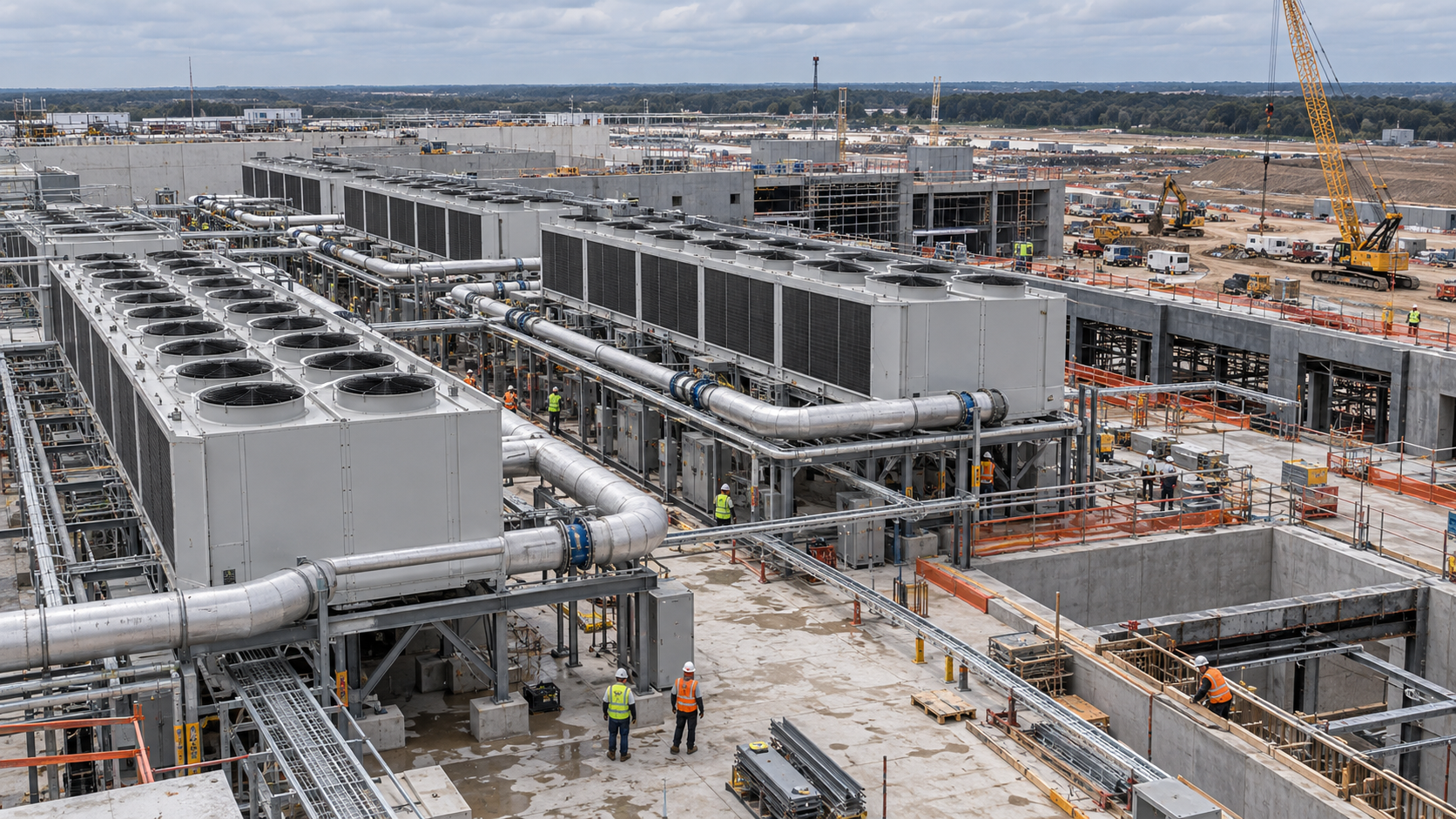
Much of the debate behind the selling has centered on financing rather than demand. The five largest cloud and platform companies are expected to spend about $1.2 trillion on capital projects next year, according to Goldman Sachs estimates. Much of the wider AI build-out, including data centers developed by third parties and leased to those giants, is funded with debt.
That makes borrowing costs central. The 10-year Treasury yield was trading above 5% last week, and spreads on riskier AI-related credit have widened. Higher yields and wider spreads both raise the cost of building AI capacity, and they reduce what investors will pay today for profits that arrive years from now.
The 10-year Treasury yield closed Friday at 5.09%, down from 5.24% a week earlier, according to Treasury data, a 15-basis-point decline. The rally was concentrated at the long end: the gap between two-year and 10-year yields narrowed to 35 basis points at Friday's close from 44 a week earlier. In early trading Monday, the 10-year eased about another 3 basis points to about 5.06%. Bonds have been acting as a haven as investors sold technology stocks.
Asia split
In Asia, the response to Friday's selloff was mixed. Samsung Electronics rose about 1.2% and SK Hynix about 0.4% in Seoul. China's largest DRAM maker, CXMT, fell about 7.8% to its lowest since its July debut after reporting that its profit growth slowed sharply in the third quarter. Japan's SoftBank closed down 2.0%.
The divergence points to stock-by-stock judgments rather than a single verdict on AI. Established memory makers held up. Those tied to capacity expansion or heavy financing did not.
Market implications
One reading is that last week was a sharp de-rating, not a credit event. Futures rebounded quickly and the VIX is below 20. On that view, the selloff reset valuations that had run ahead, and buyers will return as long as demand holds.
A second reading is that the market has started to price a financing constraint. If 10-year yields stay near 5% and credit spreads keep widening, the cost of the build-out rises, the weakest borrowers struggle to fund projects and the value of AI capacity built on leverage falls. On that view, the overnight bounce is a pause.
The cash session on Monday will test which reading holds. Futures moves before the open are often reversed.
What to watch
The 9:30 a.m. open for chip and AI-infrastructure stocks; high-yield credit spreads; Netflix's results on Tuesday; Meta and Tesla on Wednesday, where any change to spending plans would matter most; and the 10-year yield. A Meta capital-spending forecast that holds steady while yields stay near 5% would sharpen the financing debate rather than end it.