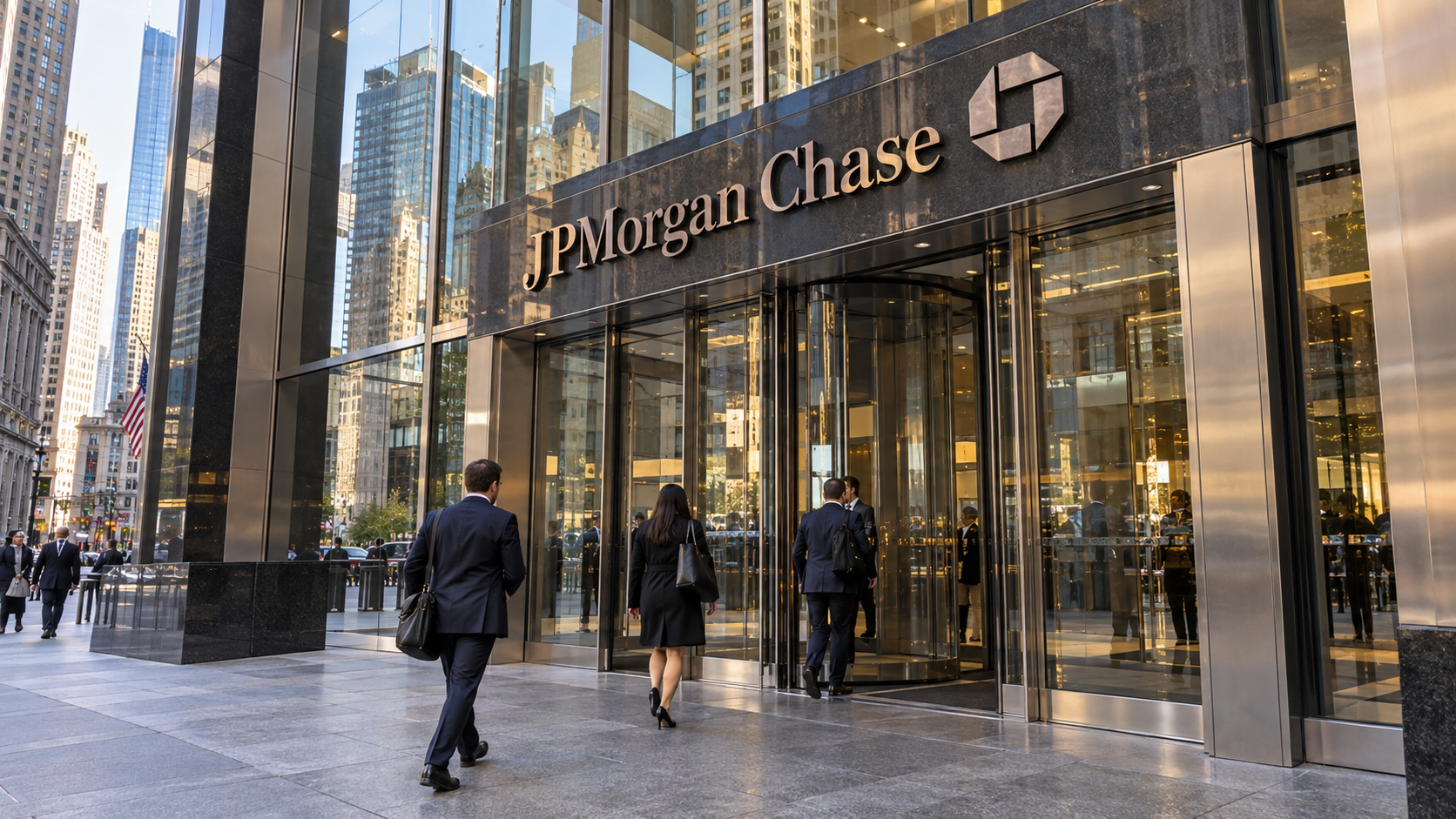
JPMorgan Chase, Goldman Sachs, Wells Fargo and Citigroup open the season on Tuesday, with Bank of America and Morgan Stanley on Wednesday, the same morning as September's inflation data. Strong AI-driven earnings are the base case; the question is the cost of fuel and borrowing everywhere else.
Third-quarter earnings season begins in earnest on Tuesday with the expectation of another blowout. The banks going first are best placed to show where the strain from higher rates and energy prices is landing.
The consensus forecast calls for S&P 500 earnings to rise 29.6% from a year earlier. That would be the third consecutive quarter above 25%, according to FactSet, driven largely by the buildout of data centers for artificial intelligence. Strategists at Deutsche Bank expect S&P 500 companies to beat forecasts by more than usual again.
The schedule
Tuesday's lineup starts before the opening bell with JPMorgan Chase, Goldman Sachs, Wells Fargo and Citigroup; Johnson & Johnson, UnitedHealth Group and Domino's Pizza also report that day. Bank of America, Morgan Stanley, BlackRock and State Street follow on Wednesday. Charles Schwab, U.S. Bancorp and PNC Financial report on Thursday, and Truist Financial and M&T Bank on Friday. The four bank stocks were trading 0.2% to 0.3% higher before Monday's open.
Analysts expect JPMorgan, the bellwether, to earn about $5.93 a share.
Why the banks matter more than usual
For most of the market, strong third-quarter profits will be the headline. For banks, the more important numbers sit lower in the release. The 10-year Treasury yield ended last week near 5.24% after reaching levels last seen in 2002, the Federal Reserve raised rates in September for the first time since 2023, and Brent crude has stayed above $100 a barrel through much of the quarter.
Those conditions reach bank results through three channels. Higher rates can lift what banks earn on loans but also push up what they pay depositors, and they reduce the value of bonds on balance sheets. Energy and borrowing costs strain households and smaller companies, which shows up first in loan-loss provisions and delinquencies. And volatility tends to help trading desks at Goldman Sachs and Morgan Stanley even as it slows deal activity.
With fuel and borrowing costs both elevated, what executives say about their customers may matter as much as the reported figures. The question is whether companies can absorb the pressure, pass costs on and still widen margins.
The inflation overlap
The calendar compounds the risk. Bank of America and Morgan Stanley report on Wednesday, the day the Labor Department publishes the September consumer price index. Economists expect core prices to rise 0.2% from August. Bond markets are closed on Monday for Columbus Day, which leaves only Tuesday's session for rate markets to position before both events.
Two readings
One reading is that this will be another strong season that keeps the bull market going. AI-related profits are carrying the index, Deutsche Bank sees room for more upside surprises, and banks can benefit from higher rates and active trading.
The other reading is that the average conceals the stress. A 29.6% growth rate concentrated in technology leaves room for weakness elsewhere, and banks are where that weakness, in consumer credit and small-business borrowing, would surface first.
What to watch
Loan-loss provisions and credit card charge-offs at JPMorgan, Wells Fargo and Citigroup, deposit costs, and trading revenue at Goldman Sachs and Morgan Stanley are the numbers that will set the tone. Any change in guidance for net interest income in 2027 will show how bank executives expect the rate environment to evolve.