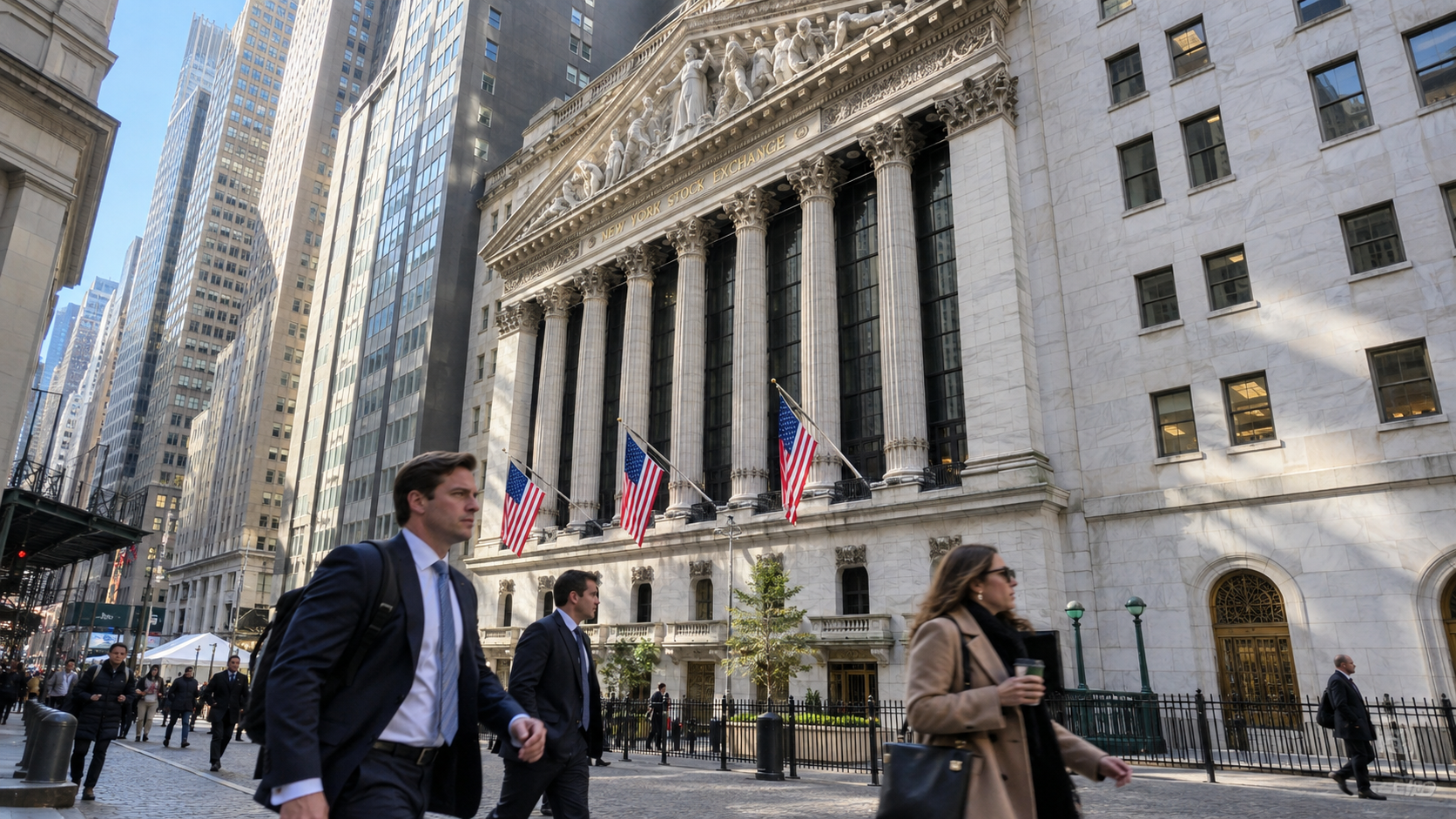
A cooler-than-expected jobless claims report and easing oil prices gave traders a reason to buy back into the selloff that followed the Federal Reserve's rate decision.
Stocks opened sharply higher Thursday, with the Dow Jones Industrial Average up about 250 points, or 0.5 percent. The S&P 500 gained about 1 percent, and the Nasdaq Composite led the major averages higher, up roughly 1.3 percent.
The move came a day after the Fed raised its benchmark rate by a quarter point to a range of 3.75 percent to 4 percent, its first increase in three years, a decision that sent the Dow down more than 700 points.
Yields and oil both eased
The 10-year Treasury yield fell to 4.949 percent, dropping back below the 5 percent level it had crossed in the hours after Wednesday's decision. Crude oil also retreated, with U.S. benchmark prices easing toward $100 a barrel and Brent crude slipping toward $102, as worries about a supply disruption tied to a Saudi Arabian pipeline outage cooled. Saudi Arabia has reportedly begun making additional crude cargoes available to Asian refiners through ship-to-ship transfers near Oman's Sohar port, a workaround that appears to be easing the near-term supply concern even as the underlying outage has not been fully resolved.
The data came in mixed
Initial jobless claims for the week ended September 12 totaled a seasonally adjusted 196,000, down 10,000 from the prior week and below the 207,000 economists had expected, the Labor Department reported. Continuing claims fell 39,000 to 1.73 million.
Housing data told a softer story. Building permits in August totaled 1.394 million, down 2.7 percent from July and slightly below the 1.4 million economists had forecast. Housing starts fell 2.6 percent to 1.275 million, also short of the 1.3 million estimate, a reminder that a 30-year mortgage rate hovering near 7 percent is still working its way through the housing market even as equity investors looked past it Thursday.
Technology led, but not everything followed
Nvidia and Amazon each rose about 2 percent, and Microsoft added roughly 1 percent. Chip and AI-infrastructure names extended the move: Applied Materials rose about 2 percent, Qualcomm about 4 percent and Intel about 3 percent, while Marvell Technology, Lam Research and Corning each rose roughly 4 percent and storage makers Seagate Technology and Western Digital each added about 3.5 percent. Caterpillar led industrials higher, up more than 2 percent. Software and cybersecurity stocks, by contrast, lagged the broader tape amid lingering investor concern about artificial intelligence disrupting those businesses.
Sentiment remains cautious
The American Association of Individual Investors' latest weekly survey found just 28.8 percent of respondents describe themselves as bullish on stocks over the next six months, the lowest reading in 16 months. Contrarian-minded strategists have historically treated depressed bullish sentiment as a supportive signal for equities rather than a warning sign.
Mark Haefele, chief investment officer at UBS Global Wealth Management, wrote in a note that his team remains "positioned for further equity gains while preparing for near-term volatility," adding that "if tightening remains measured, credit spreads remain stable, and profits continue to grow, the rally should have scope to broaden across sectors and regions." He recommended "diversified equity exposure while avoiding excessive concentration in areas that are particularly sensitive to interest rates or rely on a single return driver."
Bob Edwards, chief investment officer at Edwards Asset Management, was more direct in a note to clients. "Now we are past this rate hike, stocks can move on," he wrote. "The post-Fed stock market declines are an overreaction, and a buyable dip. When stock prices fall without a comparable decline in prospects, that is a classic sign of a buying opportunity. We are encouraging clients to add to their stock positions, and we'll focus our attention on valuation, revenue growth, balance sheets, and durable cash flows."
What comes next
Friday brings the Bank of Japan's rate decision, the first from a major central bank since the Fed moved. Whether Thursday's rebound holds may depend less on any single data point than on whether investors have simply repriced the pace of tightening rather than its direction.