The U.S. International Trade Commission opened an investigation into vertical power delivery systems on Oct. 9, naming 20 respondents. Foxconn's shares slipped in Taipei a week after it reported a 47% jump in quarterly revenue on AI server demand.
A U.S. patent fight over how power reaches the chips inside AI servers has a new front, and it names the world's largest contract electronics maker.
The U.S. International Trade Commission voted on Oct. 9 to open an investigation, numbered 337-TA-1526, into certain vertical power delivery systems, their components and computing systems that contain them. The case is based on a complaint filed Sept. 9 by Vicor Corporation of Andover, Massachusetts, which alleges that imported products infringe one of its patents.
The respondents include Monolithic Power Systems of Kirkland, Washington, and its Chengdu, China, affiliate, as well as Hon Hai Precision Industry, which does business as Foxconn, and its U.S. arm, Foxconn Industrial Internet USA, of Milwaukee. They are among 20 respondents that also include Delta Electronics, Quanta Computer, Infineon, Luxshare, Flex and Celestica.
Foxconn shares fell about 1.8% in Taipei on Monday. In New York, Monolithic Power fell about 4.8% and Vicor about 3.6%.
How Section 337 works
Section 337 of the Tariff Act allows the commission to bar imports that infringe U.S. patents. Opening an investigation is not a ruling on the merits. The commission will set a target date for completing the case within 45 days. If it ultimately finds a violation, it can issue orders blocking the infringing products at the border and halting their sale from U.S. inventory.
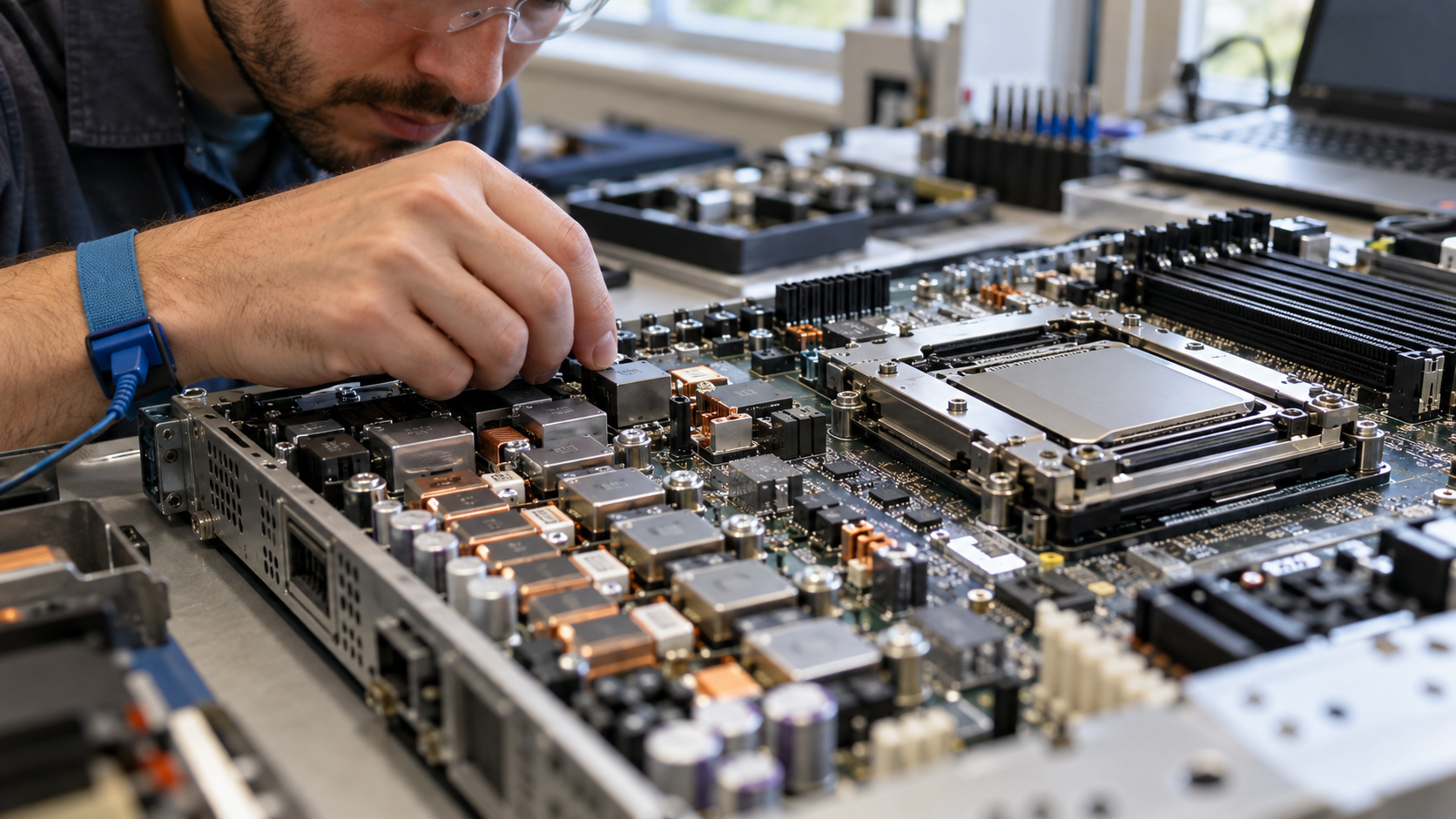
Vertical power delivery typically places power-conversion components directly beneath a processor rather than beside it, which shortens the path that current travels. The approach has become important as AI accelerators draw more power.
The history
This is not the first time these companies have met at the commission. In an earlier Vicor case over power converter modules used in data center and AI computing systems, the commission issued a final determination in February 2025 that found two Foxconn affiliates were licensed under one of the two asserted Vicor patents, reversing an earlier finding. The commission still issued exclusion and cease-and-desist orders in that case, and Vicor has appealed. In February 2026 the commission opened a separate Vicor case against Monolithic Power Systems, Delta, Quanta and others over power converters and circuit board assemblies.
Foxconn's quarter
The case arrives as Foxconn's AI server business is driving record sales. The company reported third-quarter revenue of NT$3.03 trillion, about $95.4 billion, on Oct. 5, up 47% from a year earlier. September revenue alone was NT$1.16 trillion, the first month above NT$1 trillion. Foxconn said AI-related operations should keep growing in the fourth quarter and will report full third-quarter earnings on Nov. 12.
Market implications
One reading is that the case is a contained patent dispute. Foxconn won a partial licensing ruling in the last round, the investigation concerns one patent and one product category, and the commission has not ruled on the merits.
A second reading is that repeated actions raise the cost of supplying AI server hardware. This case names 20 respondents across the supply chain, and each new case brings legal expense and the possibility of import restrictions on power components that are hard to replace quickly in high-volume AI systems.
What to watch
The commission's target date for the investigation, responses from Foxconn, Monolithic Power and the other respondents, and any appeal ruling in the earlier case will shape the risk. Foxconn's Nov. 12 earnings will be the first chance for the company to address the case with investors.