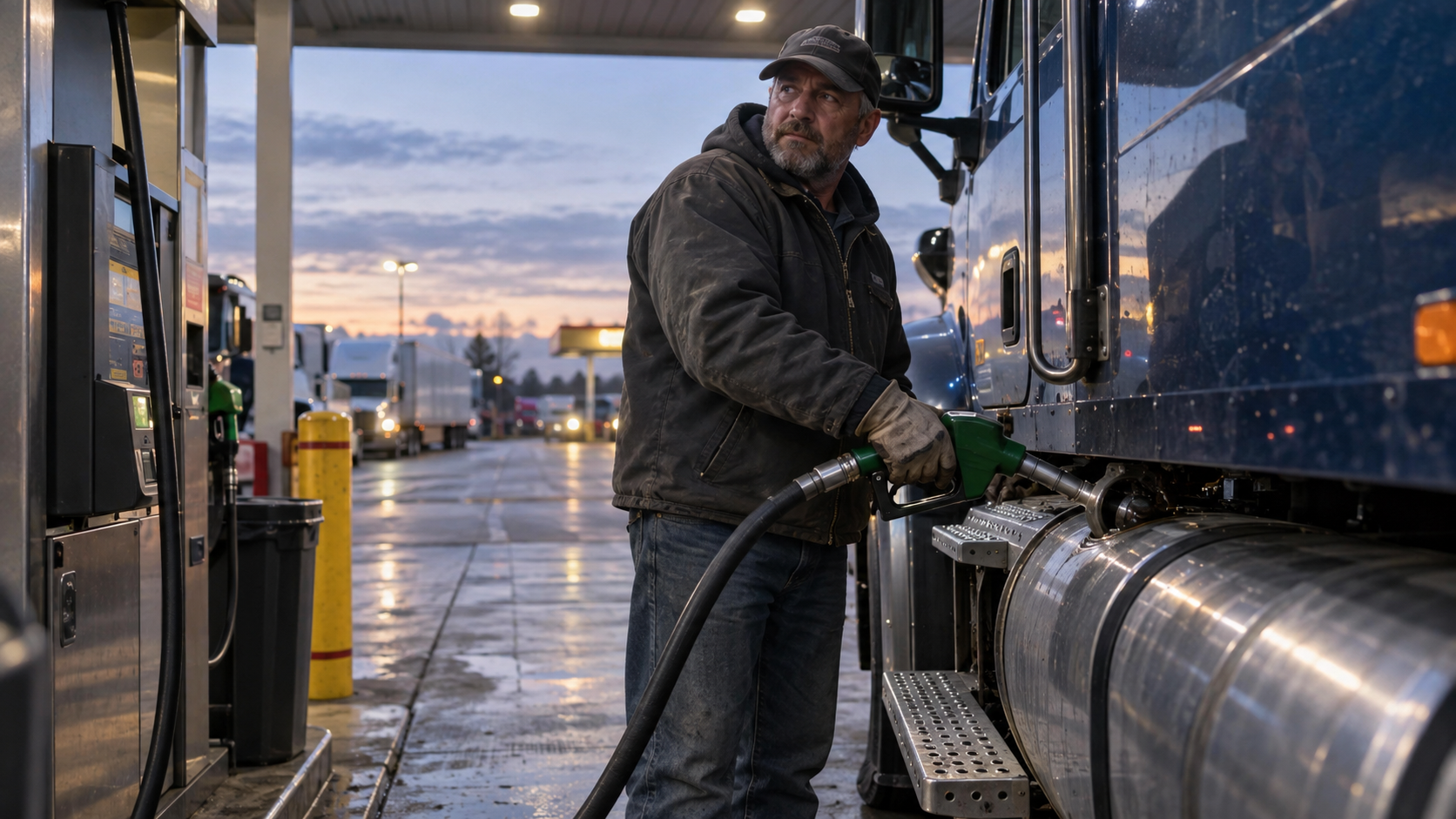
A fuel that touches nearly every part of the economy, from farm equipment to home heating, has climbed past its 2022 peak as the Iran war curtails Middle East supply and Russia's export ban removes another major source at the same time.
The national average price of diesel in the United States topped $6.50 a gallon for the first time, reaching $6.505 as of Saturday, according to the American Automobile Association, extending a rally that has added more than 87 cents to the price so far in September alone and pushed the fuel beyond the peak it set in 2022. Diesel underpins trucking, agricultural equipment, power generators, boats, trains and home heating systems, meaning its price moves ripple through the economy in ways that gasoline's do not.
Two separate conflicts are squeezing the same global supply of the fuel at once. Shipments through the Strait of Hormuz remain curtailed by the war between the United States and Iran, limiting the flow of crude oil available to refineries that would otherwise produce diesel. At the same time, Russia has banned most exports of the fuel and may extend that restriction through October, while continued Ukrainian drone strikes, including a recent attack on the Moscow Oil Refinery that was part of the largest overnight barrage of the year, keep pressure on Russian refining capacity. The combination has left global diesel supplies tight from both the Middle East and Eastern Europe simultaneously, a rare instance of two distinct wars constraining the same commodity through different channels.
The financial and political stakes of that squeeze are becoming clearer by the week. The Dow Jones Transportation Average, an index spanning airlines, railroads and trucking companies, closed 16.1% below its April record high on a recent Friday, putting the transportation-focused benchmark in a correction. Sam Stovall, chief investment strategist at CFRA Research, said higher diesel prices are "a very big concern" precisely because, despite talk of an "AI economy," nobody has yet figured out how to "tele-transport" a package, meaning physical goods still have to move by truck, rail or ship, and that movement runs on diesel. With midterm elections roughly six weeks away, record diesel prices carry particular political weight in agricultural states such as Iowa and in states that rely heavily on home heating oil, such as Maine, where a sustained run-up in fuel costs could erode support for the party in power.
Jeff Schulze, head investment strategist at Franklin Templeton Institute, called the trajectory of oil prices "the unanswerable question" hanging over the outlook, noting that a move toward $140 a barrel cannot be entirely ruled out, though he considers it a low-probability "tail risk" rather than his base case. His more likely scenario is that the approaching midterms increase the political incentive for the Trump administration to find a way to wind down the conflict. A U.S. Senate Republican has separately floated the idea of restricting diesel exports to keep more of the fuel at home, a sign that Washington is beginning to treat the price level as a policy problem rather than a temporary spike to wait out.
Even with the record nominal price, diesel remains below its 2022 peak once adjusted for inflation, according to the Institute for Progress, a distinction that offers some perspective without changing the near-term reality facing truckers, farmers and anyone paying to heat a home with oil this winter. With the Federal Reserve also raising interest rates this month for the first time in three years, the combination of higher fuel costs and higher borrowing costs is landing on households and businesses at the same time, a pairing that will keep both energy markets and the Federal Reserve's next moves under close watch through the rest of the year.