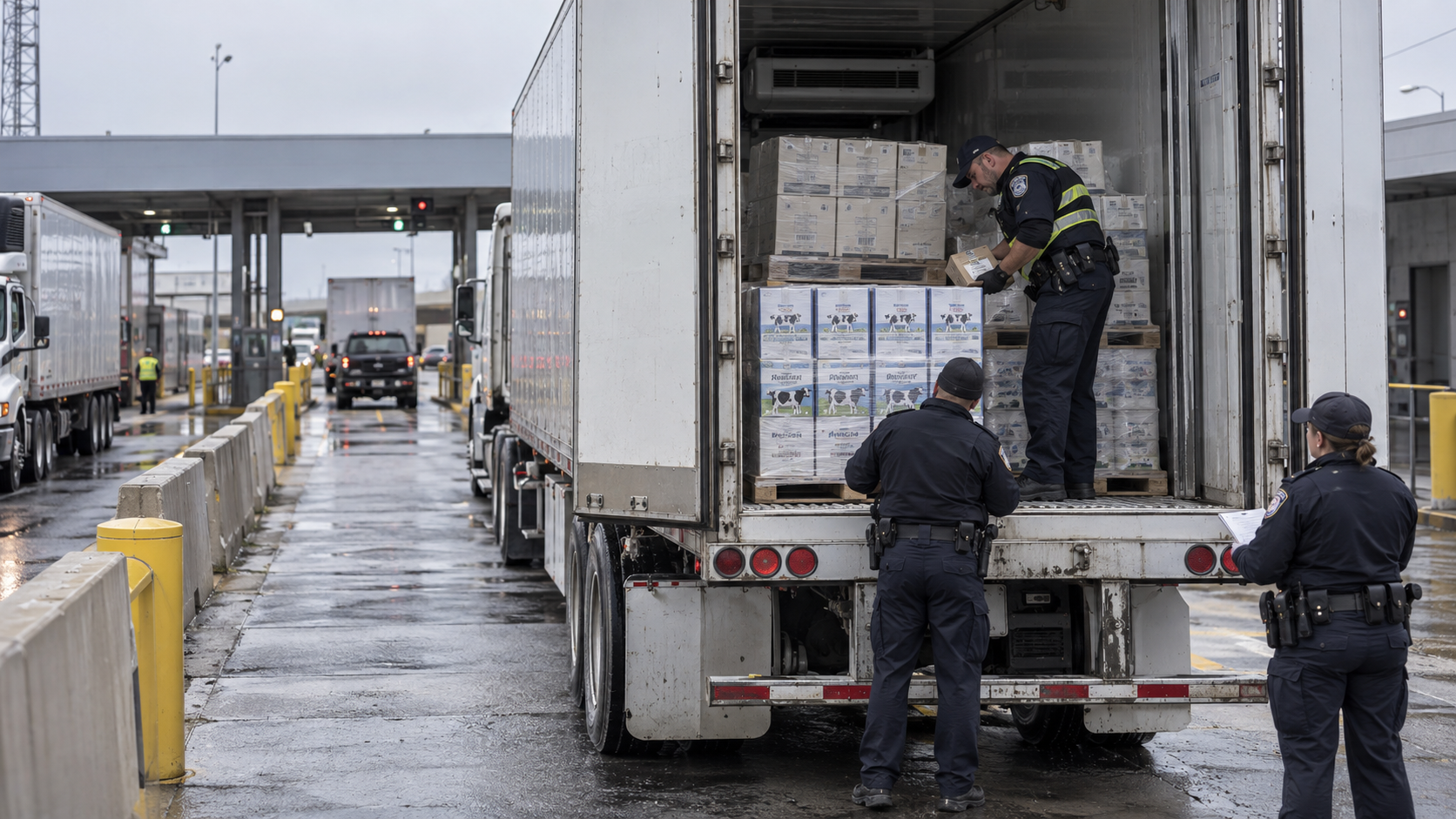
Restrictions on Canadian dairy, motorcycles and alcohol turn the dispute into a two-country escalation.
What began as a one-sided Canadian trade action has become a genuine two country escalation. Canada's retaliatory tariffs, covering steel, household appliances, agricultural equipment, dairy, machinery, textiles and consumer products at rates of 15% to 50% and spanning more than 700 products, took effect .
The United States responded with its own measures: import bans on Canadian dairy products, motorcycles and alcoholic beverages effective , plus a directive excluding Canadian origin products from federal procurement schedules absent "full and fair reciprocity." Canada announced a support package of approximately $5.42 billion for affected businesses and workers.
Who bears the cost?
Canada has put the total value of the disputed trade at $27.6 billion. The direct cost of a tariff or restriction depends on the measure and the market. Importers and consumers in the country imposing a tariff often absorb much of the added expense, while exporters can face weaker demand or pressure on margins. Import bans create a different effect by cutting off covered goods rather than adding a duty.
Canada is the largest foreign buyer of U.S. manufactured cars, which puts American automakers among the sectors with the most exposure to how this dispute evolves.
U.S. equities fell broadly on , with the Dow Jones Industrial Average down 0.55%, or 627 points, to 52,764.30, and the S&P 500 down 0.36% to 7,674.40. That decline landed the same session as the Middle East oil shock, a competing catalyst that makes any single cause explanation for the day's move unreliable.
The deadline gives investors a concrete date to watch. Whether either government uses the intervening weeks to negotiate, or lets the dispute run its course, will determine whether this stays a contained, sector-specific irritant or becomes a more persistent drag heading into year end.