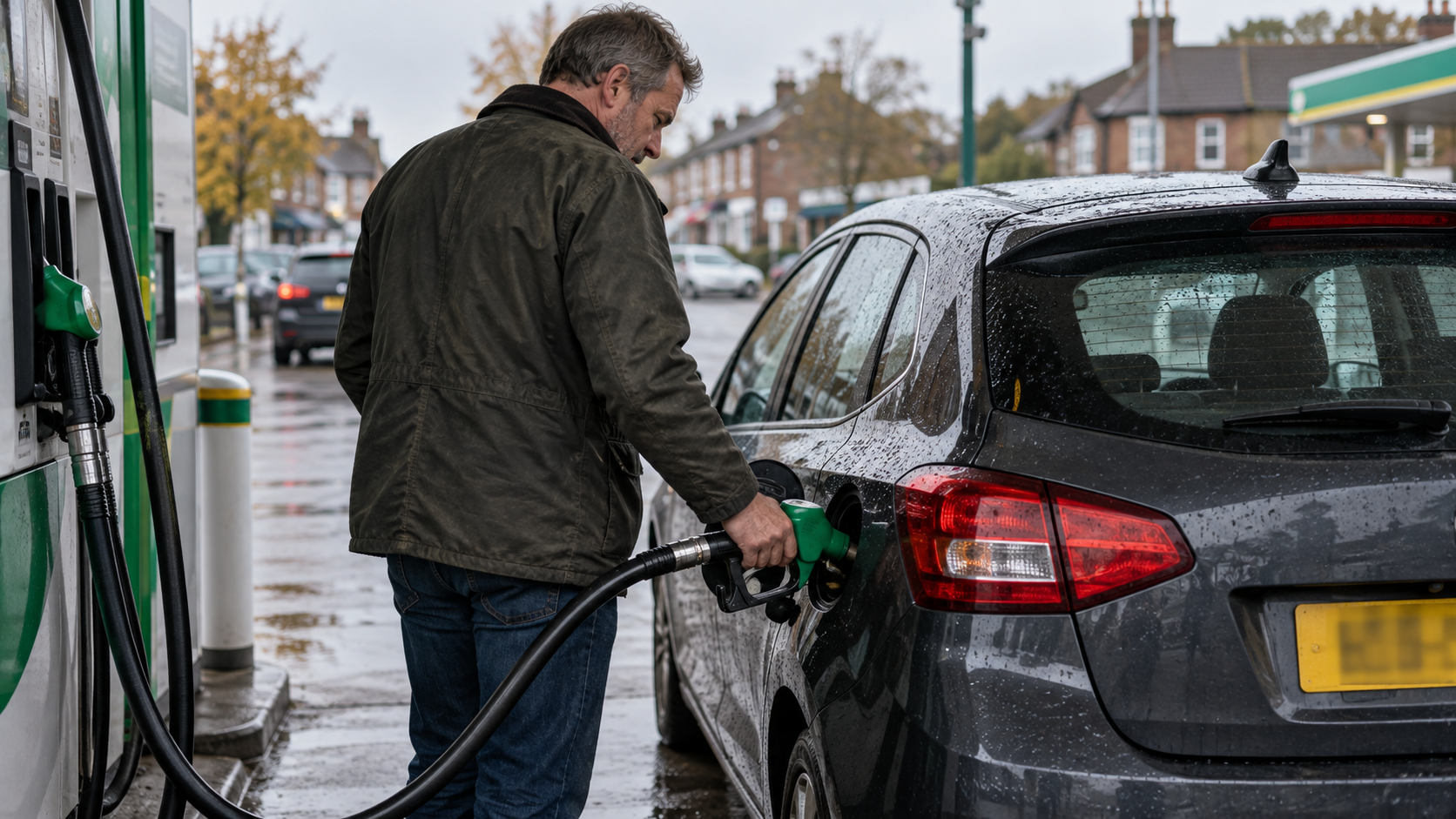
Consumer prices rose 3.5% in the year to September, a tenth above forecasts, as motor fuel climbed nearly 30%. Core inflation and services inflation both accelerated in the same month, the last price report before the Bank of England decides on Nov. 5.
Britain's September inflation figure was only slightly hotter than expected. What sat underneath it was the part that matters for the Bank of England.
Consumer prices rose 3.5% in the 12 months to September, up from 3.1% in August, the Office for National Statistics said on Wednesday. Economists had expected 3.4%. Prices rose 0.4% on the month. The broader CPIH measure, which includes owner-occupiers' housing costs, rose 3.6%, up from 3.3%. Headline inflation is now at its highest since October 2025.
Fuel at the top, food at the bottom
The largest upward push came from transport. Motor fuel prices were 29.8% higher than a year earlier, up from 23.0% in August and the fastest rate since August 2022. Goods inflation rose to 3.2% from 2.7%, its highest since September 2023.
Food tells the opposite story. Food inflation held at 1.3%, its lowest since 2021, and restaurants and hotels made the largest offsetting downward contribution to the change in the annual rate. The gap between fuel near 30% and food near 1% is a reminder that this is an energy shock, not yet a broad cost-of-living surge.
The services question
The more important detail for policymakers is in services. Services inflation rose to 3.7% from 3.4%, and core inflation, which strips out energy, food, alcohol and tobacco, rose to 2.8% from 2.6%. The statistics office said the biggest upward contribution to the change in services came from transport services, particularly air fares.
The statistics office's explanation is a base effect rather than a new price surge. Air fares fell 19.5% between August and September this year, against a 28.8% drop in the same month a year earlier, with European routes driving the difference. Fuel costs may also be reaching fares, but the official account does not rely on that, and a base effect of this kind can reverse as quickly as it appeared.
Core matched forecasts at 2.8%. Services, at 3.7%, came in a tenth above the 3.6% economists had expected, so the surprise sits in the headline and in services. The Bank's own forecast in July had projected inflation of 3.0% for this point in the year.
A muted currency
Sterling's reaction suggests markets had already done most of the work. The pound briefly rose against the euro on the release, toward 1.1922, before settling near 1.1917 within minutes. Against the dollar it was at 1.3397 at about 4:49 a.m. Eastern, up 0.14% from Tuesday's close. The FTSE 100 was little changed at about 10,724 in early trading, and the 10-year gilt yield was around 5.43%.
Before the release, traders had priced roughly a 96% chance of a quarter-point increase on Nov. 5, from a Bank Rate of 3.75%. A tenth of a point on the headline cannot add much to a near-certainty.
Market implications
One reading is that energy is now feeding into services and core prices together, and that November is the first increase in a sequence. Tuesday's labour figures, with unemployment at 4.7% and regular pay growth at 3.7%, show a job market that has softened but not cracked.
A second reading is that the beat is mostly fuel, core came in as expected, and the data confirm a single November move without saying much about what follows. On that view, the question has shifted from whether the Bank hikes to whether it signals more.
The services rate is the hinge. If October services inflation rises again without help from air fares, the first reading gains ground.
What to watch
Chancellor John Healey's budget on Oct. 28; the Bank of England's decision and new forecasts on Nov. 5; October inflation on Nov. 18; gilt yields at the two-year maturity; and Brent crude. A November statement that leaves the door open to further increases in 2027 would show the Bank reading the services data as a trend.