Commercial vessels came under fire in the Strait of Hormuz for the first time in this latest round of U.S.-Iran tension, marking a third distinct type of escalation in 48 hours. Crude prices extended their advance, but gold's failure to rally alongside the news is raising its own questions.
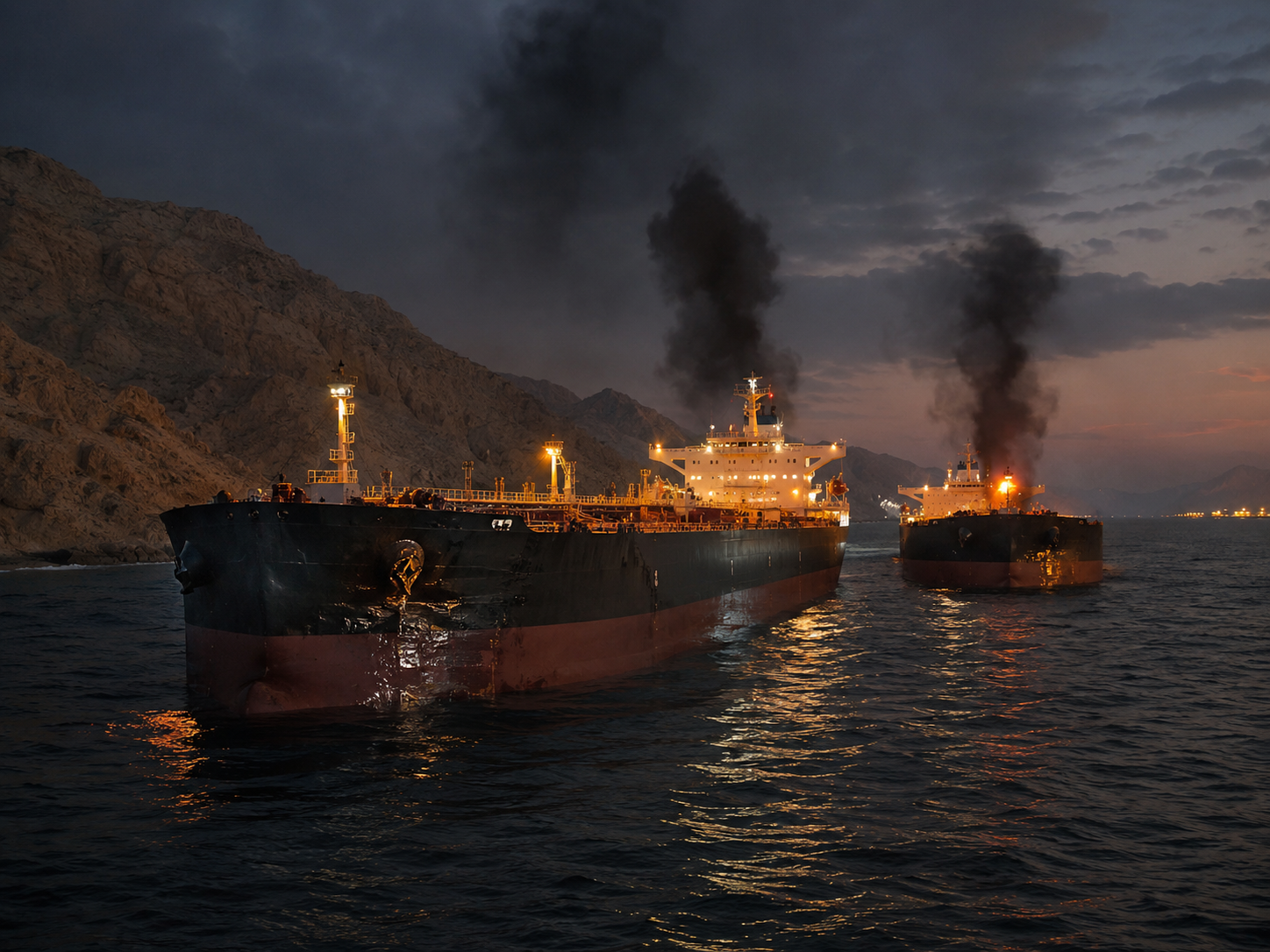
Two crude oil tankers were struck by unidentified projectiles late Monday roughly 17 nautical miles off Khasab, Oman, near the mouth of the Strait of Hormuz. The Saudi-flagged Sidr, operated by Bahri, and the Senegal Prosperity, operated by Sinokor, were both outbound from the Persian Gulf when they were hit. No casualties or environmental damage were reported, and no party has claimed responsibility.
The attacks mark the third distinct escalation in the region within 48 hours. On Sunday, U.S. forces carried out what military officials described as a limited, precise strike against Iranian minelaying positions near Larak Island. Iran responded Monday with what it described as retaliatory strikes on U.S. positions in Jordan; Jordan's own military said it intercepted eight missiles without confirming their origin. The tanker attacks that followed represent a shift toward commercial shipping, a different and more directly market-sensitive target than the military exchanges that preceded them.
Oil prices extended their advance on the news. Brent crude traded above $91 a barrel, a fresh multi-month high, while West Texas Intermediate rose more than 2.5% to near $88. President Trump vowed to respond forcefully, saying the United States would "hit them hard."
What makes this moment harder to read than a simple escalation story is the absence of two things markets typically look for: confirmed attribution and confirmed disruption. No specific actor has been confirmed as responsible for the tanker strikes, despite the surrounding context making Iranian involvement an obvious assumption. And while the risk premium in oil has grown, there is no confirmed slowdown yet in actual shipping traffic through the strait, insurance costs have not been independently quantified, and neither vessel required rescue or diversion.
A separate anomaly is drawing attention from traders watching cross-asset moves: gold fell rather than rose during the same window, dropping 1.43% even as a geopolitical risk event of this scale would typically send investors toward traditional safe havens. That divergence sits alongside the broader global bond selloff unfolding the same day, suggesting oil and gold are being pulled by different forces even within the same 24 hours.
The near-term catalysts are clear enough: any formal attribution of the tanker attacks, any further Iranian action, and how crude behaves once U.S. markets fully open will determine whether this remains an incremental add to an already-elevated risk premium or marks a turn toward something more disruptive to actual oil flows.