Chris Wright said an outright ban "definitely doesn't work" and pointed instead to voluntary limits. Refiners, farmers and Republicans in tight races are now waiting to learn what that means.
A day after President Trump said he backed the idea of banning U.S. diesel exports, his energy secretary said publicly that it would not work.
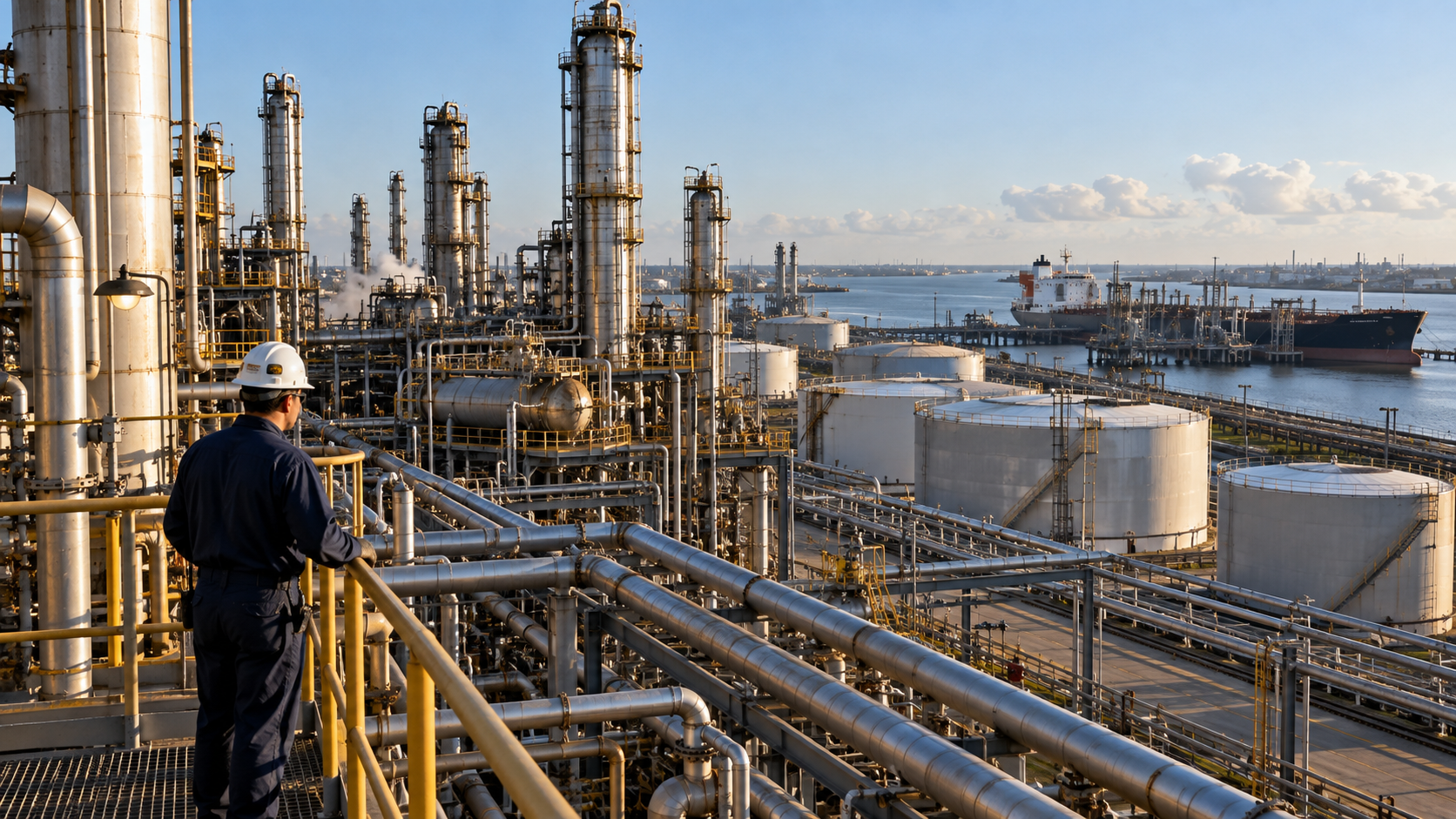
"The blunt tool of banning diesel exports definitely doesn't work," Energy Secretary Chris Wright said at an event in New York on Wednesday. His reasoning was mechanical. "If you can't export the diesel that comes out of our refineries, you run out of places to store it, and you have to reduce US refining, which would put upward pressure on gasoline prices and jet fuel prices," he said.
Wright did not rule out action. Speaking separately on the sidelines of the U.N. General Assembly, he said the administration would pursue voluntary restrictions on exports rather than a ban, and that it needed to keep the world supplied while changing the trajectory of prices at home. "We're trying to avoid a blunt hammer of a government policy, understanding the complexity of refining," he said. He offered few details on how voluntary limits would work.
Public disagreement from a cabinet member is unusual in this administration. It also reflects a split inside it. Agriculture Secretary Brooke Rollins has raised high diesel prices with the president. Interior Secretary Doug Burgum has warned that a ban could invite retaliation from countries that export fuel to the United States, which could hurt states such as California.
The political pressure is concentrated in farm country. Diesel averaged $6.52 a gallon on Wednesday, according to AAA, up 76% from a year earlier and near record levels. Sen. Chuck Grassley and other Iowa Republicans have urged Trump to impose a ban, arguing that fuel costs are squeezing farmers. Republicans are defending narrow majorities in both chambers of Congress in the Nov. 3 midterm elections. A White House official said Trump "wants to see gas prices at the pump fall and is evaluating all options on the table."
The industry case against a ban centers on the same arithmetic Wright described. S&P Global estimates that an export ban would leave refiners with a surplus large enough to force production cuts of almost 2 million barrels a day, about 12% of U.S. refinery runs. Gasoline output could fall by as much as 750,000 barrels a day, which some analysts estimate would add about 25 cents a gallon at the pump. "The loss of export abilities would force many plants to cut run rates, and reduce their output of gasoline (and numerous other products) as well, which becomes counterproductive," analysts at TACenergy wrote.
Industry trade groups have mounted their most forceful public opposition to the administration since Trump returned to the White House. The American Exploration & Production Council said policymakers "should reject this short-sighted approach and instead focus on solutions that will actually lower prices at the pump."
A voluntary cap raises its own questions. Some industry lobbyists have noted that coordinating export limits among refiners could run into antitrust law. Ben Cahill, a nonresident senior fellow at the Atlantic Council, said a cap might be easier for the administration to lift later than a ban, since unwinding a ban could trigger a sharp and unpopular rebound in diesel prices.
Energy was the best-performing sector in the S&P 500 on Wednesday, up about 1.1%. Refiners now have a sharper question in front of them than whether Washington acts. It is whether a voluntary program sets a volume, a price target or neither, and whether it survives contact with the midterm calendar.