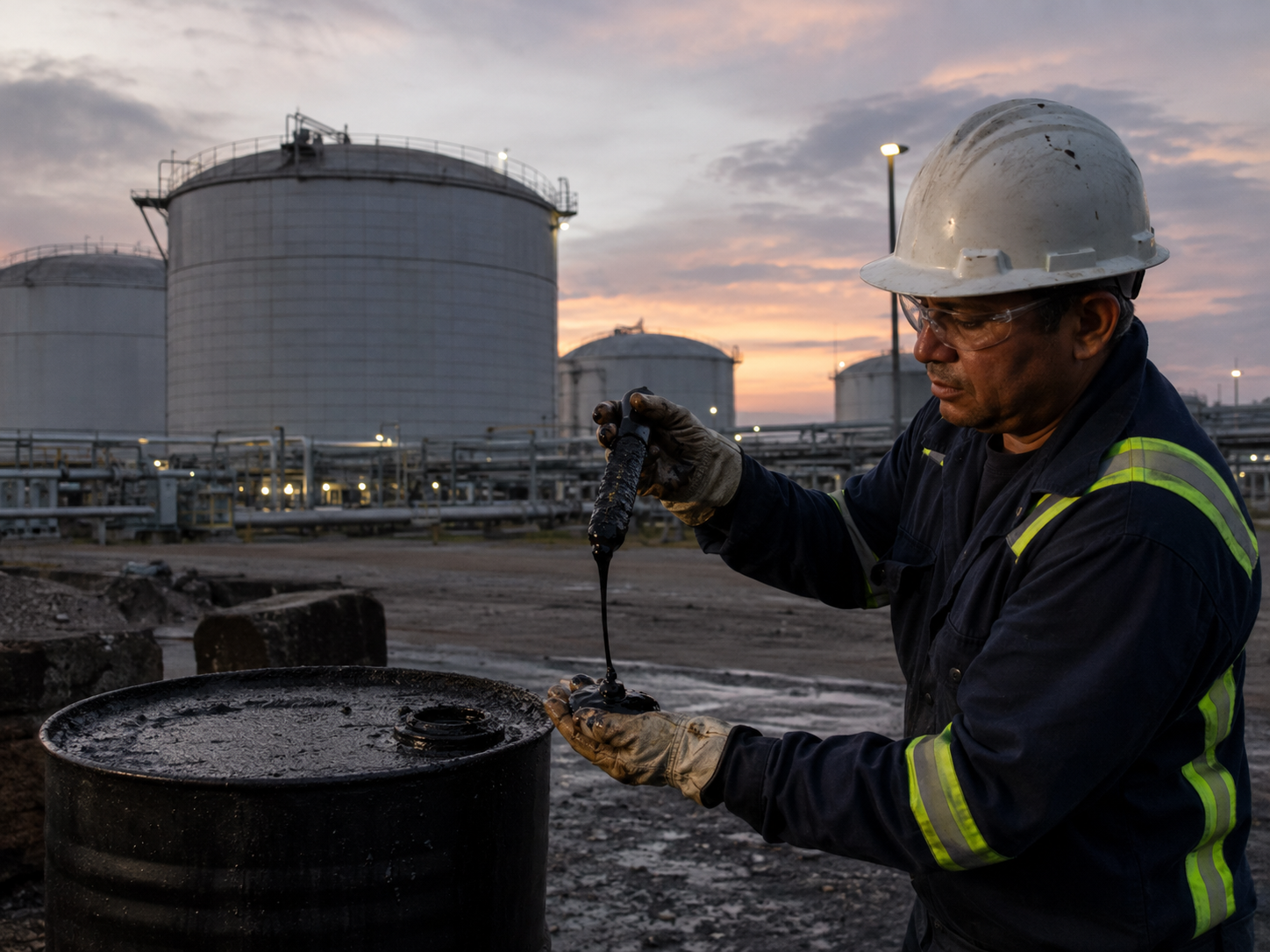
The Strategic Petroleum Reserve is emptier than it has been in more than four decades. A same-day analysis says much of the promised Venezuelan crude cannot go into it without expensive processing first.
The Strategic Petroleum Reserve is sitting at roughly 41 percent of its authorized capacity, its lowest level since 1982. President Trump says that is about to change. Over the weekend he described the reserve as "virtually" empty and said a "topping out" process using Venezuelan oil would begin "very shortly," calling the arrangement a gift from Venezuela to the American people.
Filling the roughly 420 million barrel gap to reach full statutory capacity would cost an estimated 32 billion dollars at recent average purchase prices. A smaller, partial refill of around 200 million barrels would run closer to 14 to 18 billion dollars. Those figures come from outside cost modeling, not a government budget request, and no U.S. document specifying refill quantities, a timeline, or a source of funding has surfaced yet.
The larger question is whether the oil itself is usable. Most of the reserves cited in the broader Venezuela deal, an estimated 65 billion barrels tied to a 25-year agreement, sit in the Orinoco Belt as extra-heavy crude. A technical analysis argues that grade falls below the roughly 22.3 API gravity minimum the reserve normally accepts, meaning much of it would need costly blending with lighter crude or would have to be rejected outright. Venezuela's production infrastructure also needs a multiyear rebuild before it could deliver the deal's targeted 1.5 million barrels a day; the country currently produces well under that.
Under the broader agreement, the United States is taking a 35 percent passive stake in North American Blue Energy Partners, a venture controlled by Venezuelan businessman Alejandro Betancourt, with the Pentagon's Office of Strategic Capital administering the U.S. side. Venezuela's government, through acting leader Delcy Rodríguez, has projected roughly 209 billion dollars in revenue over the life of the deal at a price of 19 dollars a barrel to Venezuela while describing the arrangement as preserving the country's sovereignty over its reserves.
For investors, the tension is straightforward. A strategic reserve at a 44-year low is a real vulnerability to any future oil-price shock, and a large new crude source under U.S.-linked control is a plausible way to start rebuilding it. But a crude-grade mismatch with the reserve's own storage rules does not resolve itself with time. It requires a blending plan, a waiver, or years of infrastructure spending that has not yet begun.
The next meaningful signals are whether the Energy Department publishes a weekly reserve figure precise enough to check against the 44-year-low claim and whether any government document specifies how much of that heavy Venezuelan crude the reserve is actually equipped, or willing, to take.