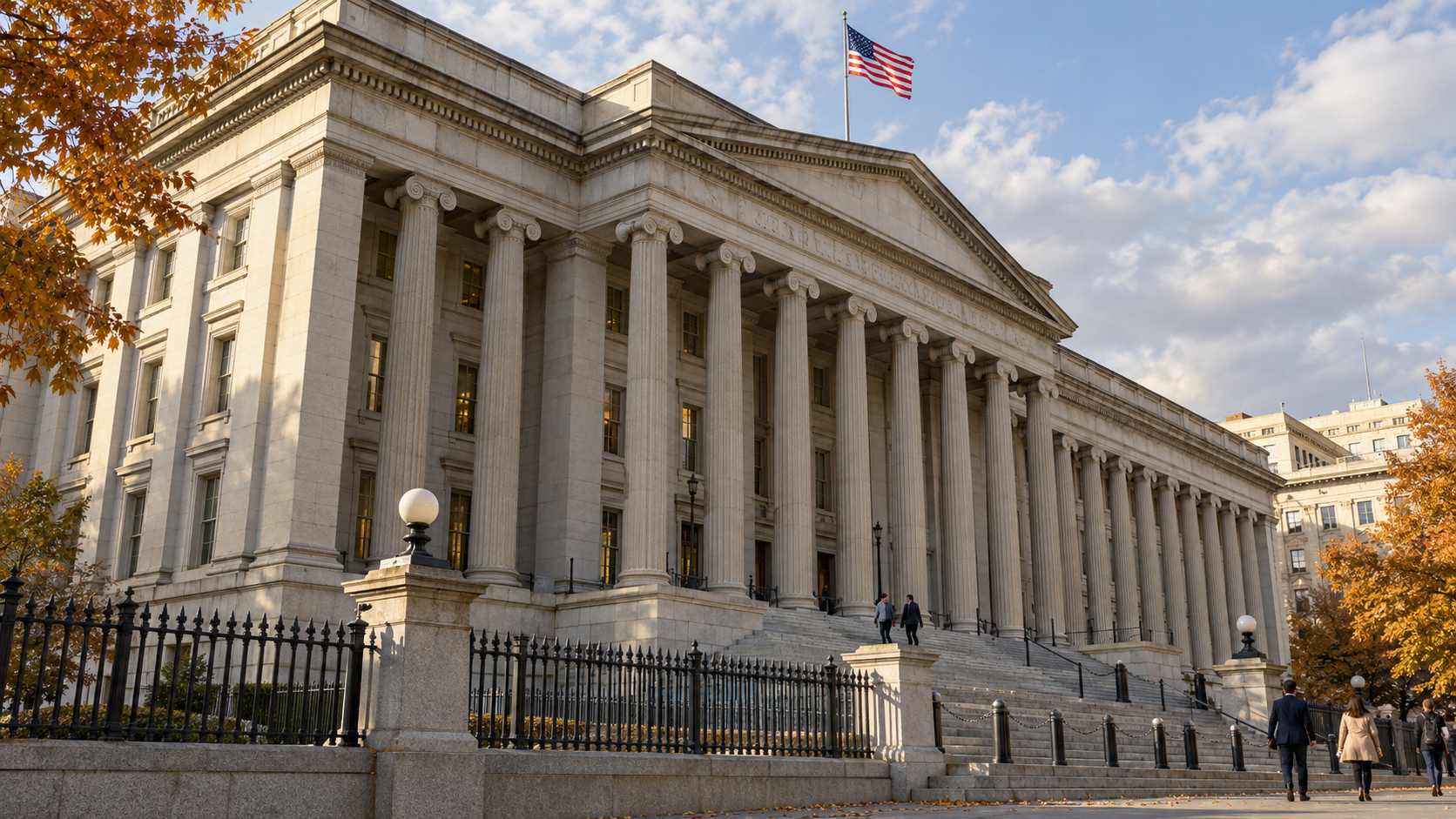
The 10-year yield traded as low as about 5.05% in Asian hours and was about 5.14% at 1:47 p.m. Eastern, roughly 5 basis points above Friday's 5.09% close. Yields climbed alongside a chip-led stock rebound, the opposite of last week's pattern, with the Treasury's 20-year auction on Wednesday.
For most of last week, the bond market behaved like a shelter. When technology stocks sold off, Treasuries rallied. On Monday the relationship broke within a single session.
The yield on the 10-year Treasury note traded at about 5.14% at 1:47 p.m. Eastern, roughly 5 basis points above its Friday close of 5.09%, according to Treasury data. In Asian hours it had traded as low as about 5.05%. In early-afternoon trading the 30-year yield was about 5.48%, against a Friday close of 5.43%, and the five-year was about 4.94%, against 4.89%. The iShares 20+ Year Treasury Bond ETF fell about 0.7%.
At the same moment, the Nasdaq Composite was up about 1.1% and the S&P 500 about 0.5%. The VIX volatility index fell to about 18.5.
A different kind of selling
Last week's pattern was simple: fear about the cost of the AI build-out drove investors out of stocks and into bonds, pulling the 10-year yield down 15 basis points, from a close of 5.24% on Oct. 9 to 5.09% on Oct. 16, according to Treasury data. Long maturities did most of the work, so the curve flattened: the two-year to 10-year spread ended the week at 35 basis points, down from 44. Monday ran the other way, with stocks and yields rising together.
That combination points away from growth fear and toward the two pressures that have kept the 10-year near or above 5% this autumn: inflation tied to energy, and the government's borrowing needs. Mark Zandi, chief economist at Moody's Analytics, warned in a note on Sunday that "a vicious cycle threatens to take hold, with higher rates adding to the interest payments and debt load, which in turn pushes rates up even more."
The rise was not only American. Britain's 10-year gilt yield rose about 6 basis points to 5.43%, and Germany's 10-year Bund about 3 basis points to 3.46%.
What did not move yields
The day's only notable U.S. data argued for lower yields, not higher. The National Association of Home Builders' sentiment index fell to its lowest level since June 2012. The bond market looked past it.
The Fed question
The Federal Reserve is in its quiet period before its Oct. 27 to 28 meeting, so officials are not commenting. Markets are doing the talking. As of Sunday evening, CME Group's FedWatch tool priced about a 16% chance of a rate increase this month and roughly a 90% chance of one by December. On Kalshi, the contract on a quarter-point increase at the October meeting traded at 14 cents at 1:28 p.m., up from 13 cents in early trading.
Aditya Bhave, an economist at Bank of America, said in a television interview on Monday that the Fed could raise rates at its October meeting. That is one bank's view rather than the consensus, but it shows how far the debate has moved toward tightening.
Market implications
One reading is that Monday was a mechanical unwind. Investors who bought bonds as protection during last week's tech selloff sold them as stocks recovered, and yields will settle back once positioning normalizes.
A second reading is that the floor under long-term yields is set by fiscal and inflation risk, not by equity sentiment. On that view, the haven trade can push yields down only briefly, and each tech rebound will expose the underlying pressure.
The next test comes quickly. The Treasury reopens 20-year bonds on Wednesday; the last sale, on Sept. 15, cleared at 5.42%.
What to watch
The Oct. 19 par curve close; Tuesday's housing starts and permits; Wednesday's 20-year auction; Meta's and Tesla's results on Wednesday, which will shape the AI-spending debate; and whether the 10-year closes above 5.15%. A weak auction with the 10-year near its early-afternoon level would argue that the second reading has the upper hand.