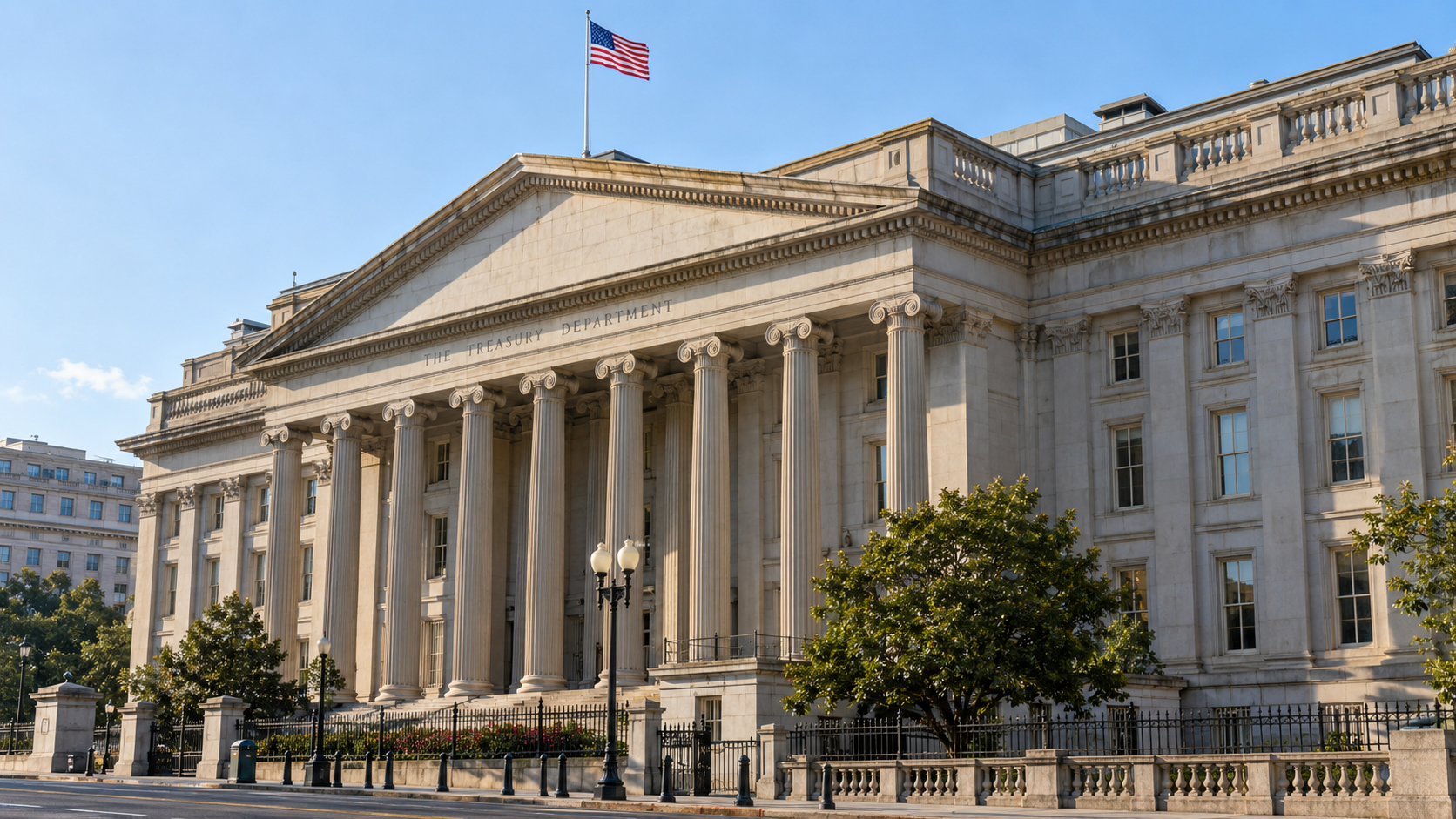
FinCEN withdrew a 2023 plan to treat crypto mixing as a primary money-laundering concern and a 2020 rule on self-hosted wallets. Neither was ever in force, and Roman Storm's retrial remains set for April 2027.
Crypto · FinancialMarkets.com · October 6, 2026 · Tickers: COIN, HOOD, ZEC, XMR, BTC
The Treasury Department's financial-crimes unit cleared away two of the most-cited regulatory threats to crypto self-custody and privacy tools on Tuesday. The Justice Department, in a courtroom in Manhattan, kept going.
The Financial Crimes Enforcement Network published two withdrawals in the Federal Register. The first scraps its October 2023 finding and proposed rule, under Section 311 of the USA Patriot Act, that international crypto mixing is a class of transactions of primary money-laundering concern. The second withdraws a December 2020 proposal that would have required banks and money-services businesses to report, keep records on and verify identities for transactions with unhosted wallets, the self-custody wallets that users control directly.
What changes and what does not
Neither proposal was ever final, so the withdrawals do not lift any obligation that firms currently face. Registration as a money-services business, the travel rule and suspicious-activity reporting all stand.
What changes is the outlook. The 2020 wallet proposal would have required reports on transactions above $10,000 and records above $3,000. FinCEN said it "will not take any further action" on it, which closes that rule for good.
The mixer proposal is a different case. FinCEN cited commenters' concerns that its definition "could have a chilling effect on legitimate activity and place a large reporting burden" on firms. It quoted a July 2025 report by the President's Working Group that "lawful users of digital assets may leverage mixers." But the agency also said it "will continue to monitor activity involving CVC mixers" and "may take appropriate steps in the future," leaving room for a new approach.
The Storm case
The courtroom fight runs on a separate track. Roman Storm, a developer of the Tornado Cash mixing protocol, faces a retrial on charges that include money laundering and sanctions violations. Prosecutors filed a letter on Monday opposing his challenge to the trial venue. The retrial is set for April 26, 2027. His motion for acquittal, argued in April, has not been decided.
That leaves federal policy on mixers split. Treasury's regulators now say mixers have lawful uses. Federal prosecutors are still pursuing a mixer developer on money-laundering and sanctions-related counts. The withdrawal of a proposed rule has no direct bearing on criminal charges brought under existing law.
Who is affected
Exchanges, banks and wallet providers that handle self-custody flows gain the most clarity. They no longer face the prospect of a reporting regime for every transfer to and from a private wallet. Privacy-focused coins such as Zcash and Monero rose on Tuesday, but the gains began before the notices and arrived alongside other news for Zcash, so the moves cannot be tied to Treasury's action.
Three readings
One reading is that this is a substantive deregulatory step that removes overhang on self-custody and privacy tools. A second is that it is largely symbolic, since neither rule ever took effect. A third is that enforcement risk has shifted from regulators writing rules to prosecutors bringing cases.
Next court dates
A ruling on Storm's acquittal motion and on the venue dispute will come before the April retrial. Any new FinCEN action on mixers, which the agency explicitly kept open, would show whether the withdrawal was a policy change or a redraft.