

Monday's issue asked how much of this bull market runs on borrowed money. By Friday, the market had a sharper question. What does that money cost?
The Nasdaq fell 4.5% for the week. The Dow rose 0.7%. The 10-year Treasury yield fell 15 basis points to 5.09%. By Friday, this looked less like a rate scare than a credit scare, aimed at the companies borrowing to build AI.
That idea runs through most of the week. Hot inflation data that bonds shrugged off. Chip suppliers that can't meet demand, and chip stocks that fell anyway. An index provider deciding who gets passive money. Brent near $110. And deals that kept getting done.
Here are the six stories that defined the week.
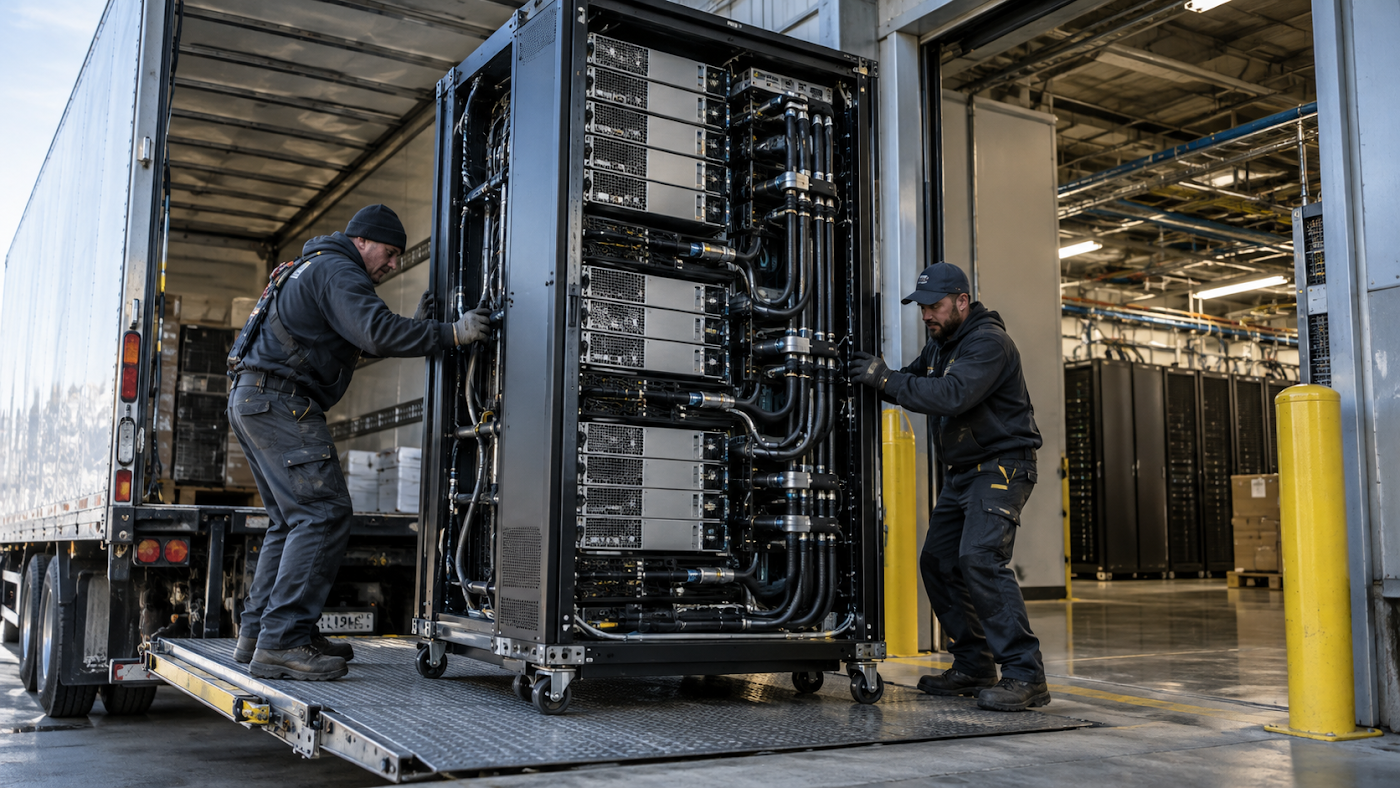
Unusual Passive Income Investment (Found on a Golf Course)
One man turned $1,000 into a decadeslong passive income stream... eventually reaching $70,000 per year after 60 years!
All from a single golf course tip.

1. AI found out what its money costs
CoreWeave (CRWV) lost a quarter of its value this week. The stock was not the scary part. Its 2032 bonds fell to about 77 cents on the dollar midweek. The cost of insuring its debt passed 1,000 basis points, a distress-level reading.
Oracle (ORCL) felt it too. Its five-year credit default swaps hit a record 288 basis points.
Then the market set a price. A $5 billion AI loan for Volta cleared at 95 cents with a yield above 11%, Bloomberg reported. Anthropic has agreed to buy computing capacity at the site. JPMorgan (JPM) and Goldman Sachs (GS) underwrote only the $1.3 billion piece tied to a data-center lease. The $3.7 billion piece backed by Nvidia (NVDA) chips was sold on a best-efforts basis.
That split is the story. Banks will lend against a lease. They would rather not own the risk on a rack of GPUs.
The demand signals mostly held this week. The price of financing them rose. For builders without a hyperscaler's balance sheet, Volta is now the reference point.
Read more: The AI selloff moved from stocks into credit | Banks had to sweeten Volta's $5 billion AI loan
2. Hot prices, calm bonds
The inflation data ran hot all week. September consumer prices rose 3.7% from a year ago, with core prices up 0.3% for the month. Producer prices jumped 1.3% in September, the most since March 2022. Import prices rose 8.1% from a year earlier.
Bonds rallied anyway.
Bets on an October rate hike swung wildly. Kalshi's October hike contract jumped from 18 cents to 55 cents within 40 minutes of Wednesday's CPI report. By Friday morning it sat near 13 cents, after Fed Chair Kevin Warsh said, "I don't prejudge meetings."
The producer price details explain some of the calm. Energy drove more than 80% of the jump in goods prices. Trade margins drove nearly half of the services gain. Price pressure is building in the middle of the supply chain. The bond market seems to be betting it fades before shoppers see it.
If that pressure reaches store shelves, the bet flips. The Fed now goes quiet until its Oct. 27–28 meeting.
Read more: Wholesale prices ran the hottest since 2022. Bonds rallied anyway. | Kalshi's October hike contract jumped from 18 cents to 55
Hidden in Tesla's Filing: A $12 Billion "Super Startup"
Pull up Tesla's most recent SEC filing. Page 5.
And you'll see a single line showing $12 billion in revenue from a brand-new "super startup" Elon Musk has been quietly incubating inside Tesla.
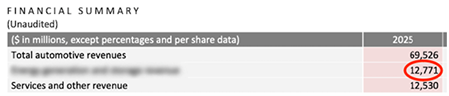
This new "super startup" has nothing to do with cars or robots or space or AI…
But it sits at the center of what Blackstone calls "a $23 trillion investment opportunity."
And on Oct 21st, Elon is expected to pull back the curtain and reveal exactly what he's building.
But Adam O'Dell already knows… and he reveals it all in this urgent video.
3. Sold out, and sold off
ASML (ASML) said its planned supply, including a 30% capacity increase, will not fully meet customer demand in 2027 and 2028. TSMC (TSM) beat its own forecast and guided for another jump in fourth-quarter sales.
Chip stocks fell anyway. Micron (MU) dropped 14.6% for the week. In Seoul, the chip selloff was steep enough to trip a trading curb.
Two worries hit at once. China's CXMT said it plans to ship a denser memory design before year-end. It has not launched the product yet, but memory investors priced the threat. And the credit scare raised a harder question. If the buyers of these chips must borrow at more than 11%, how long can they keep buying at this pace?
That is the twist in ASML's shortage. It is good news for ASML. For buyers funding their build with debt, it means scarce equipment bought with expensive money.
The market is pricing the funding behind demand at least as hard as the demand itself.
Read more: ASML says its planned capacity will fall short of demand in 2027 and 2028
4. MSCI played regulator
Index providers rarely move markets like central banks. This week, MSCI did.
On Thursday, MSCI proposed cutting Indonesia from Emerging Markets straight to Standalone status, skipping Frontier. It cited suspected coordinated trading. The Jakarta Composite fell 11.6% on Friday, its worst day since January 1998, with a 30-minute halt. A final decision is due by June 30, 2027.
The same week, MSCI set its rule for companies that mainly hold assets like bitcoin. Reuters reported that Strategy (MSTR) and Metaplanet could be removed. The final list comes Nov. 11, and changes take effect after the Nov. 30 close. Strategy fell 9.6% on Friday while bitcoin barely moved.
Passive money comes with rules, and the rules can change. For Strategy, the stock no longer tracks bitcoin alone. It also tracks whether index providers still count it as an operating business.
Read more: MSCI wants to skip Indonesia past Frontier status | MSCI drew its line on bitcoin-treasury companies
Jim Rickards Predicts: Trump's Next Big Buy
This tiny $2 stock holds the exclusive rights to the largest gold reserve in the country.
And it has the potential to be the biggest fortune maker in Trump’s second term.
According to Jim Rickards...
Trump is about to take a direct stake in this $2 stock.
And if you’d like to learn how to stake your claim in this asset before President Trump and his administration make a move…
You need to act before November 3rd.
Click here to see Jim’s big prediction: “Trump’s Next Big Buy.”
5. Oil's war premium came back
Brent crude rose 4.9% this week to $109.86 a barrel. Oil flows through the Strait of Hormuz ran about a third below normal in the week to Oct. 13, according to Kpler.
Oil was a side story most days. It should not be. Fuel feeds freight, and freight feeds prices. Transport and warehousing costs rose 3.4% in September's producer price report.
Fear rose too. The VIX closed Friday at 19.99, up from 14.84 a week earlier.
High oil makes the Fed's job harder. If crude keeps climbing, the case for holding rates steady in October gets weaker.
6. The deals kept coming
While AI borrowers paid up, other deals kept getting done.
Thoma Bravo's Proofpoint agreed to buy Varonis (VRNS) for $49.75 a share in cash, about $6.3 billion, backed by new equity and committed debt. KFC also picked Coca-Cola (KO) to replace PepsiCo (PEP) as its U.S. drink supplier, starting in January.
The deal that fits the week best came from Microsoft (MSFT). NiSource (NI) signed a 20-year deal to power Microsoft's Indiana data-center campus, adding about 1,100 megawatts. Microsoft is funding the generation and transmission needed to serve it. NiSource rose 3.5% on Friday.
Compare that with Volta. There, lenders were asked to carry the risk and demanded more than 11%. Here, the customer carries it. That is how capacity gets built when credit turns cautious.
Read more: Thoma Bravo isn't selling Proofpoint. It is using it to spend $6.3 billion. | NiSource's Microsoft deal adds 1,100 megawatts
Ticker Revealed: Pre-IPO Access to the "Next Elon Musk" Company
We’ve found The Next Elon Musk… and what we believe to be the next Tesla.
It’s already racked up $26 billion in government contracts.
Peter Thiel just bet $1 Billion on it.
And you can get exposure — pre-IPO — through a 4-letter ticker symbol revealed in this free briefing.
THE MARKET SIP TAKEAWAY
Put the six stories together and one pattern shows. The market is still mostly buying the AI demand story. What it repriced this week is who pays for it.
Borrowers paid more. Index money got pickier. Bonds bet that price pressure fades before it reaches shoppers. Lenders still backed a software buyout, and a utility whose customer pays for its own capacity got rewarded.
The thesis holds if the next AI-linked loan prices near or below Volta's 95 cents. It breaks if credit spreads tighten without help from lower rates. Tomorrow, we look at the week that tests it.
UNTIL THEN, SIP SLOWLY!
The Market Sip Desk
REPLY PROMPT: Would you rather own the AI lender, the AI borrower or the AI customer right now? Hit reply and tell us why.
Same Rate Move. Three Different Bills.
The 10-year went from 4.19% to 5.29% this year. Every company on your screen felt that. They don't feel it on the same schedule.
Some earn more when rates rise. Some pay more. The difference shows up in earnings, one report at a time.
We traced three of them: IBKR, WRB and FIS.
FREE Special Report: Rates Just Reset. Who Feels It First?
Who earns it fast. Who earns it slowly. Who pays. One has already reported. The other two report next, and the report tells you the exact line to check.
We'll text the report straight to your phone.
Text Me the Three Names → (free)