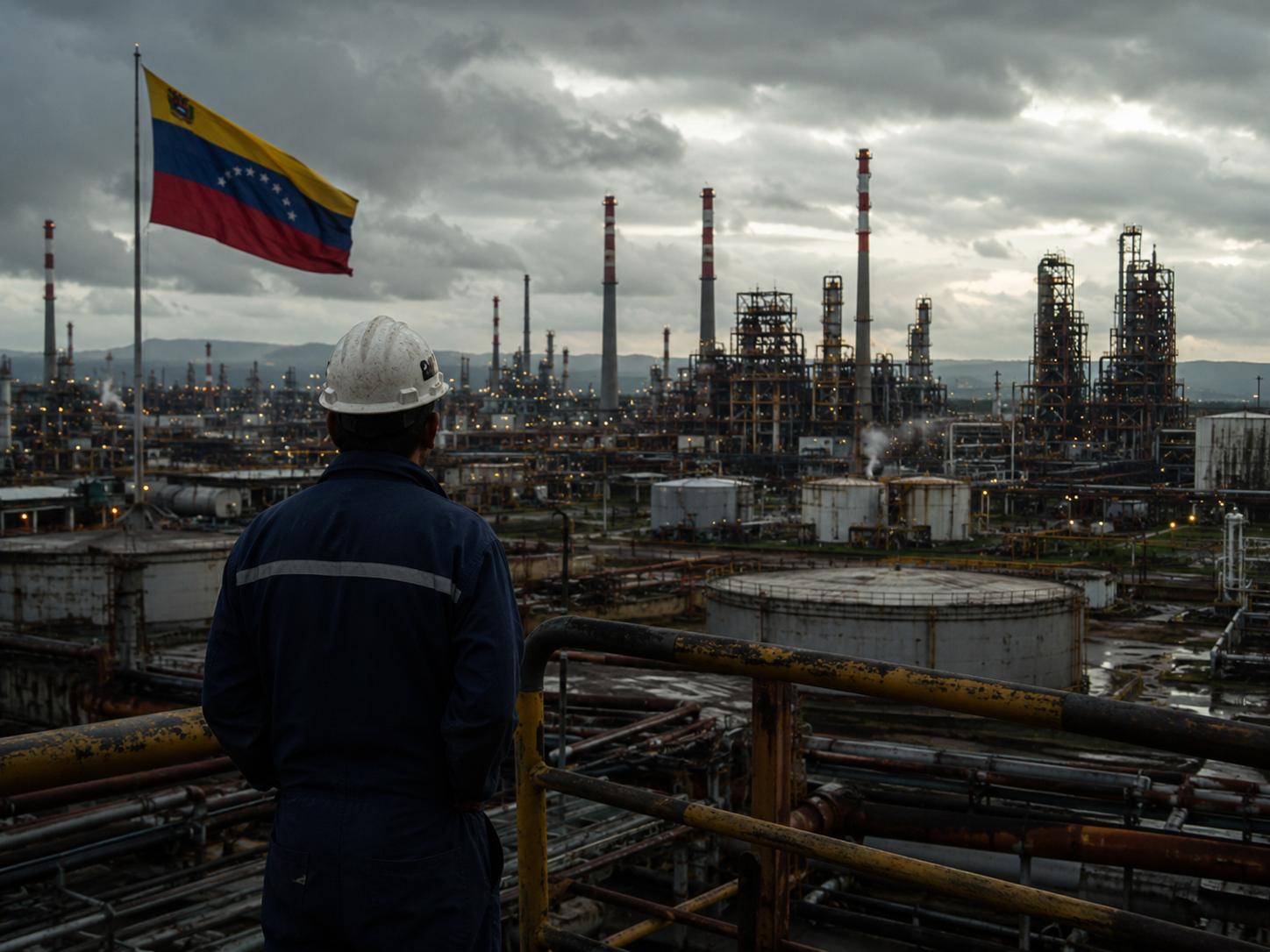

Reported details of a Venezuela oil arrangement now include a direct Pentagon stake, a 25-year term stated by Venezuela's own government, and a presidential pledge to use the oil to refill U.S. strategic reserves.
The outlines of a U.S.-Venezuela oil arrangement have been taking shape for days, but the past 48 hours added detail that changes the nature of the story. Reporting describes the U.S. Department of Defense, not solely private energy operators, as holding a direct stake in Venezuelan oil assets under the arrangement, a structural detail that would mark a real departure from how these deals are typically financed and owned.
Separately, a U.S. government stake of 35 percent in a specific Venezuelan oil venture tied to businessman Alejandro Betancourt has been reported, though at least one other outlet has separately described a larger, 55 percent figure characterized as an "effective output" share rather than an equity stake. Those two figures may simply be describing different things, an ownership percentage versus a share of output, rather than a genuine contradiction, and this article treats the 35 percent equity-stake figure as the more directly comparable number.
On the term of the arrangement, Venezuela's interim president, Delcy Rodríguez, stated on the record that the deal will remain in force for 25 years and that it targets an increase in Venezuelan crude output to 1.5 million barrels per day, while also asserting that the arrangement preserves Venezuela's sovereignty over its natural resources. That is a specific claim from Venezuela's own government, though it does not on its own confirm that the U.S. side agrees to the same term; a separately reported 100-year figure elsewhere has not been resolved against Rodríguez's statement.
President Trump added a specific, on-the-record objective of his own: oil from the arrangement, he said, will be used to replenish the U.S. Strategic Petroleum Reserve. That reserve stood at roughly 294 million barrels as of late August, close to a multi-decade low against authorized capacity near 420 million barrels, which gives the stated objective real logic. It is also worth noting that Venezuelan crude is predominantly a heavy, Orinoco Belt grade that the reserve does not typically store, a technical mismatch that raises real feasibility questions this article does not attempt to resolve.
What remains missing from the public record is any signed, named private operator. No company, not Chevron, not Halliburton, not any other operator that has been mentioned in connection with Venezuela's reopening, has confirmed a specific signed contract tied to this arrangement. Until that happens, this remains a government-to-government story rather than an investable equity story, whatever the eventual commercial structure turns out to be.