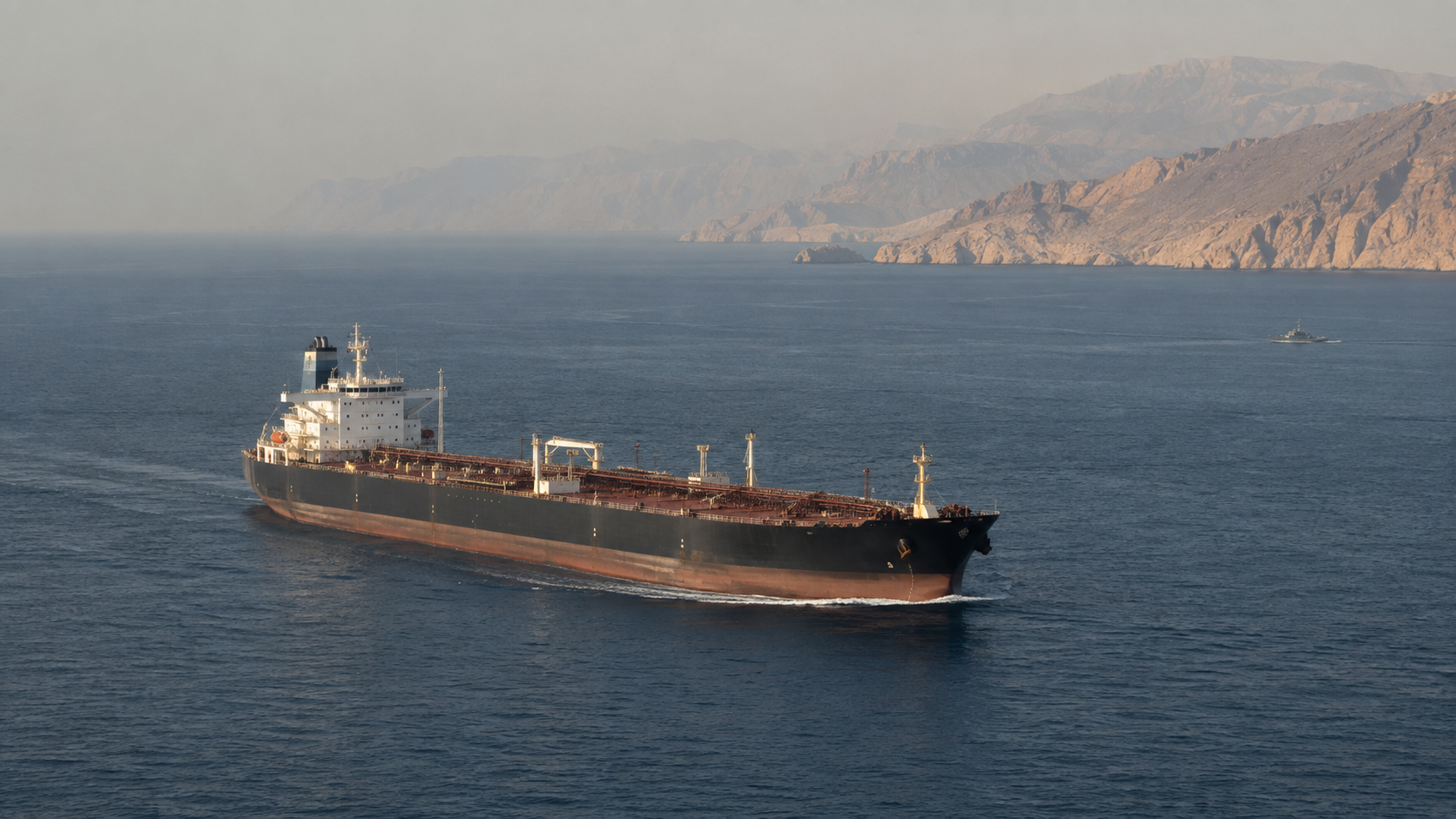
Vessel traffic through the world's most important oil chokepoint has collapsed to a fraction of normal levels. A JPMorgan strategist says nobody can model how this ends.
The Strait of Hormuz has now gone roughly 200 days without functioning as a normal commercial shipping lane, with war-risk insurance costs rather than a formal blockade keeping vessels away. On September 13, only eight vessels transited the strait, against a typical daily flow of roughly 85, a decline to about 9 percent of normal traffic.
Brent crude was last seen trading near $105.60 a barrel, and tanker war-risk insurance is now priced at roughly 40 times pre-crisis levels, a cost that makes many voyages through the strait uneconomical even when physical passage remains possible.
A vessel strike raised the stakes further
On September 13, missiles or drones struck a U.S.-contracted vessel carrying American personnel near the strait. Separately, Iranian state media reported that an Iranian cargo ship was struck in the strait, resulting in one fatality.
China has urged both Iran and the United States to resume negotiations. The United States, for its part, has been holding separate talks with representatives of the Houthi movement in Oman regarding related tensions in the Red Sea.
Energy strategists say they are out of playbook
"We simply don't know how to model the endgame," said Natasha Kaneva, head of global commodities strategy at JPMorgan. Part of the difficulty, she noted, is that developments that once looked like clear red lines for the U.S. administration, such as gasoline prices and headline inflation, have already been crossed without ending the underlying conflict.
Why an effective closure is different from a blockade
A formal blockade would be a discrete, attributable act. What has instead developed is a market-driven closure: insurers have priced risk so high that the economics of transiting the strait no longer work for many shippers, producing many of the same supply effects as a blockade without any single actor having to impose one. That distinction matters for how the situation might resolve. A blockade can be lifted by decision. A market-priced closure lifts only when insurers judge the underlying risk has genuinely fallen, which is a slower and less predictable process.
What to watch
Whether the Sept. 13 vessel strike proves to be an isolated incident or the start of a pattern will shape how quickly, if at all, insurance costs come down. Diplomatic movement, either from the China-brokered talks or the U.S.-Houthi discussions in Oman, offers the more direct path to de-escalation, though neither had produced a public breakthrough as of Thursday.