Situational Awareness's July collapse was already public. The subpoenas to Goldman Sachs, JPMorgan, Citigroup and Bank of America are what's new.
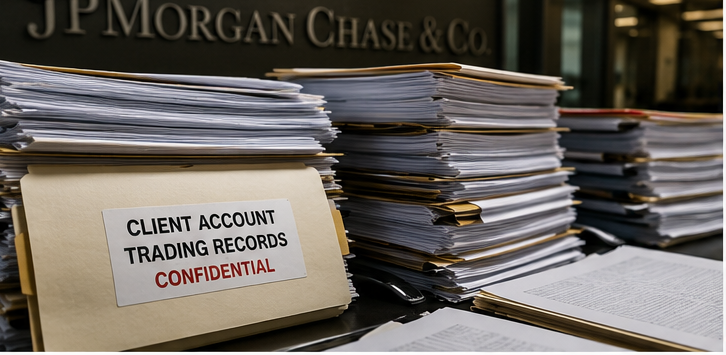
The Securities and Exchange Commission has sent subpoenas to Goldman Sachs, JPMorgan Chase, Citigroup and Bank of America, directing the banks to preserve records related to their dealings with Situational Awareness, a hedge fund founded in 2024 by Leopold Aschenbrenner, a former OpenAI researcher in his mid-twenties. The subpoenas, reported August 24 and 25 by outlets including the New York Times and Reuters, arrive three weeks after the fund's portfolio collapsed. Seven independent news organizations have converged on the same core facts: the four banks named, the timing of the subpoenas, and the SEC's focus on the trades that triggered margin calls and on what the fund told its lenders about its use of leverage.
Situational Awareness had built one of the most closely watched runs in the AI trade before July, using concentrated, leveraged bets on AI-adjacent semiconductor names. Its assets had grown to more than $45 billion, with roughly four-times leverage on its public equity positions, according to multiple news reports including CNBC. According to the fund's second-quarter 13F filing with the SEC, SanDisk and Micron were its two largest US holdings as of the end of June, together worth roughly $11.3 billion and more than half its disclosed US portfolio. Both stocks fell sharply in July as the broader AI-hardware trade reversed, and the fund's overall portfolio dropped 67% for the month. Unable to raise fresh capital to meet the margin calls that followed, the fund sold its entire public equities book in a single block trade to Citadel on July 30. Aschenbrenner told investors in a letter that the fund "came closer to permanent capital impairment than is acceptable to us."
Situational Awareness, through a spokesman, said "it is to be expected that regulators would closely examine any funds that are high profile, produce significant returns, or have particularly dramatic drawdowns," adding that the fund is "highly-regulated" and will cooperate fully with the SEC. The fund has not been accused of wrongdoing. Goldman Sachs, JPMorgan, Citigroup, Bank of America and the SEC all declined to comment.
The subpoenas make the banks' risk controls relevant because the SEC is reportedly examining lender communications and the trade sequence around the margin calls. They do not establish that any bank failed those controls. The inquiry could still end without enforcement action.
For now, the subpoenas make the relationship between a concentrated AI hedge fund and four major prime brokers a regulatory fact rather than a market rumor. They do not make it evidence of wrongdoing, but they do put bank leverage controls squarely inside the inquiry.