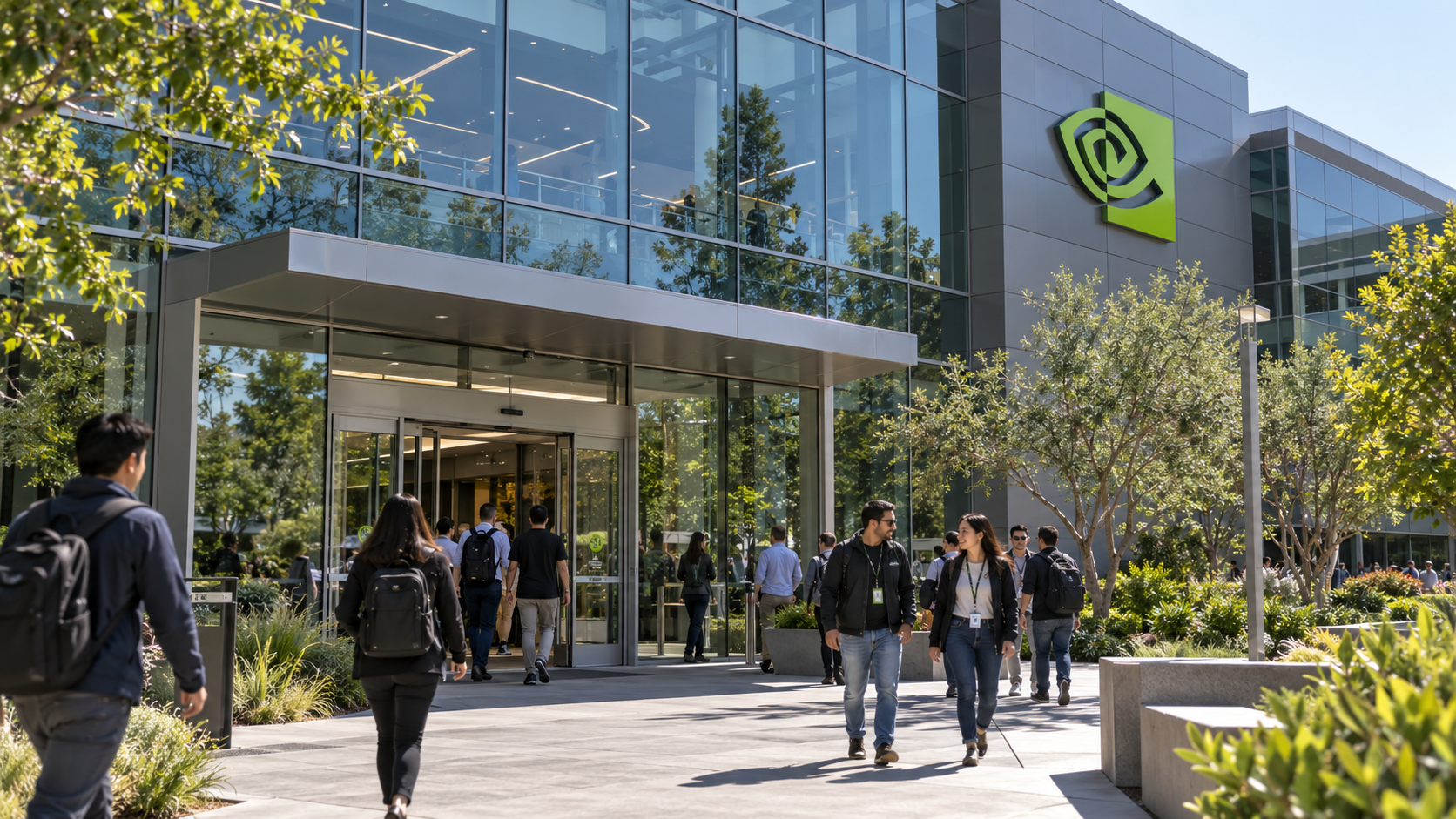
A 2% gain on a falling day for chips shows investors want to see the money spent before they reward it.
Investors had a record in front of them on Monday and treated it as routine. NVIDIA added $150 billion to its stock repurchase capacity, a step the company called "the largest share repurchase authorization increase in history," and its shares rose 2% to $229.25.
The move looks better in context. The chip sector fell that day, with the iShares Semiconductor ETF down 1%, AMD off 1% at $622.75 and Broadcom lower by half a percent. The Nasdaq Composite lost 0.8%. NVIDIA beat its own industry by roughly three percentage points.
Sizing the program
The company now has $235 billion available for buybacks, which means about $85 billion was left over from earlier authorizations. The money is meant to be deployed through fiscal 2028. Spread over roughly two years, that works out to about $75 billion annually if used in full. At Monday's closing price, the new $150 billion alone would buy back around 650 million shares.
Jensen Huang, the chief executive, cast the decision as a byproduct of cash generation. "NVIDIA's growth is being driven by a once-in-a-generation platform shift to AI and accelerated computing," he said. "Our cash generation gives us the capacity to invest in the technologies that advance this transformation and return capital to shareholders."
Confidence or caution
The benign interpretation is that nobody was surprised. NVIDIA has bought back stock steadily, the market already assumes enormous free cash flow, and a larger authorization confirms a pattern rather than revealing a new one. Huang's statement explicitly pairs repurchases with continued investment.
The uneasy interpretation starts from the same facts. The company whose chips anchor the AI buildout is choosing to hand cash back rather than push more of it into the ecosystem that buys those chips. Authorizations do not bind a company to spend, so a headline number can project confidence while leaving room to slow down. A market that responds with 2% may be reserving judgment.
The resolving number will arrive with NVIDIA's next quarterly report: how many dollars of stock it actually repurchased. Spending near a $75 billion annual pace would validate the confident reading. A figure far below it would suggest the authorization is a ceiling, not a plan.