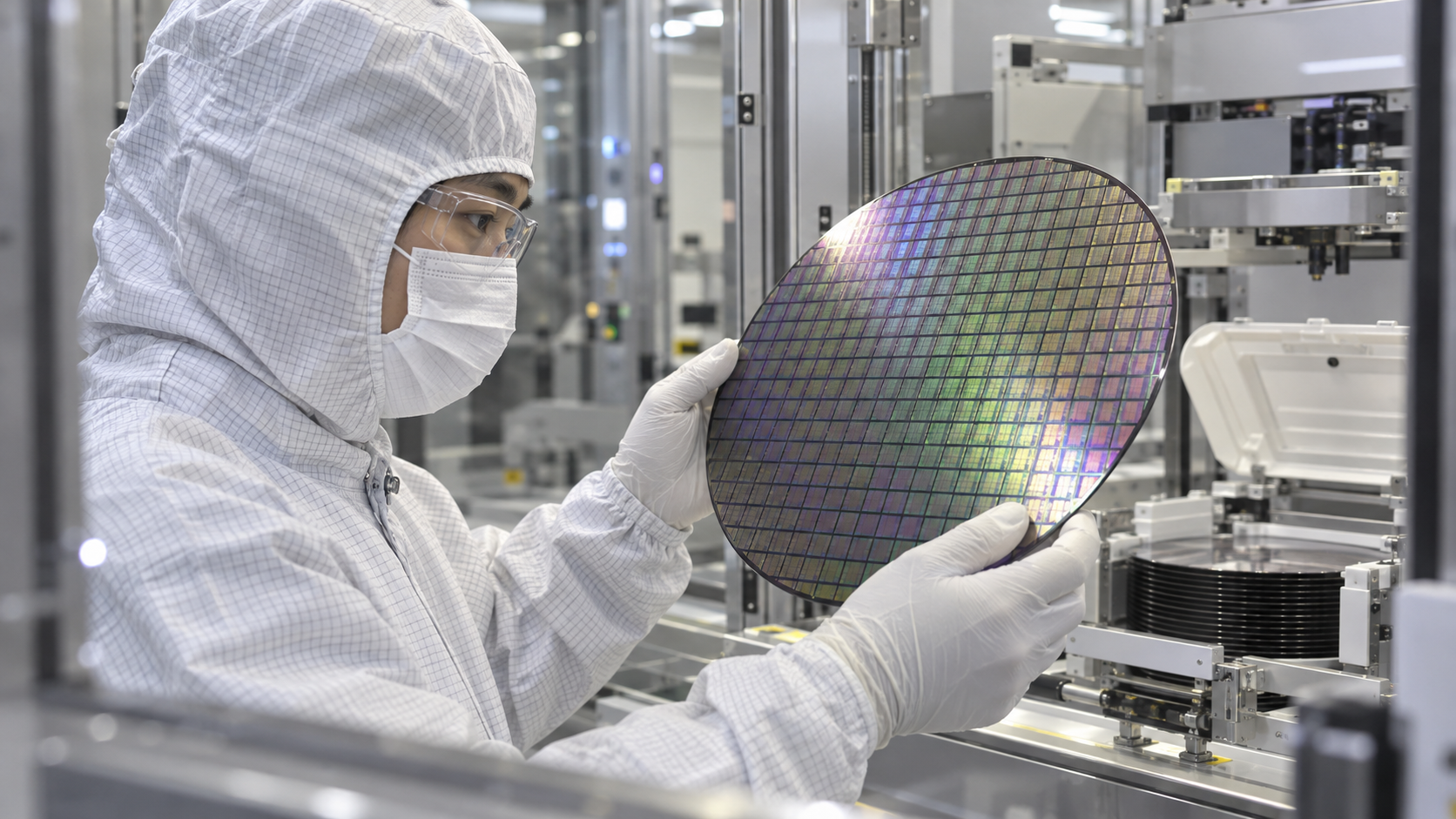
Seoul's benchmark closed at 5,735.66 as AI-linked shares recovered, after losing 17% from Oct. 1 to Oct. 16. Goldman Sachs analysts have said companies buying back their own shares were the only meaningful local buyers during the slide.
South Korea's stock market has become the place where the AI trade's mood swings show up first and largest.
The Kospi closed Wednesday up 3.29% at 5,735.66, a day after falling 215.27 points, or 3.7%, to 5,552.74. Japan's Nikkei 225 closed up 0.85% at 64,621.24.
The rebound coincided with strong news from U.S. technology companies after Tuesday's close. SpaceX reported revenue well above forecasts, driven by its AI business, and Super Micro Computer said its preliminary revenue estimate for the quarter was about $4 billion above the midpoint of its guidance. In U.S. trading on Tuesday, the Nasdaq-100 tracking fund had slipped 0.1% even as the Dow rose about 1%.
The scale of the slide
Wednesday's bounce comes after one of the sharpest drawdowns of the cycle. The Kospi fell 17.11% from Oct. 1 to Oct. 16, the worst performance among major global indexes over that span. Samsung Electronics fell 19.74% and SK Hynix 28.38% over the same period.
Measured from Oct. 2 to Oct. 15, the decline exceeded 20% in eight sessions. In an Oct. 19 note, Goldman Sachs analysts described that fall as a shock comparable in scale to the Asian financial crisis, the global financial crisis and the pandemic. They also noted that the only meaningful local buyers had been companies repurchasing their own shares.
That detail matters for reading Wednesday's move. A market whose main domestic support is corporate buybacks depends heavily on foreign investors deciding to return.
Why Korea is the gauge
Korea is where several strands of the AI trade meet. Memory chips are the largest weights in the index, foreign investors hold large positions in them, and those flows move the won and Korean bond demand. A swing in sentiment about AI spending passes through Seoul faster than through most markets.
The credit side has not given the same all-clear. Five-year credit default swaps on CoreWeave, a large AI cloud provider, rose above 1,100 basis points on Oct. 15. The option-adjusted spread on CCC-rated corporate bonds, the lowest tier of junk debt, stood at 13.10 percentage points over Treasuries on Oct. 19, according to Federal Reserve Bank of St. Louis data, still wider than the 12.97 points recorded on Oct. 16. Both readings predate Wednesday's rebound in Seoul.
Market implications
One reading is that capitulation is complete. Valuations have reset, buybacks are absorbing supply, and the early earnings season is showing AI demand intact, so the bounce marks a low.
A second reading is that this is a relief rally inside a deleveraging. Without signs of improvement in AI-linked credit, the equity bounce lacks confirmation from the funding side.
What to watch
Foreign net buying of Korean shares on Wednesday and Thursday; results from Tesla, Texas Instruments and Lam Research after Wednesday's U.S. close; the won; and credit spreads on AI infrastructure borrowers. Two consecutive days of foreign net buying would be the first evidence that the flow, not just the price, has turned.