Christine Lagarde will step down on Feb. 7, 2027, months before her term was due to end. A day later, euro-area growth beat forecasts while German core inflation fell to 2.1%.
The European Central Bank's next rate decision will be made under a president on her way out, with data now pulling in two directions.
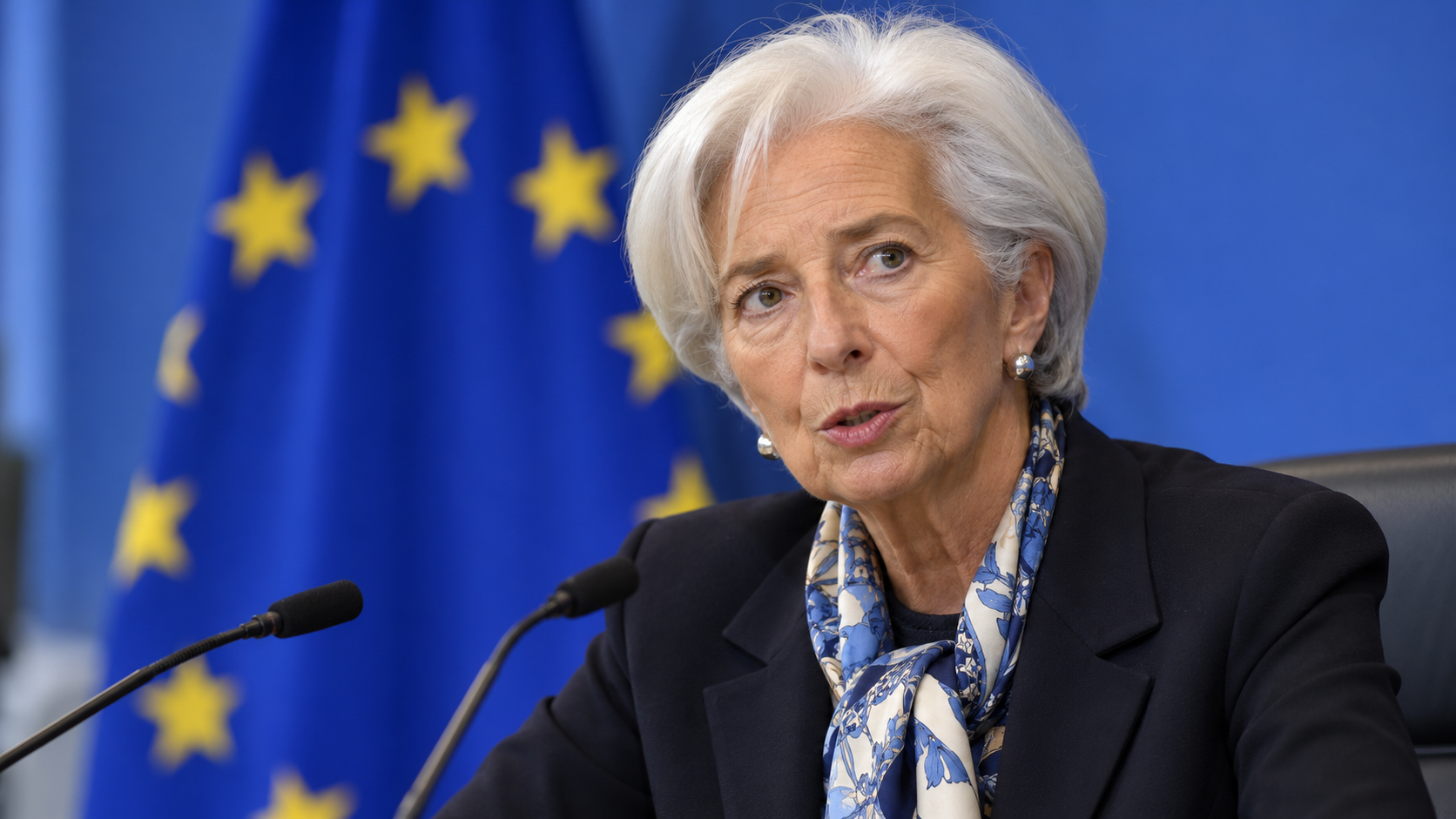
Lagarde told the Governing Council and European Council President Antonio Costa on Thursday that she will step down on Feb. 7, 2027. Her term had been due to run to October 2027. "I don't think that I can remain neutral," she said in explaining the decision. Her successor will be appointed by EU leaders under the bloc's treaty process. She will still lead the December and February policy meetings.
The announcement came hours before the ECB held rates that afternoon. The Governing Council debated whether a hike was appropriate before agreeing unanimously to hold. Markets took the departure calmly: the euro fell about 0.4% to around $1.111 after the decision, a move that coincided with the rate announcement itself.
Friday's numbers
Euro-area output grew 0.4% in the third quarter from the second, Eurostat's preliminary flash estimate showed, double the roughly 0.2% economists expected, though slower than the 0.6% pace of the second quarter. From a year earlier, the economy expanded 1.3%. Spain and the Netherlands grew 0.6% each and Ireland 5.5%, while France contracted 0.1%.
German inflation cooled sharply. Consumer prices rose 2.8% from a year earlier in October, down from 3.3% in September, and fell 0.2% on the month, Destatis said. Core inflation slowed to 2.1% from 2.4%. Energy prices were still up 12.2%, down from 14.9%, and services inflation was 2.5%.
Tightening path or end of the cycle?
The case for more tightening: the Council actually debated a hike, euro-area inflation was 3.8% in September, and France's harmonized inflation reading for October was also 3.8%.
The case that the cycle is close to its end: the ECB itself cited tighter financing conditions, France shrank last quarter, and Germany's core rate is now near the 2% target. A leadership transition could also raise the bar for a fresh move.
The euro traded around $1.115 in early afternoon Friday, down about 0.3% and close to its 52-week low near $1.110. The yield gap between French and German 10-year bonds stood at about 153 basis points on Thursday, down from a peak near 175 basis points on Oct. 22.
What to watch
Eurostat's flash estimate of October euro-area inflation on Nov. 4, the ECB's December meeting and the European Council's succession process. France's presidential election follows in April 2027, about two months after her departure.