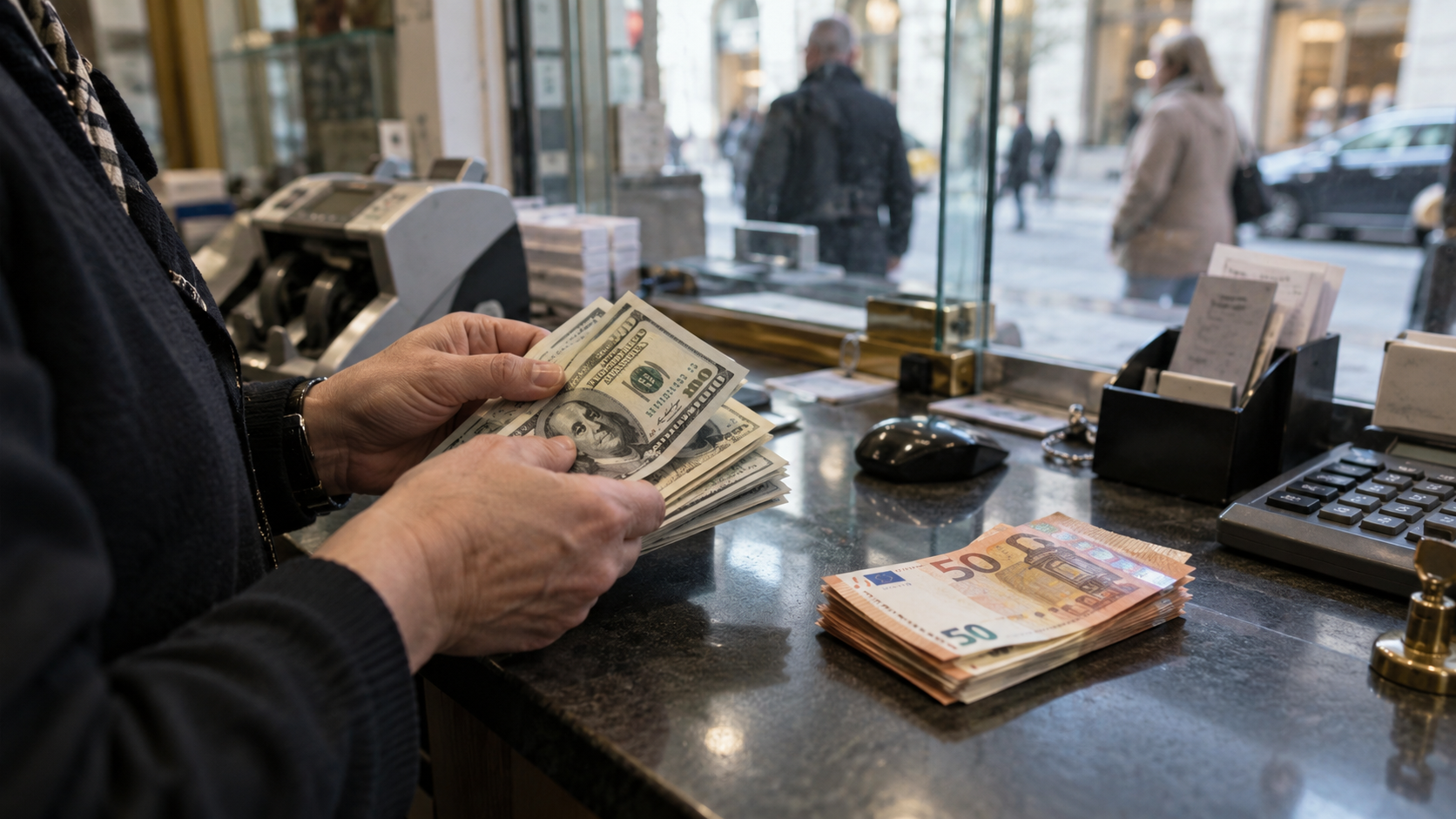
The greenback has climbed 2.2% in 11 sessions as Fed officials line up behind more rate increases and Europe looks less willing to follow. The move is already pressuring gold, the euro and the yen.
The dollar is climbing at a pace it has not matched since the opening weeks of the U.S. war with Iran. The ICE U.S. Dollar Index rose as much as 0.35% on Wednesday to about 100.95, its highest level since late July, extending a gain of 2.2% over the past 11 sessions. That is the index's biggest 11-day advance since the stretch that ended March 13, shortly after the conflict began.
The driver this time is not a flight to safety. It is interest rates. Federal Reserve officials have spent the days since last week's quarter-point hike, the central bank's first increase in three years, arguing that one move may not be enough. Richmond Fed President Thomas Barkin said Tuesday that a single hike was unlikely to tame inflation on its own, and Boston Fed President Susan Collins wrote that she sees "an increased likelihood" that inflation stays "notably" above the Fed's 2% target. Traders now price an 89% chance of at least one more quarter-point increase by December.
Europe is facing the same energy-driven inflation, but its central bank looks less inclined to move again soon. The European Central Bank raised its deposit rate a quarter point to 2.50% earlier this month and projects inflation averaging 3.0% this year, yet it has kept its guidance strictly "meeting-by-meeting." Analysts at ING said Wednesday that "any earlier tightening appears more likely to come from the Fed than the ECB," while still expecting both banks' next moves in December.
Growth forecasts are reinforcing the gap. The Organisation for Economic Co-operation and Development projected Wednesday that the U.S. economy will grow 2.2% in 2026, against 1.0% for the euro area, 1.1% for the United Kingdom and 0.8% for Japan. Faster growth alongside sticky inflation is the combination that keeps a central bank hiking, and the currency market is pricing it that way.
The pressure is visible across the major pairs. The euro slipped to about $1.1404, near a two-month low. The British pound fell to roughly $1.327 after data showed the U.K. services sector grew less than expected in September. The yen weakened to near 158 per dollar, giving back gains it made after the Bank of Japan's recent rate increase, with traders wary that a push toward 160 could draw intervention from Tokyo.
Gold, which has rallied to records in recent years partly as a hedge against a weaker dollar, is feeling the reversal. Gold futures fell about 0.9% to near $4,336 an ounce. Falling oil prices earlier in the week had eased some inflation worries and offered bullion a measure of support, but not enough to offset a firmer greenback.
For investors, the dollar's run is the market's cleanest expression of a Fed that sounds more hawkish than its peers. That makes the next several days of Fed commentary unusually important. The presidents of the New York, Richmond, Cleveland and Philadelphia Fed banks are all scheduled to speak Thursday, and each appearance is a chance to either confirm the rate gap the currency market is pricing or narrow it.