A drone was intercepted over Saudi Aramco's Shaybah field and debris killed two people. Washington ordered nonessential staff out of Saudi Arabia. Brent held above $112, a day after a similar spike faded within hours.
On Wednesday, oil sold its escalation headlines. On Thursday, it kept them.
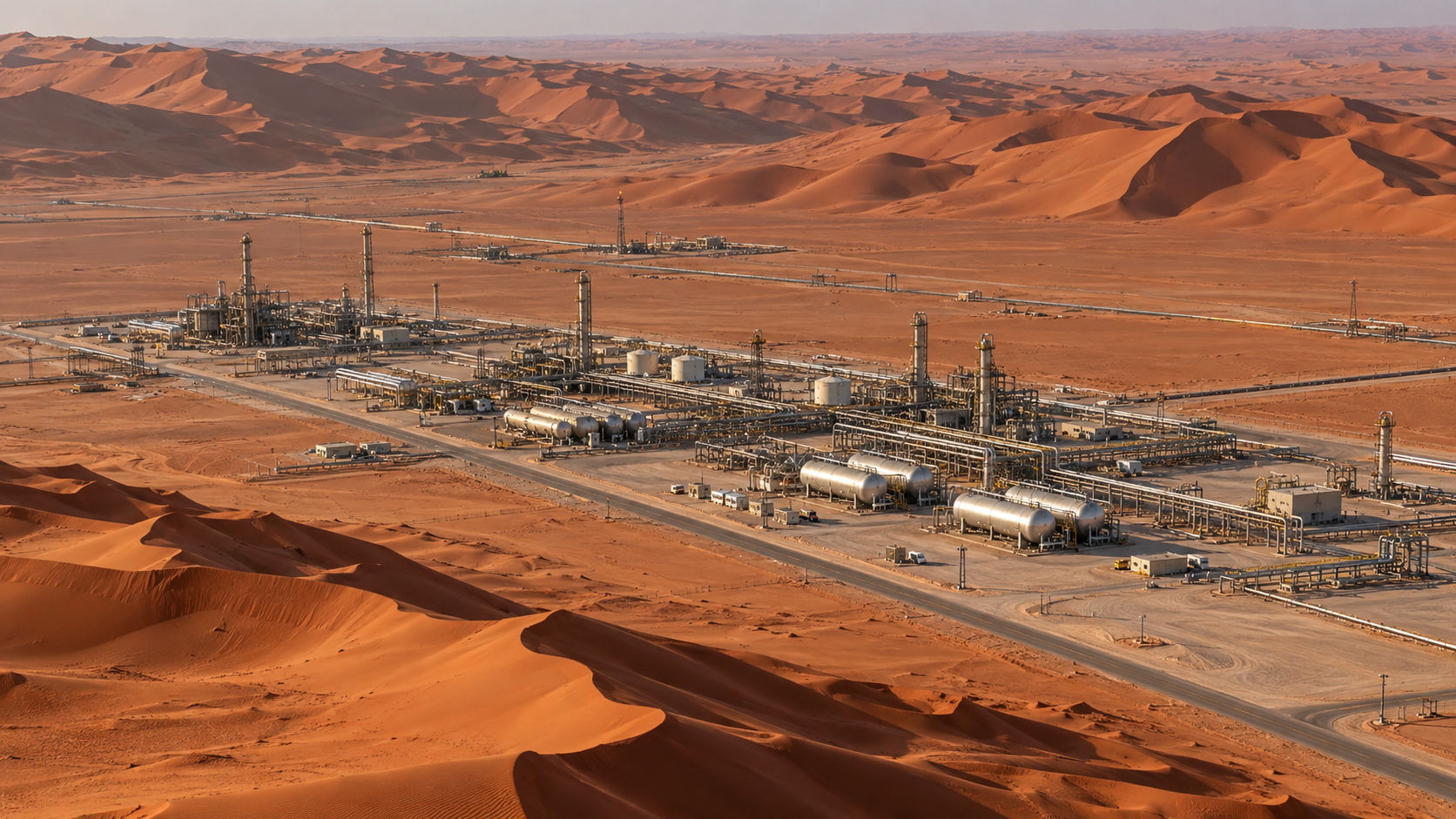
The difference is where the attacks landed. Saudi Arabia's Energy Ministry said a drone "attempting to target a facility at the Shaybah oil field" was intercepted and that falling debris killed two people and injured two others. A vehicle fire broke out outside the facility's perimeter "without affecting operational activities," the ministry said. Shaybah has capacity of about 1 million barrels a day. No group had claimed the attack.
Hours later the State Department said it had "issued an ordered departure for non-emergency U.S. government employees and their family members in Saudi Arabia," according to spokesman Tommy Pigott. A separate attack on King Fahd International Airport in Dammam on Wednesday evening killed at least one person and injured eight, according to reports from the region.
Why Saudi targets matter more
The bullish case for calm in oil has rested on a single set of numbers. Data from Kpler showed Gulf crude exports averaging 24.6 million barrels a day in the week ended Oct. 18, above the prewar average of 23.3 million. Traffic through the Strait of Hormuz has not recovered, but bypass routes, many of them across Saudi territory, have carried the difference.
An attack on Saudi upstream assets goes at that cushion directly. Operations at Shaybah were not affected, by the ministry's account, so physical supply is intact for now. What changed is the risk that the bypass system itself becomes a target.
Brent traded at $112.18 at 5:33 a.m. Eastern Thursday, up 3.1% from Wednesday's close, and held that level for hours. West Texas Intermediate was at $99.46.
A dated window
Two further items added a calendar to the risk. A report citing unnamed U.S. officials said American and Israeli military planners have drawn up options for a short, intensive campaign against Iran after the Nov. 3 midterm elections, with possible targets including nuclear sites, missile and drone capabilities and energy infrastructure. The report said President Trump has not approved any plan, and a White House official said the administration does not comment on plans that "may or may not exist."
Trump told reporters, "We are not negotiating with" Iran, and that "something one way or another will happen, fairly soon." That conflicts with Iranian Foreign Minister Abbas Araghchi's statement on Wednesday that indirect talks were continuing.
Iranian state television, citing the Revolutionary Guard navy, said seven tankers were hit or struck mines in or near Hormuz overnight. That claim had not been confirmed by maritime authorities or ship owners.
Two readings
If the risk premium is rebuilding, Thursday is the turning point: attacks have reached a Saudi oil field and an airport, Washington has reduced its presence in the largest Gulf producer, and a reported strike window has a start date.
If supply holds, the premium can fade again. Shaybah kept producing, the latest weekly export data were above prewar levels, the tanker claims are one party's account and the reported strike plan has not been approved.
What to watch
Whether Brent holds above $110 through the U.S. session; any confirmation or denial of the tanker claims; the Kpler export tally for the week ending Oct. 25, the first to include the Shaybah attack and the U.S. drawdown; and any official U.S. response to the strike-planning report.