The valuation is roughly four times its 2022 mark, for a company with one operating commercial system.
The Boring Company announced a $3 billion Series D financing at a $23 billion post-money valuation through a statement on its own official account on or around . Its previously reported valuation, from a 2022 round, was approximately $5.7 billion.
The round is led by the United Arab Emirates, described across reporting as UAE government and state-affiliated investment entities. No single fund vehicle has been named by any source, and the lead should not be attributed to a specific sovereign fund. Participating investors include Sequoia Capital, Andreessen Horowitz, Temasek, Valor Equity Partners, Vy Capital, Human Capital, Shamal Holding and Baron Capital.
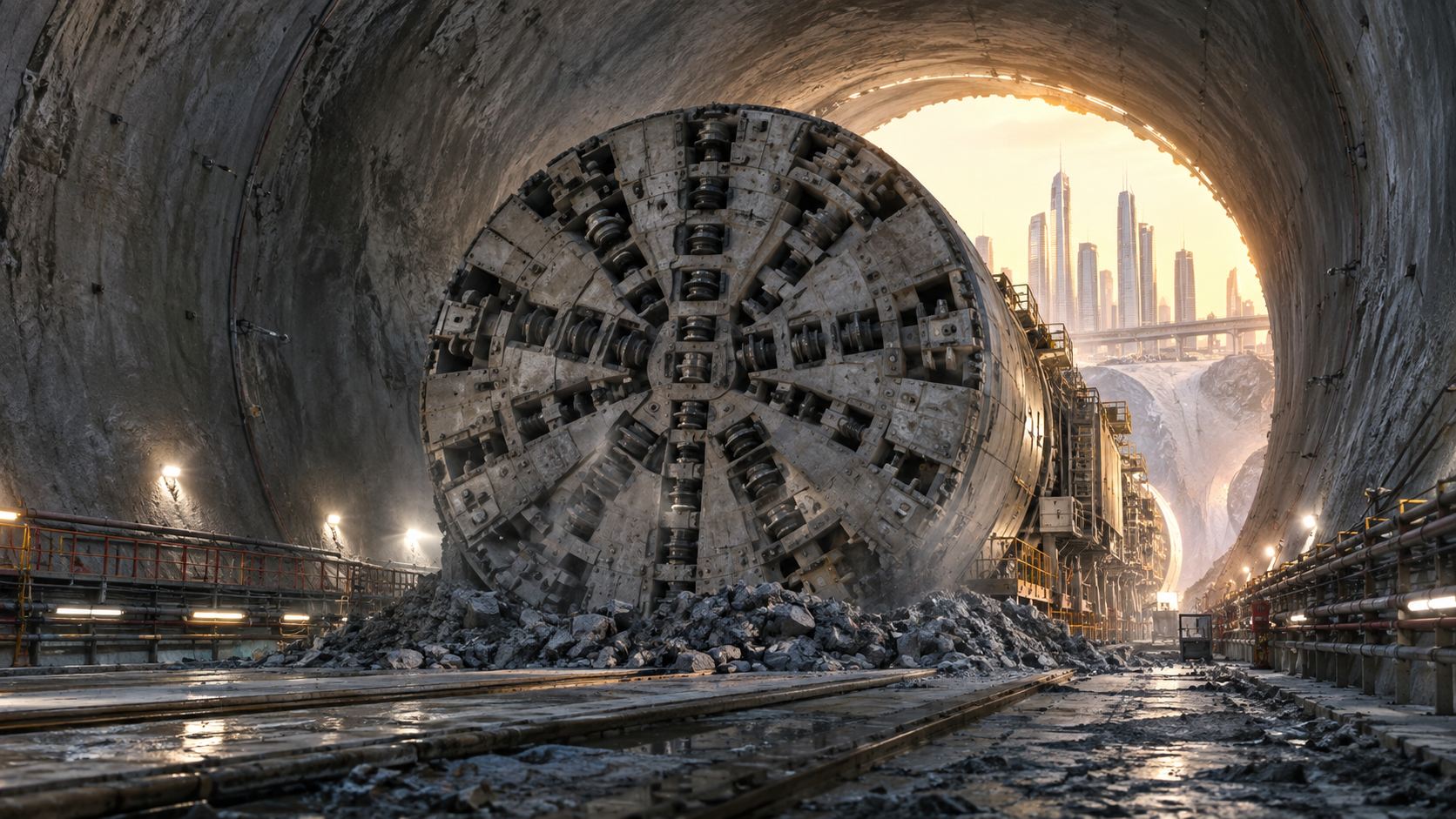
Stated use of proceeds includes hiring across engineering, operations and production, continued development of the company's Loop projects, research and development on its Prufrock tunnel boring machines, and construction of more than 150 kilometers of tunnel within the UAE.
The structure is unusual, and it is the point
The UAE is simultaneously the round's lead investor and the company's primary near-term customer. Those are two different relationships with two different objectives, held by one counterparty.
An investor wants the enterprise to be worth more than it paid. A customer wants delivery on a specific program at a workable price. When the same party occupies both seats, the valuation stops being a clean read on what the technology is worth in the open market and starts carrying some component of what securing the company's capacity and attention is worth to that specific buyer.
The traction question
The Las Vegas Loop remains the company's only operating commercial passenger system, reported to have carried more than 4 million passengers to date. A number of previously announced projects in other markets have been delayed, scaled back or have not proceeded since the company's 2017 founding, a characterization drawn from reporting rather than from any company-published project scorecard.
A roughly four-fold valuation step-up, calculated from the two disclosed valuation figures rather than stated by the company, for a capital-intensive infrastructure business with one commercial deployment, is a large move to underwrite on demonstrated revenue. It is a much more ordinary move to underwrite on a committed 150-kilometer build program.
Both readings are live
The case for genuine conviction is the co-investor list. Sequoia and Andreessen Horowitz are not passive participants in a sovereign accommodation, and their presence alongside the UAE rather than behind it suggests independent underwriting of the commercial plan.
The case against is that co-investing alongside a sovereign anchor that is also the customer is a materially different underwriting exercise from pricing a company on its open-market prospects. Delivery certainty is underwritten by the counterparty who wants the tunnels. Neither reading is resolved by anything disclosed.
Not disclosed
Ownership percentages acquired by any investor. Company revenue, profitability or unit economics. The status of each previously announced non-Las-Vegas project.
The observable test is straightforward. Either UAE tunnel construction begins at the stated scale, or it does not.