

For two years, markets have watched the front end. Fed funds, dot plots, hike-or-hold. That is where the drama lived.
The drama has moved.
The 30-year US Treasury yield touched 5.33% on Tuesday, its highest level since April 2007. The Fed does not set the 30-year. Professional buyers do, and their view of US fiscal spending, long-run inflation, and future Treasury supply right now is: not comfortable.
What follows is what happens when the long end speaks louder than the central bank. It sets today's tone for the FOMC minutes at 2 PM.
The 30-year is telling a story the Fed didn't write
The number that mattered Tuesday: 5.337%. That was the intraday high on the US 30-year Treasury bond. The last time this yield printed at that level, George W. Bush was in his second term and the iPhone had not been invented. It closed at 5.285%. The 10-year sat at 4.739%. Long yields rising faster than short yields is the classic bear steepener, and it shows up when the bond market decides the government is issuing too much debt, inflation is too sticky, or both.
Both apply. The US fiscal deficit posted its highest monthly print in July since March 2021. Treasury auctioned 10-year and 30-year paper at the highest yields since 2007 and 2001. Foreign holders (UK, China, Japan) trimmed in June. And hyperscaler AI issuance now competes with the government for the same bond-buyer wallet: Alphabet raised $80 billion; Meta and Oracle have multi-tranche deals of their own.
The signal?
Any equity valuation model that discounts cash flows against the 10-year gets rerated when yields rise 20 to 30 basis points in a month. High-multiple growth names carry the most duration. That is why Nvidia (NVDA), Meta (META), Tesla (TSLA), and Oracle (ORCL) all traded down yesterday. If the 30-year prints above 5.40% this week, the AI trade gets an uglier stress test.
Mode Mobile won't be under-the-radar much longer.
The price on pre-IPO shares goes up soon — and over 60,000 investors have already put in more than $100 million, including Shark Tank's Kevin Harrington.
Mode is still private — but the Nasdaq ticker $MODE is already secured. And this price change could signal a public listing is getting closer.
The traction is already there:
- 490M+ users
- $115M+ lifetime revenue
- $1B+ earned and saved by users
- 170+ countries served
- Deloitte's #1 fastest-growing software company in North America — 32,481% growth
Uber turned cars into taxis. Airbnb turned homes into hotels. Mode is turning everyday phone use into something that pays you back.
This isn't early-stage hype. It's about timing.
Fed minutes at 2 PM: read the words, not the vote
The FOMC minutes from July 28-29 drop this afternoon. The vote is old news: the Committee held at 3.50-3.75% with a three-way hike dissent from Hammack, Kashkari, and Logan. Most unified hawkish dissent since September 2016.
What matters today is what the minutes reveal about how divided the room was. Two things to watch: how many non-voting members expressed sympathy for the hikers under Warsh's terser statement regime, and whether the minutes reference the 30-year yield explicitly. Warsh has argued tighter financial conditions do part of the Fed's job for it. If the minutes lean into that logic, hikes get less likely and equities breathe.
CME FedWatch prices a 68% probability of at least one hike by year-end, up from 31% earlier this month. September 15-16 carries a fresh dot plot.
The signal?
Minutes with hike sympathy push September odds toward 50-50 and pressure the long end further. Minutes emphasising patience trigger a duration rally and relief bid in growth. Position sizing today matters more than usual.
Jensen Huang just committed $105 billion in an SEC filing
On Monday, Nvidia filed an 8-K that quietly changed the size of the AI capex story.
Nvidia will provide up to $105 billion in credit support for a new AI data center for OpenAI in Ohio, backing 4.25 gigawatts of compute with an option for another 3.75. SoftBank (SFTBY) subsidiary SB Energy will build and manage the campus in Pike County under a 20-year lease to OpenAI. Nvidia will invest $1.5 billion in SB Energy directly. Capacity comes online in phases from 2028.
Huang's quote in the filing: "We are securing long-lived infrastructure for NVIDIA compute so OpenAI can deploy the most productive AI factories." Read that again. Not chips. Not GPUs. "AI factories." Nvidia is repositioning from component vendor to infrastructure landlord.
The tension: Nvidia is guaranteeing debt used to buy Nvidia's own chips, hosted in a facility leased to a company Nvidia holds a stake in, powered by an entity Nvidia is investing in. Every arrow points back to the same company. Analysts call this circular financing. Nvidia calls it vertical integration. Both are accurate. $105 billion is roughly a third of Nvidia's current annual data center revenue run rate, committed to a project that does not go live until 2028. Long-duration bet at a moment when the 30-year is telling investors to be careful with long-duration bets.
The signal?
Watch SB Energy's IPO next month. Strong pricing validates equity funding of the AI buildout. Weak pricing forces more corporate debt into an already crowded bond market.
The REAL Reason Trump Is Invading Iran
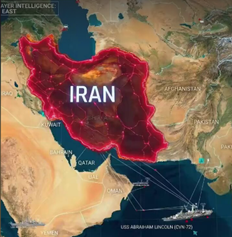
For a moment…
Forget about Trump’s ties to Israel.
Forget about reports of Iran’s nuclear program.
Because my research has led me to believe we’re risking World War 3 with Iran for a completely different reason.
Click here to find out what it is.
If you have even a single dollar invested in the U.S. stock market, this is going to directly impact you.
Japan's version of the same problem
The Nikkei 225 fell as much as 3.1% Wednesday in Tokyo, memory chipmaker Kioxia and fiber optic cablemaker Furukawa Electric leading. Japan's 10-year JGB hit 2.95% Tuesday, a 30-year high, as the Bank of Japan is expected to raise its policy rate imminently. Meanwhile Japan's Q2 GDP came in at 1.1% annualised, well short of the 2.0% consensus.
Same pattern as the US, compressed. Long-end yields rising on fiscal and inflation concerns. Central bank credibility in transition. Growth softer than the market wants. A benchmark carried higher by AI-supply-chain names, now vulnerable to rate sensitivity.
The signal?
The correlation between US 30-year yields and Nikkei tech names has tightened this month. If US yields keep rising, Japanese chip and networking suppliers lead the downside in Asia. The AI trade is now a global duration trade, and duration is what is being sold.
Moutai's slump and China's quiet economic reorganisation
For years, Kweichow Moutai (maker of a fiery Chinese sorghum spirit called baijiu) was the largest listed company in mainland China by market cap. From 2020 to 2023, it topped the Shanghai exchange, 90% gross margins, bottles selling above $300 apiece, treated as a permanent feature of Chinese wealth culture. That story is quietly ending.
Moutai reported rare drops in net profit in its half-year report, following its first annual profit decline on record last year. Wholesale prices for flagship Feitian baijiu are down 16-17% this year to record lows. Sichuan Swellfun reported a 57% profit drop. Jiugui Liquor warned of a 90% earnings collapse.
The explanation is not about liquor. Baijiu consumption was historically driven by real estate business banquets and government official entertaining. Beijing's anti-corruption crackdown killed the second. The property collapse is destroying the first. The industries growing in China now (semiconductors, EVs, AI, renewable manufacturing) are staffed by younger technical workers who do not build careers over old distilled spirits at boozy dinners.
The signal?
Moutai's slump is compositional, not bearish. Capital is flowing out of consumer luxury and property proxies into technology and manufacturing, mirroring the broader rotation into Chinese semiconductor names this year. Read baijiu weakness as economic reallocation.
Satellite Confirms: Elon Musk Activating Strange 'Dark Energy' Across U.S. South
Confirmed by satellites 300 miles above the Earth's surface... Elon Musk is rolling out a breakthrough technology that could replace our need for foreign oil and ignite a $10 trillion boom a small group of stocks. Click here to learn how you can invest in this before it becomes mainstream.
- The FOMC July minutes at 2 PM Eastern are today's biggest catalyst and the last major Fed communication before Warsh's Jackson Hole keynote on August 28.
- Walmart (WMT) and Target (TGT) both report Thursday morning, delivering the quarter's most important consumer read. With July retail sales down 0.6% and Home Depot flagging frozen housing, Walmart's tariff-pass-through commentary shows whether lower- and middle-income households are still absorbing price increases.
- Nvidia earnings August 26 now carry the OpenAI Ohio financing overhang. Analysts want detail on how the $105 billion commitment shows up in guidance, receivables risk, and balance sheet.
- The signal across all three?
- Fed minutes set the tone. Walmart tests the consumer. Nvidia stress-tests the AI trade. The next six sessions decide whether the bond selloff was a positioning wobble or the start of a risk-off phase in equities.
That's it for today's Slate.
Fed minutes at 2 PM. Stay close to the tape.
Today's reply prompt:If the 30-year Treasury settles above 5.40% by Friday, what is the first trade you make?
Tickers: MS FOMC PM UK NVDA META TSLA ORCL MODE CME SFTBY SB JGB WMT TGT POLL