

On Wednesday, the S&P Global flash Composite PMI hit 58.4, the fastest pace of US business expansion in more than five years. That same week, Costco Wholesale (COST) posted 11% revenue growth and 150 million cardholders spending at record levels. And yet, consumer sentiment sits near its lowest reading in the survey's 74-year history. The American consumer is spending more and enjoying it less. Today's final UMich reading at 10 AM ET will tell us if the picture is getting better or worse. Either way, the gap between what the economy is doing and how people feel about it has never been wider.
But before we get to that, let's take a quick look at the markets and what matters...
3 Movers in 3 Minutes
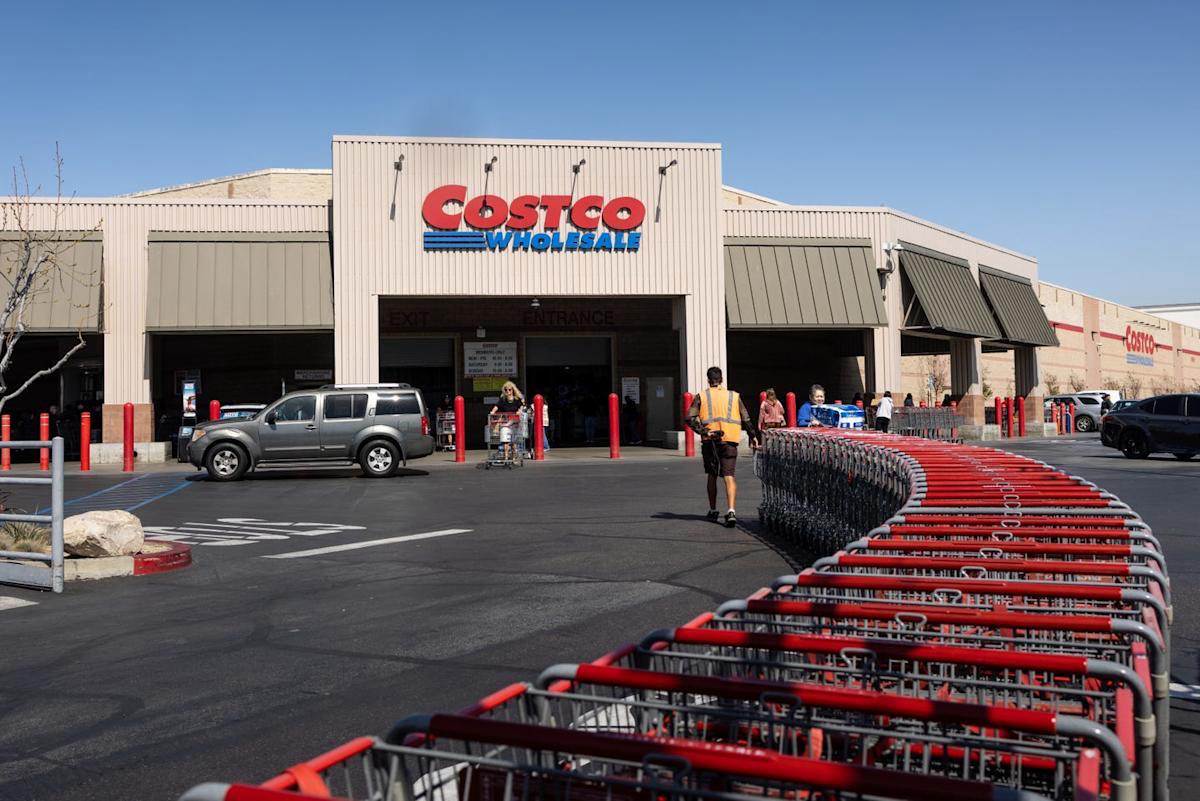
1. Costco Wholesale (COST) beats on both lines. The warehouse giant posted Q4 revenue of $95.7 billion, up 11.1% year over year, with EPS of $6.75 versus the $6.53 consensus. Comparable sales rose 9.4%, and total cardholders hit 150.4 million with a worldwide renewal rate of 89.8%. One asterisk: $0.15 of that EPS came from non-recurring IEEPA tariff refunds. Strip that out, and the beat is slimmer than it appears.
2. Starbucks (SBUX) shutters 250 stores. CEO Brian Niccol's second major round of North American closures targets 1% of the chain's 18,000 locations. Starbucks expects roughly $300 million in restructuring charges. The company cut its FY26 net new store opening forecast to 440, down from an earlier range of 600 to 650. Last September, Niccol closed 627 locations. The pruning is accelerating.
3. Trump-Xi summit: ceremony, not substance. Xi Jinping's first state visit to Washington in over a decade produced a two-month extension of the existing trade truce, warm toasts at a lavish White House dinner, and very little else. No breakthroughs on rare earths, AI export controls, or Taiwan. Markets had already priced in the truce extension after Treasury Secretary Bessent confirmed it Wednesday.
3 Signals for Today
UMich Consumer Sentiment (Final, September) at 10:00 AM ET. The preliminary reading cratered to 47.8, the second-lowest on record. Year-ahead inflation expectations surged to 4.6%. Watch the final print for any revision, particularly on inflation expectations, which the Fed monitors closely.
August Durable Goods Orders at 8:30 AM ET.The Schwab preview flags this as the session's first hard data point. A strong number in the current environment would be bad news for anyone hoping for a rate-hike pause.
Costco (COST) regular-session reaction. The after-hours earnings beat will face the real test when the broader market prices in the tariff-refund asterisk and the stock's 43x trailing PE.
The Market Is Already Looking Beyond the Mag 7
The Magnificent Seven reshaped the market, but leadership rarely stays concentrated forever.
As these giants mature, history shows leadership rotates toward companies with growing cash flows and scalable business models.
Our analysts believe that shift is already underway.
That’s why they created These 7 Stocks Will Be Magnificent in the second half of 2026, a FREE report highlighting the next group positioned to step into market leadership.
And with that out of the way, let's get to today's big story: the American consumer is spending more than ever and hating every minute of it.
The Sip
Booming and Miserable
On Wednesday, S&P Global reported that its flash US Composite PMI hit 58.4 in September. For the unfamiliar, anything above 50 signals expansion. Anything above 55 is a boom. At 58.4, the US private sector is growing at its fastest clip since July 2021, back when the economy was still riding the post-lockdown sugar rush.
Employment is surging at a pace not seen in over four years. New orders are expanding at their highest rate in 20 months. Manufacturing output is accelerating. Chris Williamson, S&P Global's chief business economist, said the data points to annualized GDP growth of around 5%.
The same day, Costco Wholesale posted the kind of quarter that makes retail analysts blush. Net sales of $93.9 billion, up 11.2%. Comparable sales up 9.4%. Digitally enabled sales growing at nearly 20%. Total cardholders: 150.4 million, with a renewal rate of 89.8%. A consumer base spending freely and loyally.
And yet.
The Mood in the Room
The University of Michigan's preliminary consumer sentiment index for September plunged to 47.8. That is the second-lowest reading since the survey began in 1952. It is lower than any point during the 2008 financial crisis. Lower than the worst of the pandemic shutdowns. The only print ever worse was 44.8 in May of this year.
To be clear: the American consumer is not just pessimistic. They are more pessimistic than at almost any point in modern economic history.
Year-ahead inflation expectations jumped to 4.6% in September, the highest since June. The five-year outlook edged up to 3.4%. Overall sentiment is now 16% below February, before the Iran conflict escalated, and 13% below a year ago. According to the University of Michigan's own release, sentiment declined across all political groups, with year-ahead expectations for both personal finances and business conditions posting sharp drops.
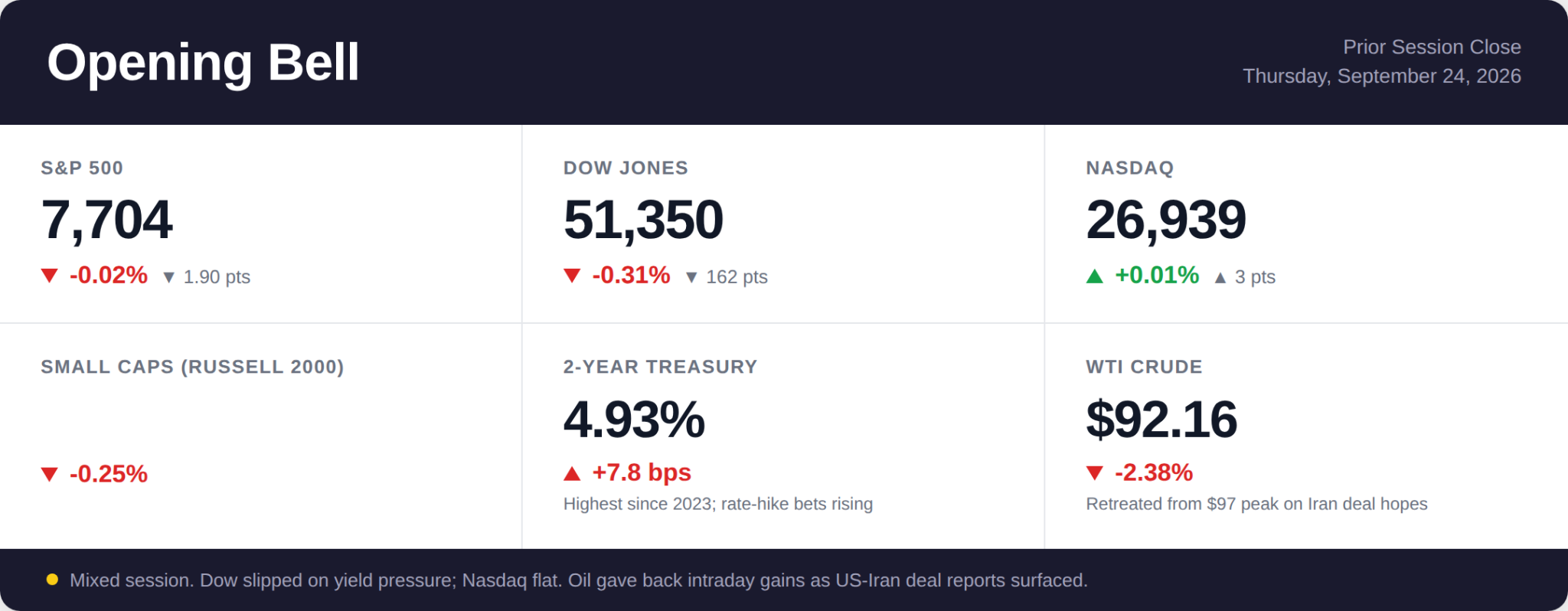
Gasoline is doing a lot of the work. With WTI crude still north of $90 and the Strait of Hormuz partially blocked, pump prices have surged to levels not seen since 2022. In the May reading, 57% of respondents spontaneously cited high prices as eroding their finances, before they were even asked about inflation.
The Gap That Won't Close
Here is where it gets strange.
The cash register and the survey are telling opposite stories. Retail sales have been climbing. Personal consumption expenditure has risen every month of 2026. The labor market is steady. Costco just proved that the consumer is not merely alive but thriving. McDonald's (MCD), on the other hand, told investors this week that high inflation and flat restaurant traffic are here to stay. Its shares fell to four-year lows. And Starbucks (SBUX) just closed 250 stores in North America, its second major round of closures under CEO Brian Niccol.
The Closest Thing to a Virtual AI Monopoly Wall Street Is Ignoring
A little-known company is building what may be the closest thing to a virtual monopoly the AI era has ever seen.
Only 3...
Yet it beat Apple, Amazon, and the S&P 500 combined...
While paying out $146,000 in total dividends on a 1,000-share stake.
Kevin O'Leary calls what it controls a "unicorn."
Right now, it's trading at a rare discount.
>>>Whitney Tilson reveals the name, completely free.<<<
This ad is sent on behalf of Stansberry Research, 1125 N Charles St, Baltimore, MD 21201. If you would like to optout from receiving offers from Stansberry Research please click here.
So the consumer is spending more at Costco but not at McDonald's. Buying in bulk but cutting back on coffee. This is not irrational behavior. This is triage. When grocery inflation runs hot and gas eats into household budgets, consumers trade down. They shift from convenience to value. They swap a $6 latte for a Costco rotisserie chicken and a $10 case of sparkling water.
What makes this moment different from past downturns is that spending has not actually collapsed. The misery is emotional, not yet behavioral. A Kansas City Federal Reserve paper from February 2026, titled "Forecasting with Feelings," found that the link between consumer sentiment and actual household spending has been historically modest. People say they feel terrible. Then they go buy a 55-inch TV at Costco.
But the question the market cares about is whether feelings eventually become actions. And the answer, historically, is: sometimes. Not always, and not quickly, but when sentiment stays this low for long enough, it starts to seep into real decisions. Delayed car purchases. Postponed renovations. Smaller holiday budgets. Sentiment is a leading indicator with a terrible track record, except for the times it works.
What Breaks First
The real risk is not that consumers stop spending. It is that the Fed reads the PMI data and keeps hiking.
A Composite PMI of 58.4, combined with oil above $90 and wages growing, gives the Federal Reserve no room to pause. Philadelphia Fed president Anna Paulson said Thursday that inflation "needs attention" and further hikes may be required. New York Fed president John Williams echoed the message, saying the Fed would likely need to hike again before year-end. The 10-year Treasury just crossed 5.20%, its highest since 2007. The 30-year hit levels not seen since 2004.
That is the trap. The economy is too strong for the Fed to ease, but the consumer is already cracking at the margins. The companies that sell essentials at scale, like Costco, are winning. The companies that sell discretionary convenience, like Starbucks and McDonald's, are struggling. Costco just opened 28 new warehouses and plans 33 more next year. Starbucks just cut its new-store forecast from 650 to 440 and closed 250 locations this week. Two consumer companies, two completely different Americas.
The gap between those two Americas is getting wider every quarter. And if the Fed keeps tightening into an economy where the top half is booming and the bottom half is choosing between gas and groceries, the disconnect does not resolve. It deepens.
Porter Stansberry's Critical New Warning:
Trump Is Replacing The U.S. Dollar
"The last time America reset its money, it created 1,300 millionaires every day. This could be bigger."
The MarketSipsTakeaway
Today's final UMich consumer sentiment reading at 10 AM ET will update the mood, but it will not resolve the tension. The real signal is not the headline number. It is the inflation expectations component. If year-ahead expectations hold at or above 4.6%, the Fed has its justification to keep hiking, regardless of what consumers say they feel. And if that happens, the divergence between corporate revenue growth and consumer confidence is not a paradox. It is a countdown. One of them is wrong. The question is which one blinks first.
Until then, sip slowly!
The Market Sip Desk
3 STOCKS OUR SIGNAL ENGINE SAYS TO WATCH CAREFULLY
Three stocks. Three signals. Two weeks later, the story changed.
On September 2, we published three market questions around KLAC, HPE and PG&E.
Two weeks later, every one of them produced new evidence.
One company delivered record revenue and raised its outlook.
Another saw weakness spread across its entire peer group.
And in the third, a market risk that had only been showing up beneath the surface suddenly became explicit.
Yet none of these stories is finished.
That’s why we built Market Tell.
To track the signals that keep moving after the headline is gone — and show you what investors should be watching next.
We’ve put the latest analysis into a new FREE Special Report:
3 Stocks at a Major Turning Point
See what changed… what still hasn’t been resolved… and the signals we’re watching now.
Tickers: UI MS PMI COST ET EPS IEEPA SBUX PE WTI MCD MD TV WATCH KLAC HPE PG POLL