

There is a kind of trading day that arrives maybe six times a year. Two data points land inside the same twelve hours and neither can be second-guessed by the other.
Today is one of them.
July PCE hits at 8:30 AM. Nvidia reports after the close. One tells you what the Fed is allowed to do this autumn. The other tells you whether the trade that drove every up-move since April still has runway. A soft PCE cannot rescue a Nvidia miss. A blockbuster Nvidia beat cannot save a hot inflation print. They have to be right independently.
Yesterday's tape said positioning is defensive on one leg and constructive on the other. We'll get to which is which.
Two prints. Twelve hours. No hedges.
Consensus on headline PCE is 3.6% year-over-year, core 3.3%. Both are expected to hold steady or ease slightly from June, both remain comfortably above the Fed's 2% target, and neither is expected to move the September rate decision alone. What the report does move is the term premium argument. Every basis point above consensus is ammunition for the fiscal-stress narrative that has kept the 30-year Treasury near 5.20% for a month.
Nvidia arrives after the close. Consensus sits at $2.09 EPS on $92.07 billion in revenue, roughly 97% and 54% year-over-year growth. The number the desk cares about is data centre revenue, expected around $80 billion, plus any commentary on the Blackwell-to-Vera Rubin transition, which Bloomberg reported over the weekend will carry price increases of more than 15% for early 2027 shipments.
Chip stocks priced Tuesday like the fear had already been paid. Nvidia (NVDA) closed up nearly 2%, snapping a seven-day decline. Advanced Micro Devices (AMD) added 4.9%. Micron (MU) gained 2.5%. That is a squeeze into the print, not a broad conviction rally. Squeezes reverse on any hint of caution in the call.
The market signal?
A beat with Q3 revenue guided above $95 billion sends the Nasdaq through 26,500 by Thursday. Anything softer on data centre gross margin, and the AI trade re-tests last week's lows before Warsh even opens his mouth on Friday.
The 7 Stocks Built to Outlast the Market
Some stocks are built for a quarter… others for a lifetime.
Our 7 Stocks to Buy and Hold Forever report reveals companies with the strength to deliver year after year - through recessions, rate hikes, and even the next crash.
One is a tech leader with a 15% payout ratio - leaving decades of room for dividend growth.
Another is a utility that’s paid every quarter for 96 years straight.
And that’s not all - we’ve included 5 more companies that treat payouts as high priority.
These are the stocks that anchor portfolios and keep paying.
This is your chance to see all 7 names and tickers - from a consumer staples powerhouse with 20 years of outperformance to a healthcare leader with 61 years of payout hikes.
The report is free for a limited time - go here to get it now.
Expectations printed 68.2. That's the seventh month.
Tuesday's tape was cleaner than last week's. The S&P 500 rose 0.32% to 7,677.28, the Nasdaq Composite 0.66% to 26,151.30, the Dow 0.30% to 53,577.40. The 10-year Treasury yield dropped more than 7 basis points to 4.625% on the CNBC report that Treasury may tap the $1 trillion General Account to fund the buyback expansion. WTI fell more than 3% as Iran headlines cooled.
Sitting inside the green tape was a number worth reading. The Conference Board's Consumer Confidence Index dropped to 89.4 in August from 90.2 in July. The Present Situation Index rose 6.8 points to 121.2, a four-month high. Consumers feel fine right now.
The forward number is the one to circle. The Expectations Index dropped 5.8 points to 68.2, its weakest since January. Any print below 80 has historically signalled recession within twelve months. This is the seventh consecutive month below that line, with 26.1% of consumers now expecting fewer jobs.
The market signal?
While the Present Situation Index holds above 120, nobody is calling recession from confidence data alone. But seven months below 80 on expectations puts a soft floor under the September cut case even before Warsh speaks. If July PCE prints 2.8% or lower this morning, the doves get their loudest week of the year.
Dick's core comps grew 4.9%. The stock lost a third of its value.
Dick's Sporting Goods (DKS) closed Tuesday at $124.32, down 30.67%, its worst session since 2023. Volume ran 1,807% above the three-month average. Academy Sports and Outdoors (ASO) fell 5.8% in sympathy. About $5.5 billion in market cap evaporated in one afternoon.
The headline was a miss: Q2 adjusted EPS of $3.53 against $3.78 consensus, revenue of $5.59 billion versus $5.64 billion expected. Technical misses, both, but neither costs you a third of your market cap alone.
The real story is Foot Locker. Dick's acquired it for roughly $2.5 billion in September 2025. Yesterday it disclosed Foot Locker comparable sales fell 3.6% in the quarter. Dick's core namesake stores, meanwhile, grew comps 4.9% on strong FIFA World Cup demand. The core is fine. The acquired business is bleeding through the consolidated print, and the company now expects up to $750 million in pre-tax restructuring charges from Foot Locker asset reviews, including $200 million this fiscal year. Full-year revenue guidance came down to $21.9-$22.2 billion.
Foot Locker was supposed to give Dick's a footwear moat and Gen-Z distribution. Instead it gave them a promotional environment no amount of operational excellence can absorb in the short term.
The market signal?
The DKS pattern is now the retail M&A pattern: acquire in optimism, integrate into a downturn in the acquired category, watch the stronger business get punished for the weaker one. Watch whether ASO holds $43 today.
"A Dangerous Financial Plan Unfolding in D.C. Could Cost You 40% of Your Wealth"

Former Goldman Sachs executive who traded through Black Monday warns this plan is all written down in black and white, spearheaded by a financial insider who infiltrated the Federal Reserve... It's gone "viral" in the hedge fund circles… and yet practically nobody on Main Street understands this financial shock playing out across America. He lays out all the evidence... plus a detailed roadmap for exactly what to do. (And it doesn't require shorting... options... or perfectly "timing the market.")
You must see this critical market briefing today.
This ad is sent on behalf of Stansberry Research, 1125 N Charles St, Baltimore, MD 21201. If you would like to optout from receiving offers from Stansberry Research please click here.
Intuit beat by 12%. Guidance guided them 7% lower.
After Tuesday's close, Intuit (INTU) delivered a decisive Q4 beat. Non-GAAP EPS of $4.03 against $3.58 consensus. Revenue of $4.354 billion against $4.27 billion. Global Business Solutions grew 16% for fiscal 2026, TurboTax Live grew 37%, Credit Karma grew 20%. The company just crossed $20 billion in annual revenue for the first time.
The stock fell around 8% after-hours to around $330. The reason lives in the fiscal 2027 outlook. Intuit guided full-year revenue growth to 9-10%, a sharp step down from 14% in fiscal 2026. TurboTax segment growth guided to just 2-3%. Mailchimp guided to down 1% to flat, and will be broken out as a separate segment beginning fiscal 2027, which is management-speak for not wanting the group multiple dragged down. Q1 EPS guide came in at $2.44-$2.48, well below the $4.02 consensus, though management attributed most of the gap to revised stock-based compensation accounting.
This is Goldman Sachs vindicated with a receipt. In June, Goldman downgraded Intuit from Neutral to Sell with a $276 target, arguing AI-native tax competitors would compress TurboTax revenue by 2030. The stock was $519 then. Management's own numbers now imply TurboTax growth in the low single digits, exactly the trajectory Goldman's model priced. INTU is down 43% year-to-date. The de-rating that took twelve months to build is now ratified by the company itself.
The market signal?
Every "legacy SaaS plus AI pivot" name gets re-benchmarked against this print. Autodesk and Workday both report tomorrow. If either guides growth below 10%, the software sector opens a second front. If both hold above 12%, Intuit becomes idiosyncratic.
Gold is on pace for its biggest month since September 1999.
Gold spot touched $4,677 on Tuesday, a three-month high. December futures opened at $4,710. The metal is up more than 15% in August alone. Per UOB, that puts it on pace for its strongest monthly gain since September 1999, when the Washington Agreement between Western central banks briefly reset the whole market.
The trigger this month was the Treasury buyback expansion Bessent announced last Wednesday, which knocked the dollar down roughly 1% in three sessions. But the deeper mechanism is what makes this different from earlier gold rallies. This is not a fear trade. It is a debasement trade with three legs. Central bank net purchases posted their strongest Q2 on record. The US national debt crossed $40 trillion earlier this month. And the Treasury is now openly using balance sheet tools to backstop the long end of the curve, a soft admission that organic demand for 30-year paper is thinning.
Bitcoin traded to a three-month high alongside gold Tuesday, though it remains 9.6% lower on the year. Gold is up 7% year-to-date on top of a 47% gain in 2025.
The market signal?
While the 30-year Treasury holds above 5.10% and the dollar keeps softening, the debasement trade has structural fuel a soft PCE print alone will not extinguish. The tell is whether gold holds $4,600 into month-end. Below that, a technical rally that ran out. Above, a re-rating of the reserve asset stack.
Warren Buffett Issues Cryptic Warning on U.S. Dollar
In May, Warren Buffett announced his retirement.
And his “going away” speech had a cryptic warning for investors.
“We wouldn’t want to own anything in a currency that’s going to hell. And that’s the big thing we worry about with the United States...”
What could that possibly mean?
We recently sat down with multi-millionaire investor, Mark Jeftovic.
And he told us, Buffett is right to be concerned.
“America is facing a new kind of crisis,” he said. “We’re entering the most terrifying bull market in history.”
What on earth is a “terrifying bull market” and what could it mean for your money?
Jeftovic is part of a team with a long and storied record of making bizarre predictions – many of which have proven correct.
Recently he shared his shocking analysis, along with details on a handful of investments that could soar in the weeks ahead.
He told us, “This could be the best – or worst thing that ever happens to you.”
We’ve made his findings available, free of charge. For complete access, click here.
This ad is sent on behalf of Banyan Hill Publishing. P.O. Box 8378, Delray Beach, FL 33482.
If you would like to unsubscribe from receiving offers for Grey Swan, please click here.
- Today is half the story. Q2 GDP second estimate lands at 8:30 alongside PCE. Durable orders too. And Nvidia is joined after the close by Salesforce (CRM), CrowdStrike (CRWD), HP (HPQ), Synopsys (SNPS), Okta (OKTA), and Williams-Sonoma (WSM). Salesforce is the one to watch after Intuit.
- Thursday brings Marvell Technology (MRVL) plus Dell, Autodesk (ADSK), Best Buy (BBY), Dollar General (DG), and Ulta (ULTA). Marvell reads as the connectivity leg of AI infrastructure. Dell as the enterprise systems leg. Both are direct read-throughs on whatever Jensen says tonight.
- Warsh speaks Friday at 10:00 AM ET from Jackson Hole. Fed funds futures still price roughly 31% odds of a September hike. If Warsh does not address rates, silence reads hawkish by default, because the July minutes already showed several participants wanted 25 basis points.
- The market signal across all three? Today prices two of the biggest second-half variables in one session. Thursday tests whether AI extends through the ecosystem. Friday decides whether the Fed backs the bond market or picks a fight with it.
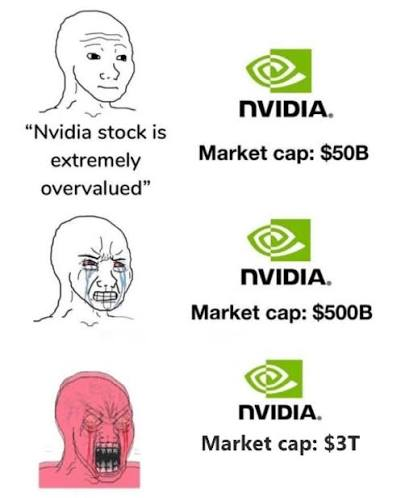
That's it for today's Slate. Big day. PCE at 8:30, Nvidia after the close, Salesforce alongside it. Stay close to the feed.
Today's reply prompt: If Nvidia beats and PCE runs hot, what's the trade?
Tickers: MS PCE EPS NVDA AMD MU CNBC WTI DKS ASO FIFA MD INTU GAAP UOB FL CRM CRWD HP HPQ SNPS OKTA WSM MRVL ADSK BBY DG ULTA ET POLL