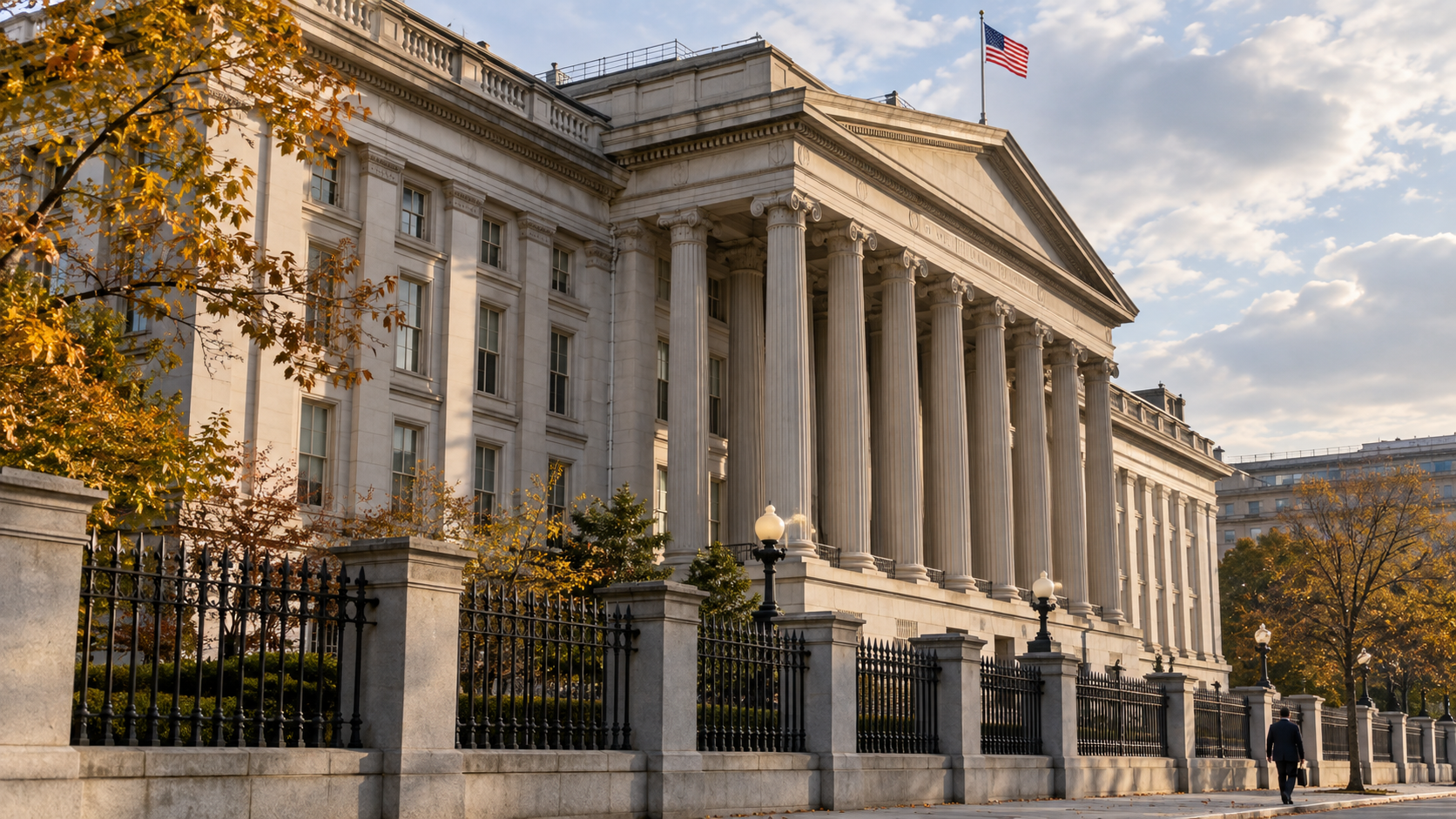
The benchmark reached 5.304%, its highest since May 2002, on the final day of a quarter in which it rose about 84 basis points. The 30-year's premium over the two-year widened to about 75 basis points.
The inflation report bought the bond market about half a day of relief.
After the 8:30 a.m. release showed softer price growth, the 10-year Treasury yield slipped toward 5.21%, then turned around. By the afternoon it had risen to 5.304%, a hair above its 2007 intraday peak of 5.303% and the highest since May 2002, a swing of about 9 basis points off the post-data low. Late in the session it was near 5.30%, up about 5 basis points.
Thirty-year bonds fared worse, with the yield up about 7 basis points at 5.64%. On Tuesday it had set its own high for the period since 2002. The two-year note, which tracks expected Fed policy, fell as low as 4.864% after the data and was back near 4.89% by the afternoon, little changed on the day.
A steeper curve
Long yields rising while short yields held flat pushed the curve steeper. The 30-year yielded about 75 basis points more than the two-year, up from about 70 basis points on Tuesday. The 10-year stood about 41 basis points above the two-year.
The two ends of the curve are now answering different questions. Short yields eased as traders cut the chance of an October rate increase to about 35%. Long yields rose regardless.
Growth is the explanation U.S. Bank Asset Management Group's Rob Haworth, a senior investment strategist, offered. "I'm not seeing that inflation expectations are really blowing out, so I think it's really the growth number," he said. Second-quarter growth was revised to 2.2% from 1.5% on Wednesday morning, and private employers added 90,000 jobs in September.
Supply is the other pressure. Heavy corporate bond issuance this week and a rise in oil prices weighed on long maturities during the session. Rate strategists at TD Securities put the federal government's annual interest bill at a record $1 trillion. If yields hold here, their projection adds about $600 billion to that bill within three years, with $1.4 trillion in fiscal 2027 and $1.5 trillion in 2028 before $1.6 trillion in 2029.
The quarter
Wednesday closes the third quarter. At about 5.27% earlier in the day, the 10-year was on track to finish roughly 84 basis points above where it began in July. No quarter has seen a bigger increase since the first three months of 1994.
The pain shows up across rate-sensitive assets. The iShares 20+ Year Treasury Bond ETF fell about 0.7% to near $77.70 and was on course for its lowest close since it launched in 2002. The real estate sector ETF was heading for its lowest finish since April 1. The MOVE index of expected Treasury volatility rose 4.7% on Tuesday to 106.60, its highest since late March.
Stocks have absorbed it so far. The S&P 500 was up about 0.3% in the afternoon, carried by technology shares. Jasmine Yu, chief investment officer at Bryn Mawr Trust Advisors, argued that yields rising on growth or inflation are a reason to own stocks, and her team kept its 8,000 year-end target for the S&P 500. "We haven't blinked," she said.
What to watch
Friday's payroll report is the next test of the growth explanation, with forecasters expecting 84,000 jobs. A strong print that lifts long yields would support it. A weak print that fails to bring the 10-year back under 5.2% would point instead toward supply and term premium, the extra return investors require to hold long bonds.