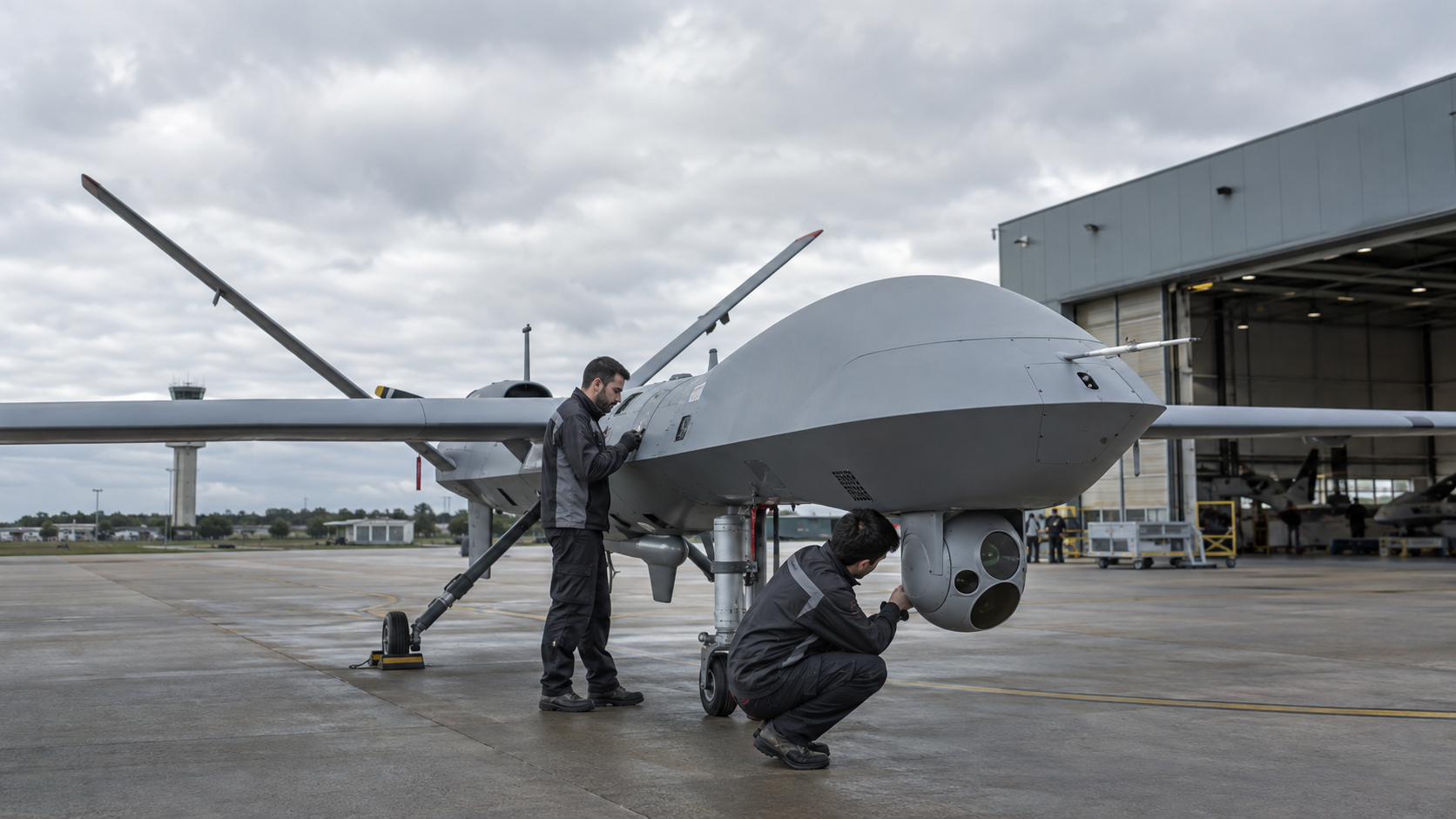
The Portuguese-British maker of AI-powered surveillance drones raised $580 million as European governments race to rebuild their defenses. A decade-long British contract and tens of thousands of combat flight hours sit behind the number.
Tekever, a Portuguese-British developer of AI-powered autonomous drones, said Wednesday it has reached a $6.4 billion valuation after raising $580 million, one of the clearest signs yet of how much private capital is flowing into European defense technology.
The round was led by University of California Investments and Baillie Gifford, with Merlyn Advisors, Crescent Cove, Ventura Capital and Iberis Capital also participating. The investor list is notable in its own right, pairing a U.S. university investment office with a growth-equity manager, and it reflects how far defense technology has moved into the venture mainstream.
Tekever's case to investors rests on operational evidence rather than prototypes. The company says its drones have logged more than 50,000 operational flight hours in Ukraine since Russia's full-scale invasion began in 2022. In July, it said Britain's Ministry of Defence had selected it to provide surveillance technology under a program worth up to £400 million, or about $530 million, over 10 years.
That combination of battlefield data and a long-dated government contract gives investors a revenue anchor and a track record under real conditions, two things that are rare at the growth stage in this sector.
The broader driver is political. Europe is racing to rearm in response to the war in Ukraine and mounting threats from Russia, and the conflict has put drones at the center of that effort.
The risks are familiar ones for defense investors. Revenue depends heavily on government budgets and procurement timelines, which can shift with elections and diplomacy. A durable ceasefire in Ukraine would not end European rearmament, but it could change the urgency behind it.
For private markets, Tekever's round is a benchmark. It shows growth investors are now willing to pay technology-style valuations for defense companies with proven products and government contracts, and it sets a reference point for the next European defense-tech raise.