The technology distributor earned $5.68 a share on an adjusted basis, against forecasts of $4.64, as revenue jumped 38%. Its gross margin narrowed even as its operating margin widened.
TD Synnex reported the best quarter in its history on Thursday and told investors the next one would be better. Its shares fell about 3.4% before the opening bell.
The technology distributor earned $5.68 a share on an adjusted basis in its fiscal third quarter, well ahead of the $4.64 analysts had forecast. That is a beat of $1.04 a share, or about 22%. Revenue rose 37.7% from a year earlier to $21.6 billion, above the top of the company's own guidance. On a reported basis, earnings came to $5.18 a share, up 89.1%.
Gross billings rose 40% to $31.8 billion.
The quarter carried one number moving the wrong way. Gross margin fell 61 basis points to 6.61%. Operating margin, on the other hand, rose. The adjusted figure climbed 39 basis points to 3.42%, as adjusted operating income grew 55.1% to $736 million, far faster than revenue.
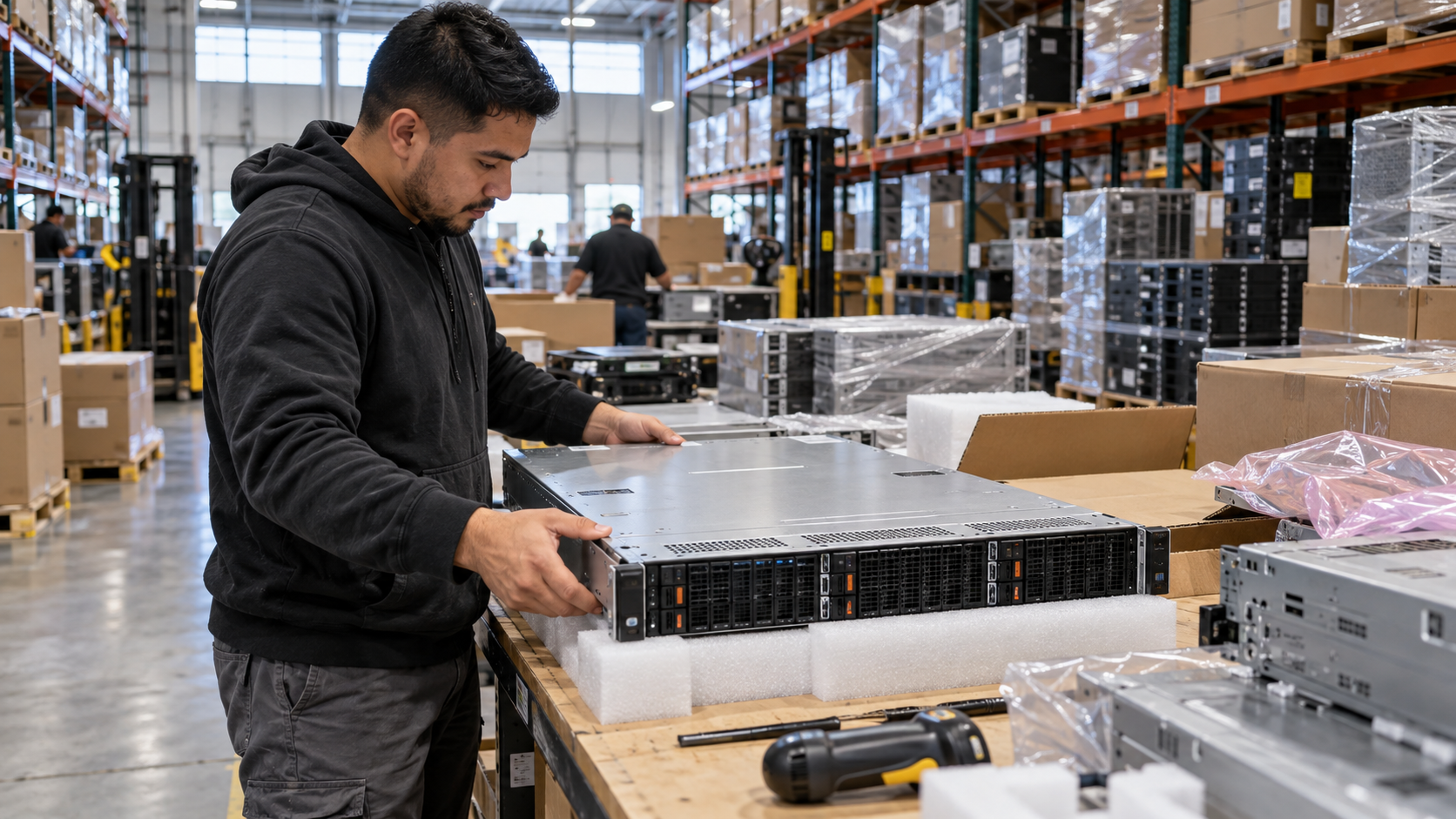
Put together, those figures suggest a company selling far more of its lower-margin products while spreading fixed costs over a much bigger base. Chief Executive Patrick Zammit pointed to where the volume is coming from. "Enterprise AI adoption is progressing toward broader production deployments. Data center modernization remains a priority as organizations prepare for next-generation infrastructure requirements," he said.
The outlook kept the momentum. TD Synnex guided fourth-quarter revenue to $21.8 billion to $22.6 billion and adjusted earnings to $5.65 to $6.15 a share. The midpoint, $5.90, sits above the quarter it just reported. The company raised its quarterly dividend 9% from a year earlier to 48 cents and repurchased about $100 million of stock in the quarter.
The stock's reaction reflects where it started. Shares had risen about 80% over the past 12 months and were trading near their 52-week high of $298.77. Morgan Stanley trimmed its price target to $334 from $374 in mid-September while keeping an overweight rating. Insiders have been net sellers, disposing of about $44.2 million of stock over the past year without offsetting purchases.
That leaves two readings of the decline. The first is valuation: a stock that already priced in a strong AI hardware cycle had little room to rally on confirmation of it. The second is the gross margin, the one metric that went backward, and the question of whether AI server demand is pulling the mix toward thinner-margin products for longer.
Fourth-quarter results will test both. If gross margin stabilizes while revenue lands inside the guided range, the selling on Thursday will look like profit-taking. A further decline would keep the margin question at the center of the stock.