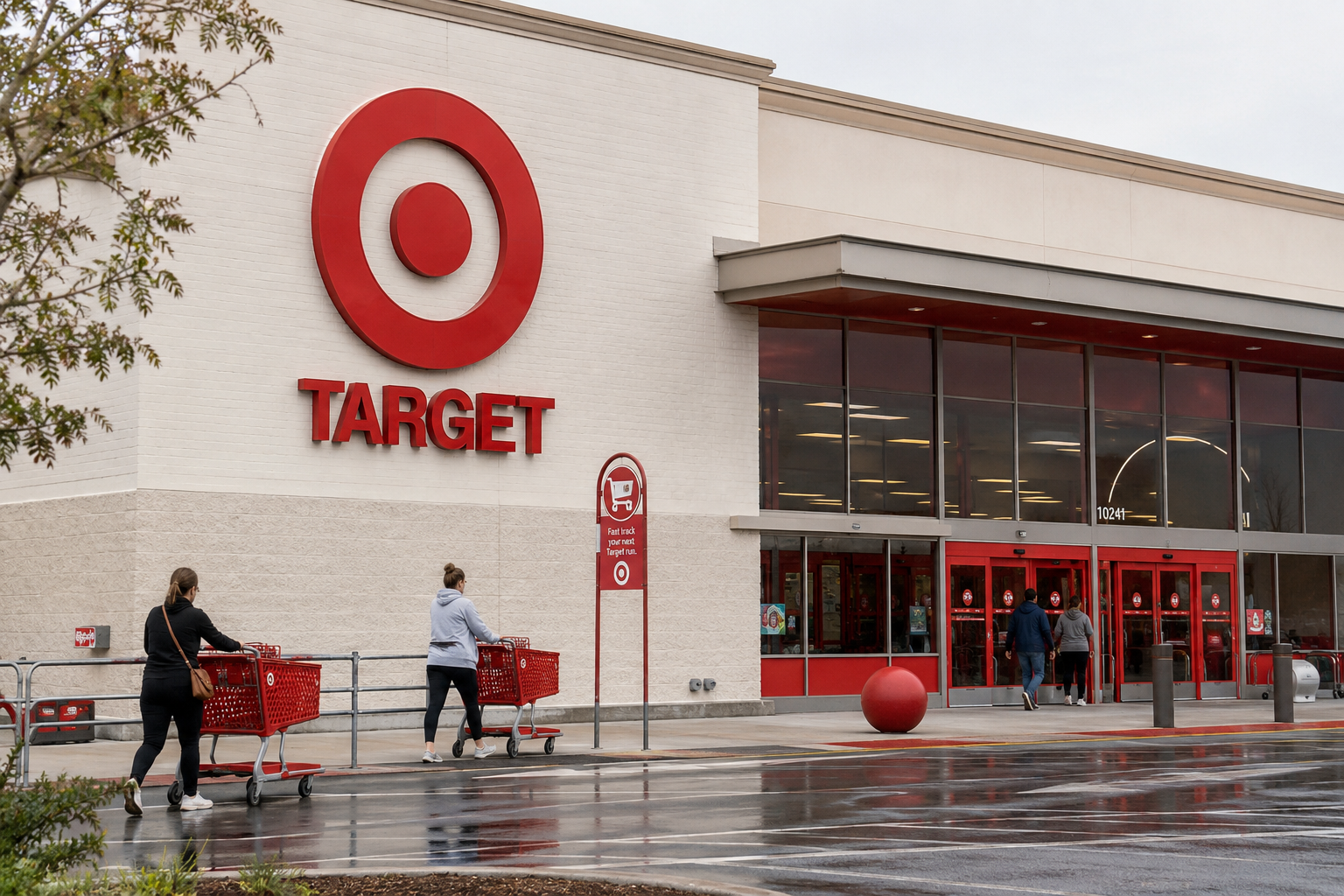
Target's stock hit a 52-week high after a Q2 beat and raised guidance drew a wave of higher analyst price targets. The same analysts raising those targets are now warning the easy gains may be behind it.
Target shares rose 3.6% to a 52-week high of $163.96 after the retailer's second-quarter results beat expectations and management raised full-year sales guidance to $110.02 billion. Revenue came in at $26.54 billion, up 5.3% year over year and above the $26.14 billion analysts had expected, while operating income nearly doubled to $2.56 billion, expanding operating margin to 9.6% from 5.2% a year earlier.
The results triggered a round of price-target increases. Telsey Advisory Group raised its target to $182 with an Outperform rating; Citigroup and Goldman Sachs both raised their targets, to $160 and $161 respectively, while keeping Neutral ratings. Target's stock now carries a Wall Street average price target of $163.25, essentially in line with where shares were already trading after the earnings pop.
That gap between rating and price target captures where the debate over Target has moved. Guggenheim's Robert Heinbockel said the uncertainty around Target's turnaround "has faded," but flagged that the stock's valuation now resembles a mature growth company rather than a recovery story, limiting how much room is left after a roughly 60% run since late 2025. JPMorgan's Christopher Horvers made a similar point from the operating side, citing "genuine improvement in Target's merchandising and customer experience" while keeping a Neutral rating on margin concerns.
In other words, the analysts confirming that Target's operational turnaround is real are, in the same breath, arguing the stock has already priced most of it in. That's a different problem than the one Target was solving a year ago, when the debate was whether the business was actually improving. Now it is whether a fixed business, trading near its average price target after a 60% run, still has an obvious next catalyst for the stock specifically, separate from whether the underlying retailer keeps executing.