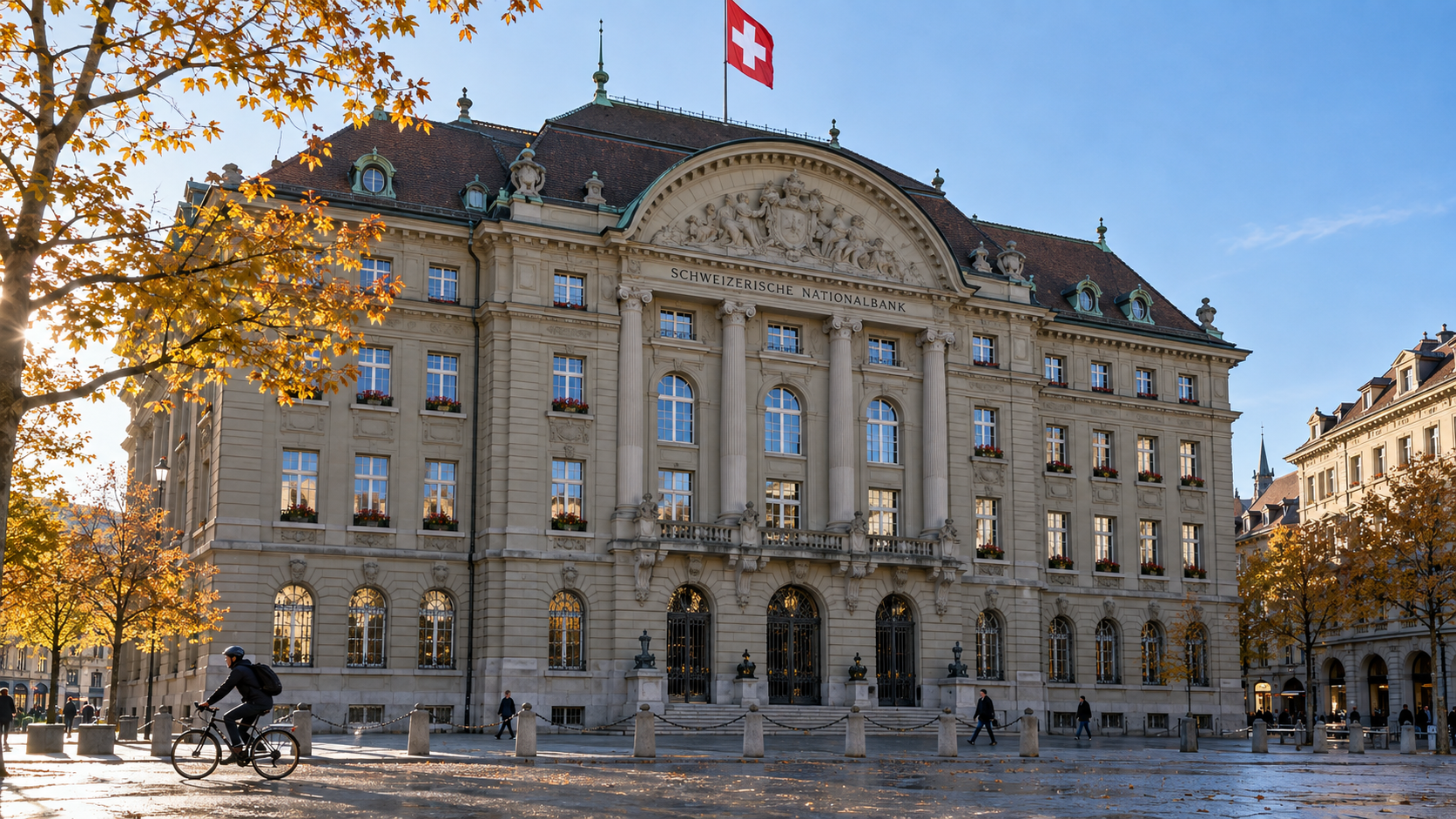
The Swiss National Bank kept its policy rate at 0% as most major central banks tighten. Sweden's Riksbank also held, at 1.75%, but said a hike this year had become more likely.
Two European central banks held interest rates on Thursday. Only one of them sounded like it wanted to.
The Swiss National Bank kept its key rate at 0%, standing apart from a tightening cycle now under way at many of its major peers, including the Federal Reserve, which raised rates last week. Switzerland's annual inflation rate rose to 0.8% in August, pushed up by gasoline, diesel and heating oil. That is inside the central bank's target of 0% to 2% and well below inflation in the United States, Britain and the euro zone, whose central banks aim for 2%.
Markets expect the gap to close anyway. Traders price roughly even odds of a Swiss rate increase in December and more than a 90% chance that the central bank begins raising rates by early 2027.
Sweden's Riksbank held its policy rate at 1.75% and said a hike later this year had become more likely.
The two decisions show how an energy shock travels differently through different economies. In Switzerland, fuel costs have lifted inflation from very low levels without pushing it outside the target band. In the United States, Fed officials have said inflation remains elevated even outside energy, and they are still raising rates. Sweden sits between them, holding for now while preparing markets for a move.
For investors, the divergence has practical consequences. A Swiss policy rate at zero sits nearly 4 percentage points below a U.S. policy range of 3.75% to 4% that futures markets expect to go higher. That differential feeds directly into what it costs investors to hedge franc and dollar exposure.
The divergence may not last. Pricing that assigns a better than 90% chance of Swiss tightening by early 2027 suggests traders expect energy-driven inflation to spread further into Swiss prices. The next Swiss inflation readings will test that. A move toward the top of the target band would make December a live meeting. A reading that stays near current levels would leave the central bank with room to wait while its neighbors tighten.