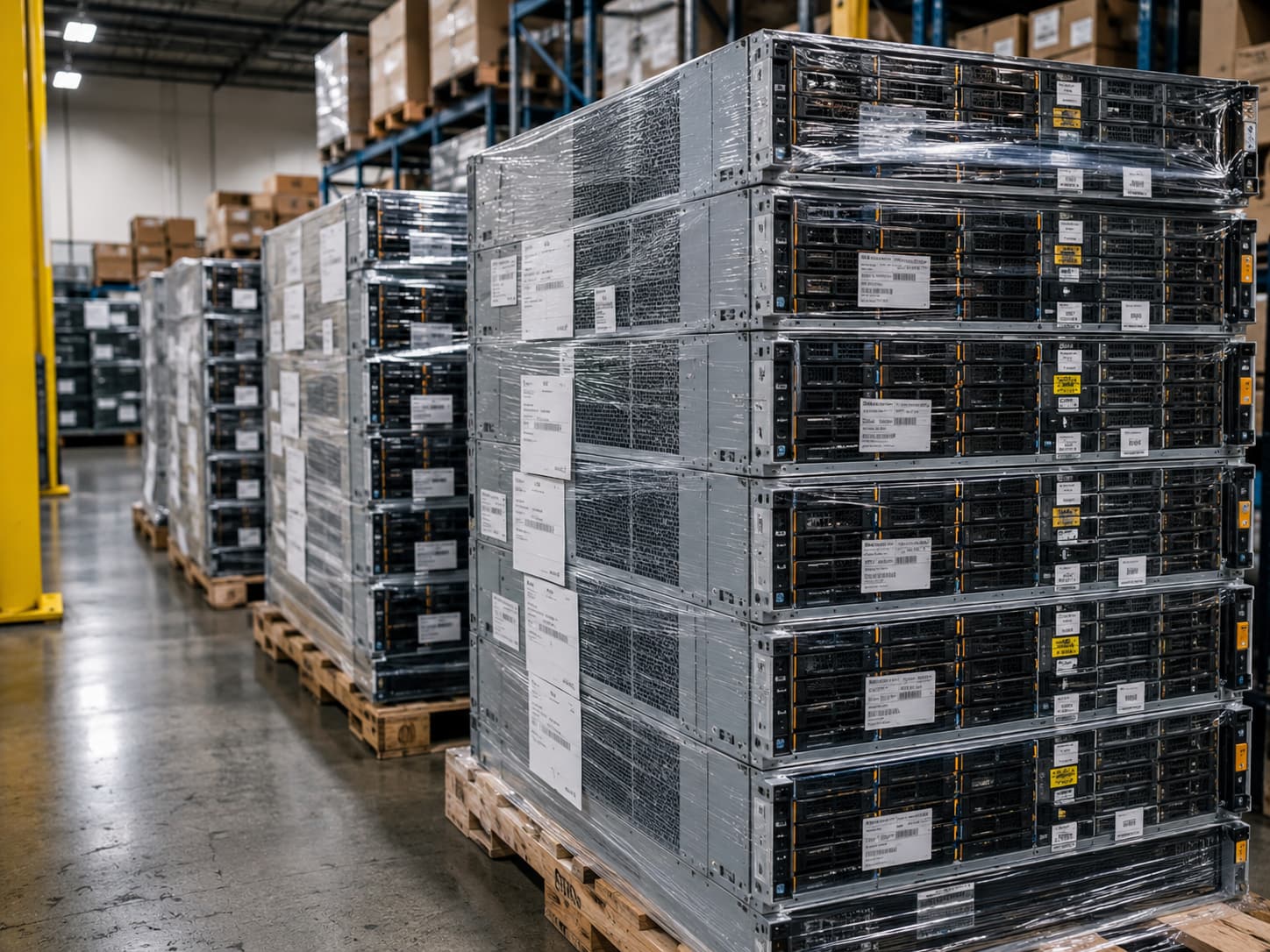
Super Micro Computer closed its fiscal 2026 with a number that should worry anyone tracking how fast the AI server maker is growing: operating cash flow for the year was negative $6.8 billion. That is the cost of chasing a backlog management says now tops $60 billion in new orders. The fourth quarter capped a year of contradictions. Revenue missed the company's own guidance range at the low end. Earnings and gross margin blew past the top of that same range. And the stock rallied hard for two straight sessions before giving back some of its gains. Investors are left to decide whether Super Micro's order book proves demand is real and financeable, or whether it is setting up another cash crunch just as the company promises to nearly double revenue again.
Record Orders, a Guidance Miss
Fourth-quarter revenue came in at $11.12 billion, up 93 percent from a year earlier but landing near the bottom of the $11 billion to $12.5 billion range management had guided in May. Chief Financial Officer David Weigand attributed the shortfall to "delays in customer readiness," and said the company expects that revenue to show up in coming quarters instead. Meanwhile, GAAP diluted earnings per share of $1.62 and non-GAAP diluted EPS of $1.70 both came in far above the top of their guided ranges, and non-GAAP gross margin of 17.6 percent more than doubled the 8.2 to 8.4 percent range management had set. CFO Weigand said roughly three-quarters of that margin gain came from a favorable mix of customers and products, including some contracts that shifted from the fourth quarter into the first quarter of fiscal 2027, with the rest from lower tariff costs and reduced inventory reserves.
That combination, a revenue miss paired with an earnings and margin blowout, is the kind of result that can mean very different things. It could mean the business is becoming more profitable per dollar of revenue as it matures. It could also mean results were flattered by items that will not repeat, while the underlying growth engine slipped behind plan.
The Cash Conversion Cycle Is Stretching
The more concrete concern shows up in working capital. Super Micro's cash conversion cycle, a measure of how long cash is tied up in inventory and receivables before it comes back in the door, worsened to 149 days in the fourth quarter from 106 days in the third. Days inventory outstanding rose to 119 from 106. For the full fiscal year, operating cash flow swung from a positive $1.66 billion in fiscal 2025 to a $6.8 billion use of cash in fiscal 2026, even as capital expenditures more than doubled to $162 million from $127 million. The company raised $5.6 billion in the fourth quarter alone, split between common stock and a new mandatory convertible preferred issue paying a 7 percent coupon, and net debt fell to roughly $1.2 billion from about $7.5 billion at the end of the third quarter.
Management says the cash conversion cycle should normalize as newer, better backlog terms take hold. CEO Charles Liang told analysts that funding a revenue base of $80 billion or more, above the top of the current fiscal 2027 guide, could require additional cash beyond what the balance sheet holds today. That is a notable admission from a company guiding to $65 billion to $72 billion in revenue this year, a range that already implies growth of 66 to 84 percent.
What the Backlog Does Not Settle
The order book itself raises its own questions. Liang described the more than $60 billion in new orders as roughly 70 percent tied to pure AI workloads and 30 percent to CPU-based or edge-AI business, and said management expects AI-related revenue to exceed 80 percent of the total going forward, up from about 60 percent in the fourth quarter and above 80 percent in the third. Nine customers each generated more than $1 billion in fiscal 2026 revenue, up from four a year earlier, which management points to as evidence of a broadening customer base. One customer alone still accounted for 28 percent of the year's revenue.
Analyst Asiya Merchant asked management directly whether large data center customers are increasingly buying components straight from original design manufacturers instead of going through Super Micro. Liang's response focused on power and cooling readiness and asserted that Super Micro's combined manufacturing and design model is distinct, but it did not include a specific rebuttal backed by numbers. Separately, analyst Ananda Baruah asked for an update on a previously disclosed board investigation. CFO Weigand said only that an update would come "shortly," leaving the matter unresolved heading into the new fiscal year.
The Burden of Proof Now Sits With Cash, Not Orders
Super Micro no longer has to prove that demand exists. A $60 billion order book and a guide calling for revenue to nearly double again make that case on their own. What the company has not yet proven is that it can fund that growth without repeating fiscal 2026's cash drain or leaning further on capital markets. Investors should watch whether the cash conversion cycle actually shortens as management expects, whether the fiscal 2027 revenue guide holds without another low-end miss, and whether management provides real detail on the still-unexplained board matter. A cleaner cash conversion cycle and a revenue print inside guidance would support the bull case that this is a financeable growth story. Another year of negative operating cash flow, paired with silence on the board investigation, would support the bear case that the backlog is outrunning the company's ability to pay for it.