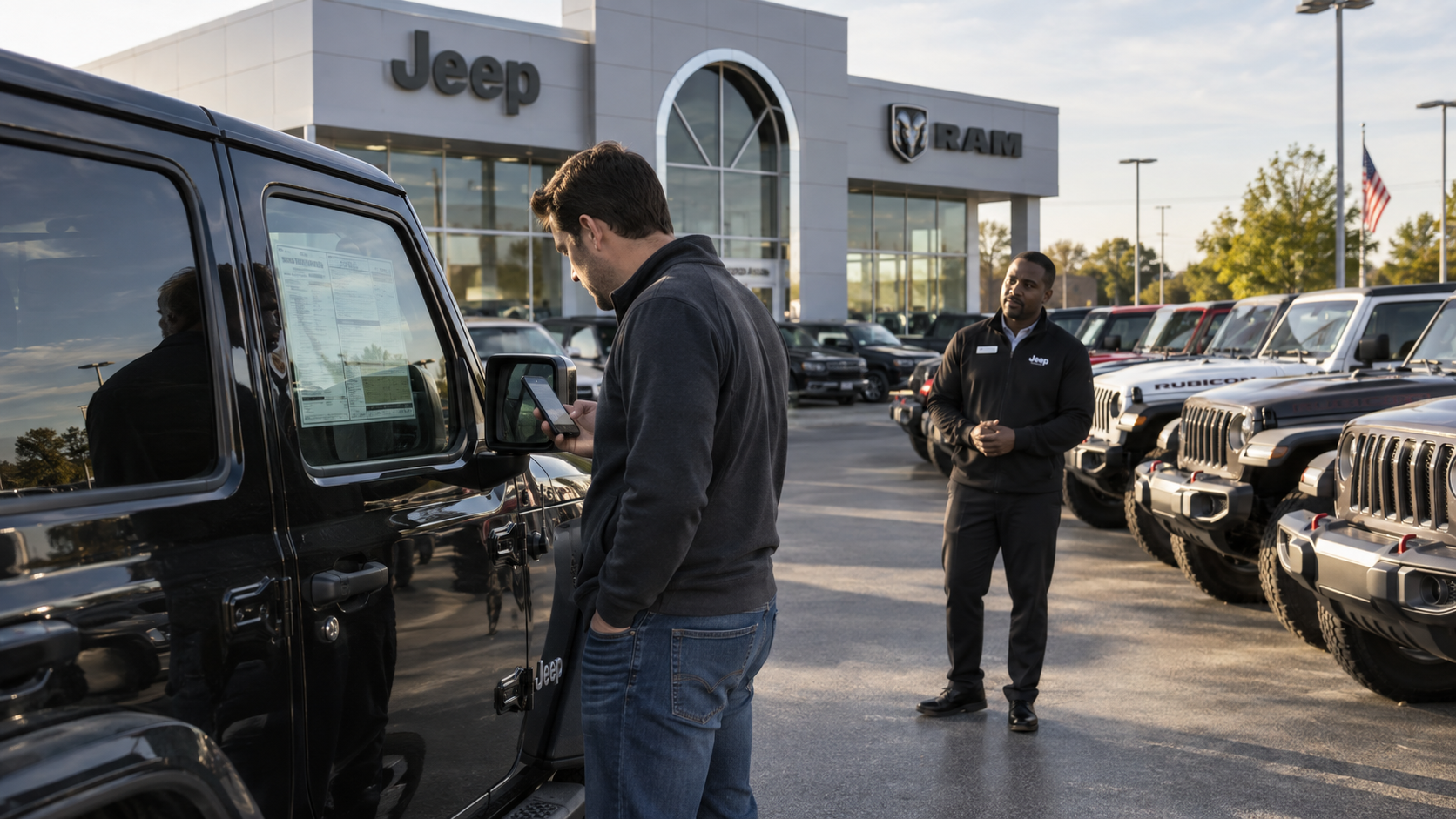
Starting next month, Jeep, Dodge, Ram and Chrysler dealers will no longer be allowed to advertise prices below invoice, the latest and largest automaker to adopt a policy that makes comparison shopping harder even as it promises a more predictable buying experience.
Stellantis will adopt a minimum advertised pricing policy for its dealers beginning next month, joining General Motors, Mazda, Toyota, Kia and Hyundai in setting a floor under how low a price a dealer can publicly advertise. Starting with the 2027 model year, advertisements for Stellantis vehicles generally will not be permitted to go below the invoice price, the amount a dealer pays the manufacturer, which typically sits a little below the vehicle's sticker price.
The change matters because Stellantis vehicles are currently discounted more than three times as deeply from sticker price as the average car, according to research from car-shopping platform CarEdge. Internal documents describe the goal as protecting "brand integrity" as the company works to launch a wave of new Jeep, Dodge, Ram and Chrysler vehicles by 2030. The new rules also restrict the language dealers can use to hint that a lower price is available if a shopper asks: phrases such as "Unlock additional price," "Click here for lower price" and "Ask about additional discounts" are barred, while prompts like "Get this price" and "Pick my payment" remain allowed.
The practical effect for consumers is that they will no longer be able to compare a real floor price across dealerships from their couch. Once a buyer walks into a specific dealership, negotiation can still bring the price down further, but that number will not appear in any online advertisement. Scott Painter, founder and chief executive of car-buying platform TrueCar, put it plainly: minimum advertised pricing "makes price discovery for consumers harder."
Stellantis and the dealers backing the change frame it differently, as a defense against the industry's own worst habits. Automakers and many dealers argue that unrestricted advertised pricing invites bait-and-switch tactics, in which a shopper is lured by a price that evaporates once fees and add-ons appear at the dealership. General Motors, in its own 2026 advertising standards, wrote that "no customer wants to arrive at the dealership only to learn that they will need to pay something different than what they expected." The Federal Trade Commission has separately been cracking down on dealers who advertise prices that omit mandatory fees, pressuring both manufacturers and listing sites such as Cars.com and Autotrader.com to tighten their practices.
Dealers themselves are split on how much the change will help their margins. GianMarco Taverna, who runs a Stellantis dealership near Fort Lauderdale, Florida, currently advertises discounts of 20% or more off sticker price and says he feels forced to match competitors who obscure fees; he expects the new floor to let him "sell cars for more gross profit" if every dealer follows the same rule. Jared Glover, who operates a Jeep-Ram store near Tulsa, Oklahoma, was more skeptical of the online-discount culture generally, noting that "the cheapest price that you find on the internet is not going to end up being your best overall deal."
The broader trend points toward the fixed-price model long used by Tesla, Rivian and, more recently, Carvana as it begins selling new Stellantis vehicles. Ronnie Flowers, general manager of a Chrysler dealership in Johnson City, Tennessee, said the shift reflects what buyers actually want: "Customers want transparency. They don't want it to be long and tumultuous, and have to negotiate." Whether Stellantis's version of transparency, a price floor rather than a fixed price, delivers that experience will depend on how consistently dealers apply the new rule once the 2027 model year arrives.