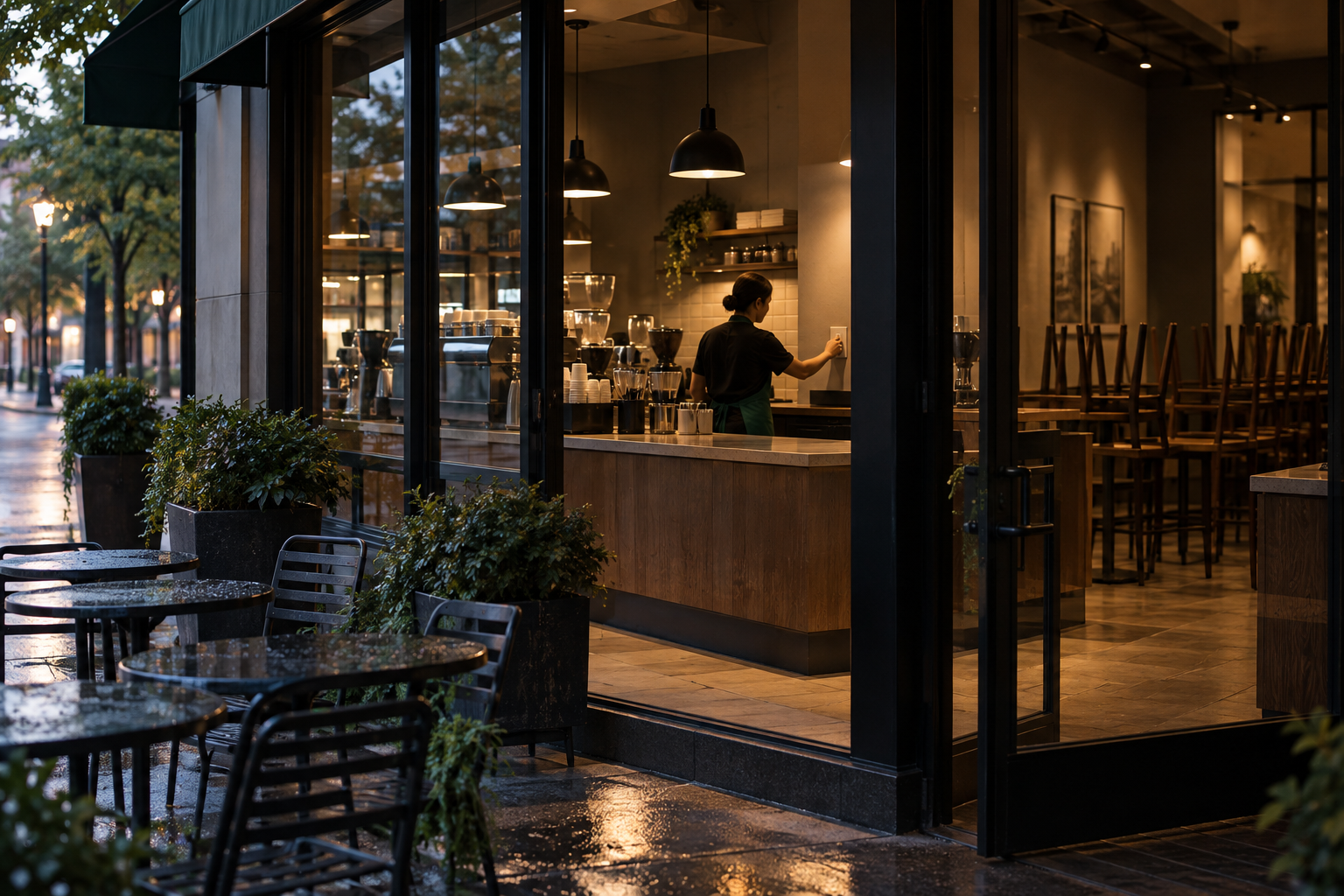
The second round of closures under Chief Executive Brian Niccol carries about $300 million in restructuring charges. It trims roughly 2% of the company's owned North American stores as a $2 billion cost program continues.
Starbucks expects to book about $300 million in restructuring charges to close roughly 250 cafes this week. Divided evenly, that is about $1.2 million for every location it shuts.
The closures are the second cull of underperforming stores since Brian Niccol took over as chief executive two years ago. At the end of June the company owned and ran 11,149 stores in North America, around 300 fewer than a year before. The new round takes out a little more than 2% of that total.
In a note to staff on Thursday, Chief Operating Officer Mike Grams said "some coffeehouses continue to underperform despite the hard work and commitment of all of you." Starbucks said it will try to move baristas from closing cafes into other stores and will pay severance to those who leave.
The calendar is repeating itself. Last year, shortly before its fiscal year ended in September, the company announced hundreds of closures after a quiet internal review of its U.S. fleet, called Project Bloom, singled out stores that were falling short on profit or customer experience. This year's announcement lands at the same point in the fiscal cycle. Niccol called the reviews "just good hygiene" in July.
Stores are one line in a larger budget exercise. Niccol has set a goal of taking $2 billion out of costs by the close of fiscal 2028, and much of the work so far has been at headquarters. Roughly 2,000 corporate jobs were cut last year. There were 300 more U.S. corporate layoffs earlier in 2026, along with the closure of four regional offices, and more than 200 in August tied to a move to a new office in Nashville. At the same time the company is adding capacity elsewhere, including a new technology office in Chennai, India.
The other half of the plan is investment. Hundreds of U.S. cafes are being renovated, and a smaller store format is in development to take on fast-growing drink chains such as Dutch Bros. Outside North America is where Starbucks says most of its near-term unit growth will come from.
The stock slipped about 0.9%.
A shrinking store base makes one number especially useful. Closing weak stores can lift company-wide averages without any improvement at the stores that remain, so sales growth at cafes open more than a year is the cleaner measure of whether the renovations and the new format are working. The fiscal fourth-quarter report, likely the first to carry this round's charges, will show it.