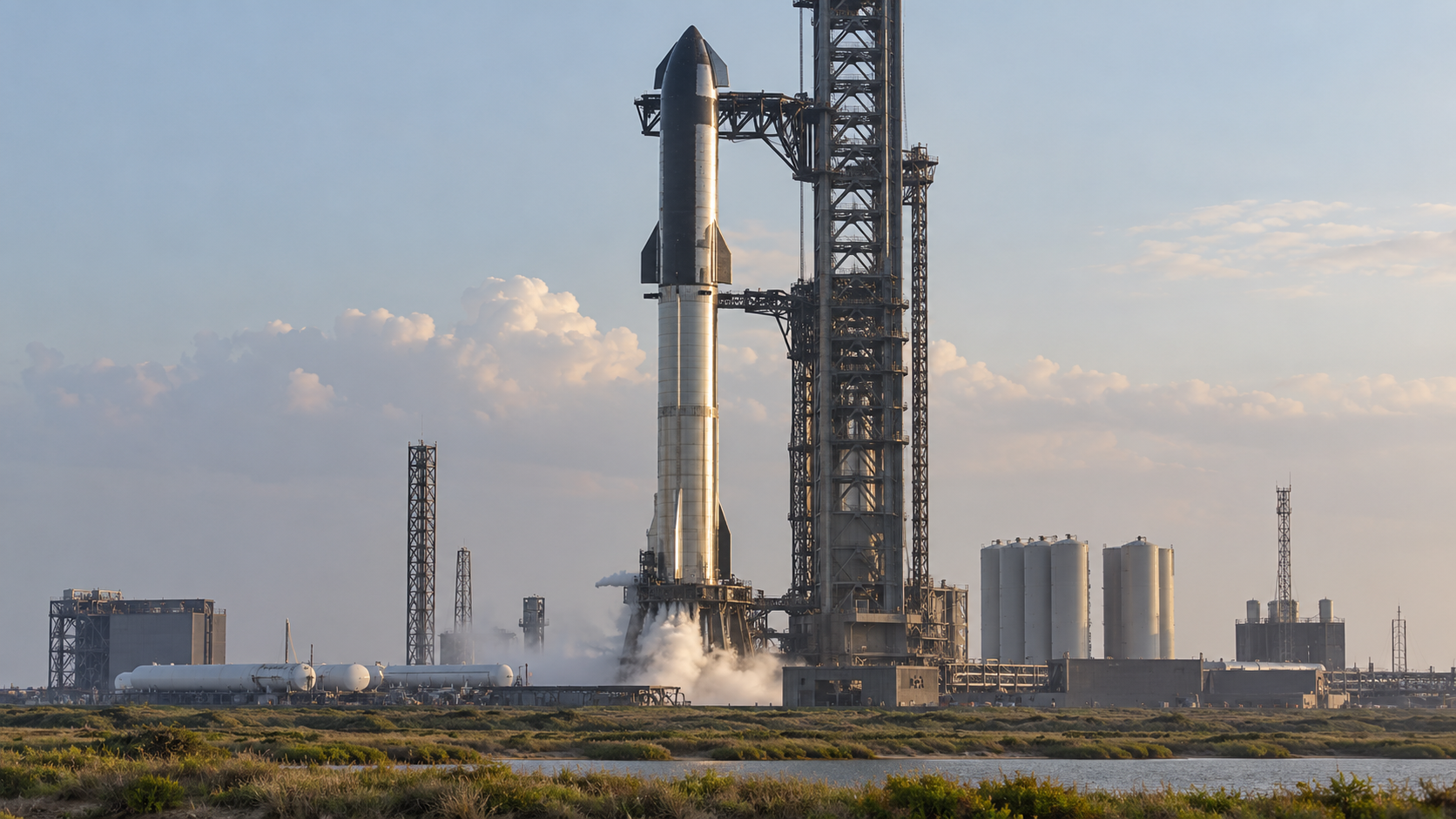
The rocket deployed 26 of SpaceX's newest Starlink satellites, less than half of the 60 it is designed to carry, in the first flight meant to circle the planet.
SpaceX cleared the milestone its growth plan depends on. Investors who bought the stock this summer had already assumed it would.
Starship lifted off from Starbase, Texas, at 8:48 a.m. Eastern on Monday and reached orbit for the first time, on the program's 14th test flight. The Super Heavy booster made a soft splashdown off the coast shortly after launch. Aboard were 26 Starlink V3 satellites, a larger model whose solar arrays produce double the power of the previous generation, and all were released.
Monday's flight plan called for several orbits and an ocean landing off Chile, a profile none of the 13 previous flights attempted.
SpaceX shares were down about 0.3% in afternoon trading.
Why Starship matters to the business
As of the second quarter, Starlink, the satellite internet business, was the company's biggest unit and the only one making money. SpaceX operates about 11,000 active satellites, roughly 17 times the approximately 650 run by Eutelsat's OneWeb, its closest competitor in low Earth orbit.
Starship is how SpaceX plans to widen that lead. SpaceX rates each Starship at 60 V3 satellites per trip, roughly 20 times what a single Falcon 9 mission delivers. Monday's flight carried 26, or a little over 40% of that load, as a test.
"It's not out of the question that at some point, Starlink will deliver a majority of the world's internet, at least in countries where we're allowed to operate," Elon Musk said on SpaceX's earnings call in August.
The delay and the valuation
Musk's original timeline had orbit in 2022 and satellite deployments a year later, so the milestone came about four years behind schedule. Since its June listing, the biggest IPO on record, SpaceX has carried a valuation of about $2 trillion, a price set with Starship's success as a working assumption rather than an upside surprise. A flat stock on the day it happened is consistent with that.
What's next
NASA work comes next on the rocket's schedule: a major test flight for the agency next year and, eventually, landing American astronauts on the moon. Gwynne Shotwell, the chief operating officer, has put orbiting AI computing satellites on the 2027 calendar.
The recovery of the spacecraft, and how quickly SpaceX moves from test loads to full 60-satellite deployments, will determine how fast Starlink capacity grows. The cadence of flights over the next year is the number that ties the rocket to the revenue.