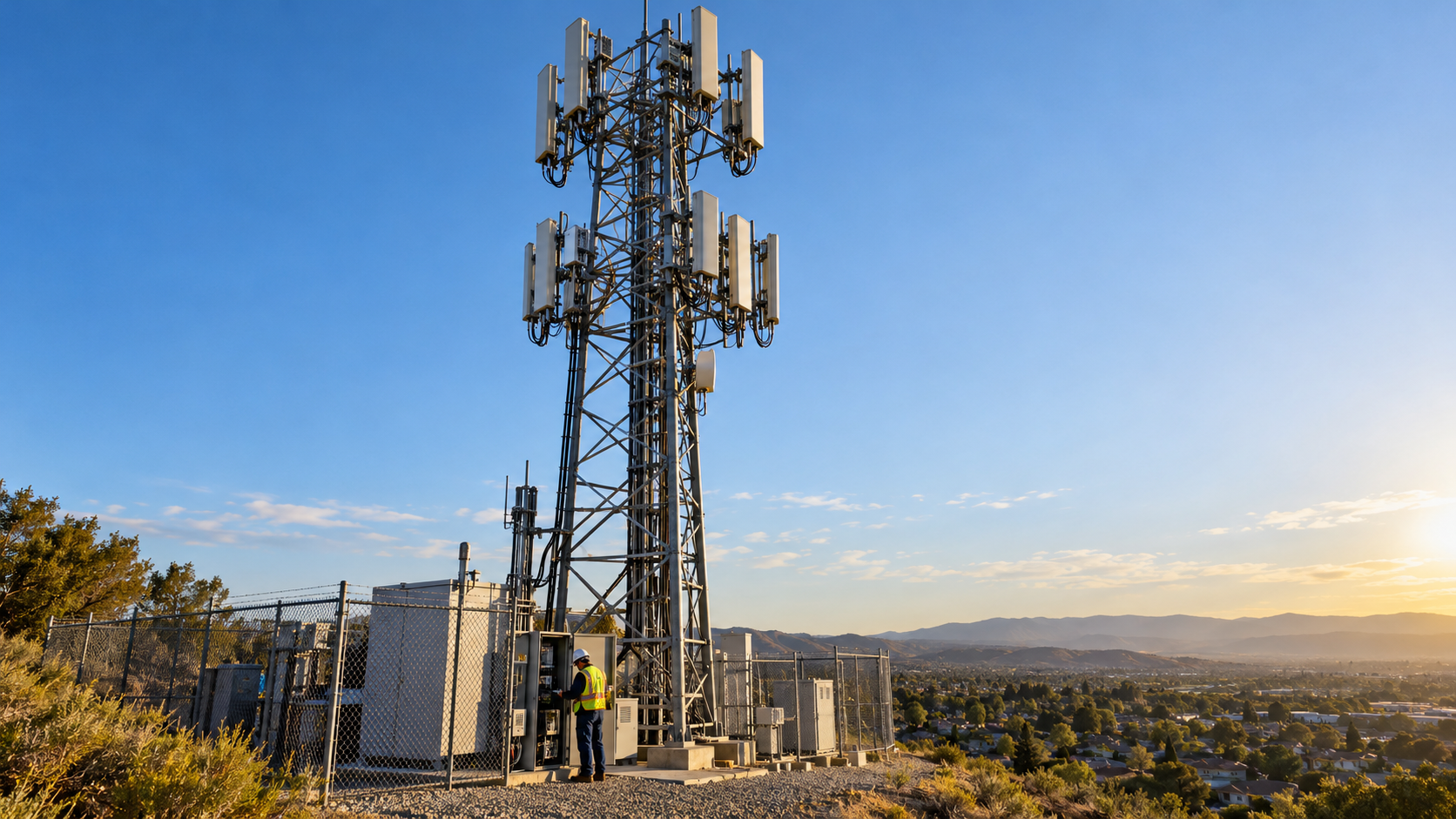
The three carriers fell 10% to 13% in their first full session after SpaceX agreed to buy nationwide 800 MHz airwaves. Tower owners rose, adding about $11 billion in value, because a ground network needs towers.
October 9, 2026
Tickers: SPCX, T, VZ, TMUS, AMT, CCI, SBAC, ASTS, IYZ
Friday's regular session priced the SpaceX wireless threat in full, and it moved money in three directions at once.
AT&T traded near $22.03 in early afternoon, 11.4% below Thursday's close. Verizon was at $41.23, down 11.1%, and T-Mobile US at $149.37, down 12.8%. Both AT&T and Verizon went ex-dividend on Friday, which accounts for part of the decline; after adjusting for their payouts, AT&T was down about 10.4% and Verizon about 9.7%.
Taken together, the three carriers were worth about $64 billion less than at Thursday's close, or about $60 billion after excluding the dividends. Early Friday, before the opening bell, the combined loss had been about $38 billion.
Who gained
SpaceX shares rose about 0.9% to $162.09, adding roughly $20 billion to a company valued at more than $2.1 trillion. The stock had opened at $165.34 and given back most of its early gain.
The larger winners in percentage terms were the companies that own cell towers. Crown Castle rose 13% to about $77.84, American Tower 7.9% to $179.90 and SBA Communications 6.7% to $181.46. Together they added about $11 billion in market value.
AST SpaceMobile, which is building its own satellite-to-phone network, fell 13.3% to about $49.36, a loss of about $3 billion.
Why towers rose
The tower move reflects what SpaceX bought. Grain Management, the private investment firm that sold SpaceX the spectrum, described a nationwide portfolio of 800 MHz licenses, a low band used for terrestrial cellular service. SpaceX said the block of up to 14 megahertz of paired spectrum would provide "a coverage layer" for Starlink Mobile that penetrates walls, complementing its satellite spectrum.
A terrestrial layer requires radios on the ground. SpaceX owns satellites, not towers, so a nationwide terrestrial network would most likely lease space from the same companies that host AT&T, Verizon and T-Mobile today.
The deal
Grain bought the portfolio from T-Mobile in August for $2.9 billion in cash plus all of its 600 MHz licenses. The SpaceX price was not disclosed; people familiar with the transaction have put it at about $8 billion in cash. The sale needs Federal Communications Commission approval. SpaceX has not disclosed a launch date, service pricing or network partners for Starlink Mobile.
Analysts at KeyBanc Capital Markets said the deal was "likely to be viewed as negative for wireless carriers, which we have a difficult time arguing against."
Two readings
The bear case for the carriers is that a fourth national competitor with satellite and terrestrial spectrum, regulatory support and deep financing has arrived, and that $64 billion is a reasonable price for losing pricing power over a decade.
The other view is that the market has priced a network that does not yet exist at roughly eight times the reported cost of the spectrum. The FCC transfer is pending, SpaceX must build or lease a ground network, and the incumbents report third-quarter results within weeks, giving them a chance to answer.
Next steps
AT&T reports on Oct. 21, Verizon on Oct. 26 and T-Mobile on Oct. 28. The FCC filing for the license transfer, any SpaceX tower-leasing agreement and how the carriers trade against the broader market next week will show whether Friday's repricing holds.