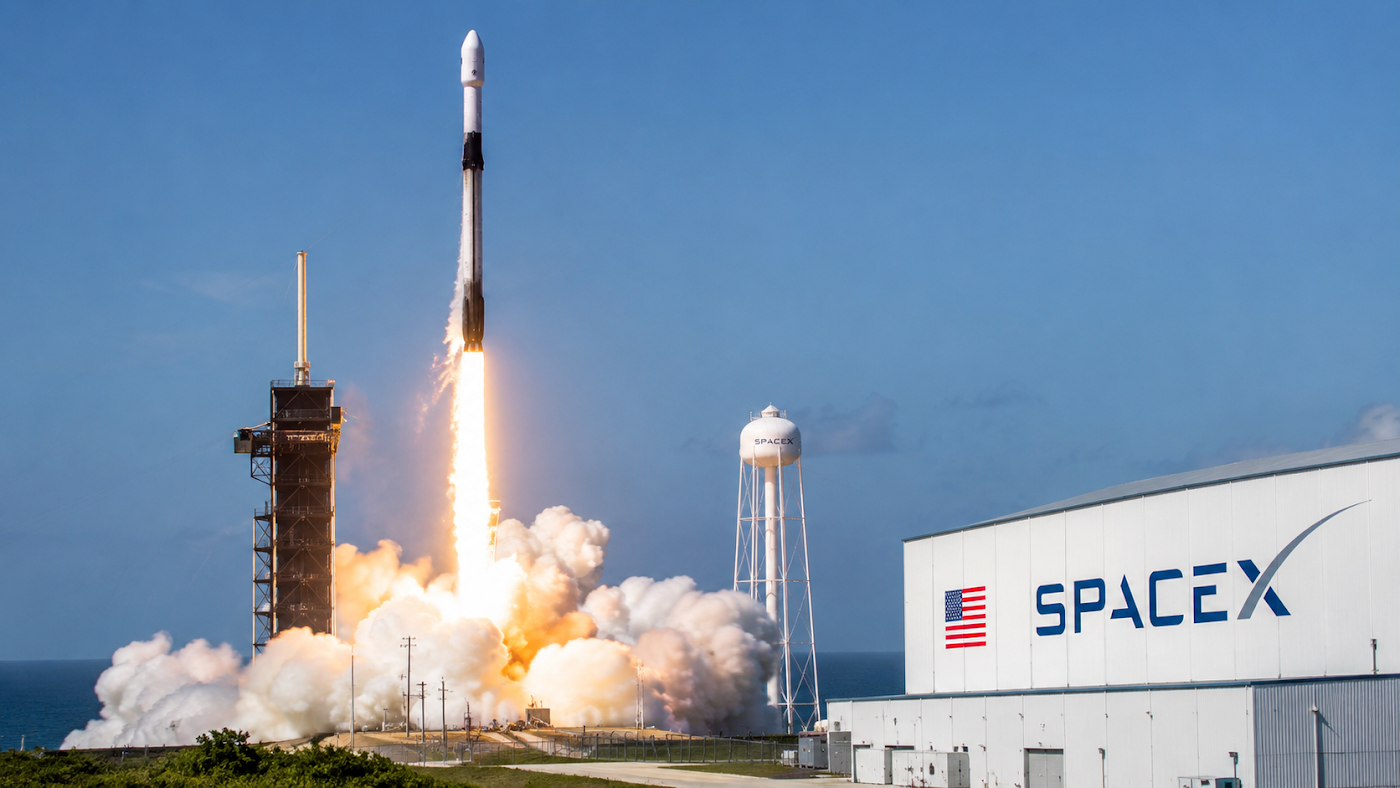
SpaceX is in talks to borrow $40 billion for Nvidia chips, mostly investment-grade debt. Deeply distressed loans hit a pandemic-era high with tech leading. Lambda's backlog tripled on one Anthropic commitment.
Stocks Are Retreating. The Record Was Messier Than It Looked.
Futures are lower after the S&P 500 and Nasdaq both closed at records Tuesday. Only the AI-heavy names did the work. Less than half of S&P stocks sit above their 200-day moving average. And that share has been falling since August.
France's budget worries are pushing the euro toward its lowest level since May 2025. Treasury yields are ticking higher. WTI is above $90 as Houthi attacks on Saudi targets keep Middle East tension elevated. The FOMC minutes from the September meeting drop at 2 p.m. today, alongside a $39 billion 10-year auction.
SpaceX (SPCX) is falling premarket after reports it is seeking $40 billion to buy Nvidia (NVDA) chips. Constellation Brands (STZ) is sliding after beer sales volumes fell in its latest quarter. Pepsi (PEP) reports earnings later.
Investor Signal
Tuesday's record had seven sectors trailing. Today the FOMC minutes and the 10-year auction land on the same afternoon, and neither is likely to be friendly. The minutes will show how divided September's hike was. The auction will show what 5.3% actually draws. Both readings arrive into a market that is narrower than its headlines suggest.
Investing In The Titans of AI

Carnegie didn't invent steel. He used new technology to produce it cheaper and faster than anyone on Earth.
Rockefeller didn't discover oil. He used industrial machinery to refine it more efficiently.
Vanderbilt didn't build the railroad. He understood that whoever controlled the infrastructure controlled the economy.
Their combined fortunes were between $700 billion and $1 trillion.
Best-selling financial author Alexander Green has identified three companies positioned to be the Titans of the AI age.
SpaceX Wants $40 Billion of Debt for Nvidia Chips.
Among the biggest AI debt financings ever attempted.
SpaceX is in early talks to raise roughly $10 billion in bank loans and $30 billion in investment-grade debt, with Apollo (APO) leading and a close expected in 2027. Pimco is among the investors reviewing it. Talks could end without a deal.
The pipeline behind it is significant. Broadcom's banks are gathering $60 billion in fresh AI chip financing for Anthropic and others. Morgan Stanley estimates the industry needs $1.5 trillion in external financing by 2028, as lenders grow more cautious. Apollo is already part of the Nvidia-backed coalition that promised to mobilize $500 billion at attractive rates for chip buyers.
Investor Signal
SpaceX could issue equity after raising $86 billion in its IPO. It is choosing debt instead. Three-quarters of the structure is investment-grade, which means banks are treating depreciating chips as investment-grade collateral. The rate SpaceX secures will be the first public read on whether Apollo's promise of attractive rates holds, or whether the $500 billion platform prices risk the way private credit usually does.
Sixty-Five Billion in Loans Below 60 Cents. Tech Is 39% of It.
Deeply distressed loans are at their highest level since March 2020.
That $65 billion pile, up from $40 billion a year ago, sits in the most distressed tier of the loan market.
Technology accounts for $54 billion of it. Software providers CDK Global, QLIK Technologies, and Quest Software are among the largest contributors. Software faces more than $100 billion of maturing debt, and AI disruption fears hit the sector hard this year.
CCC loans are the only junk tier losing money in 2026. CCC bond spreads have passed 1,000 basis points, their widest since the 2023 regional banking crisis. JPMorgan projects leveraged loan defaults will rise to 4.5% next year from a projected 2.25% in 2026.
Investor Signal
Software stocks hit 2026 highs Tuesday. The loan market disagrees with that read entirely. Equity holders get the upside if AI proves an enabler. Lenders need refinancing to work regardless of the outcome. The 2027 maturity wall is where the two readings have to reconcile, and the distressed pile is already pricing what happens if they don't.
Porter Stansberry's Critical New Warning:
Trump Is Replacing The U.S. Dollar
"The last time America reset its money, it created 1,300 millionaires every day. This could be bigger."
Lambda's Backlog Tripled in Three Months. One Customer Drove Most of It.
Seventy percent of the jump came from a single Anthropic commitment.
Lambda is raising up to $4 billion at a $14.5 billion valuation, led by Blackstone (BX) and Coatue, ahead of a 2027 IPO. Its backlog grew from $15 billion in June to $50 billion in September, driven by a $35 billion commitment from Anthropic to rent Nvidia chips in a facility Nvidia leases in Texas. Lambda uses Nvidia hardware exclusively, and Nvidia invested in the company last year.
The valuation has moved fast. Lambda was worth $5.9 billion after its November round. The new price is roughly 2.5 times that in under a year.
Investor Signal
A backlog tripling reads as broad demand. The composition says something narrower. One customer is 70% of it, and that customer's IPO filing discloses $518 billion in compute commitments against roughly $20 billion in cash at the end of 2025. Lambda's IPO is partly a bet on Anthropic's ability to pay. Watch whether the prospectus breaks out customer concentration, because $35 billion inside a $50 billion backlog is the disclosure that determines the valuation.
Record Close. Median Stock Is Down from Its High.
The S&P 500 closed at its first record since August 13. The Magnificent Seven ended the session worth nearly $25 trillion combined.
Underneath, the median S&P stock sat about 17% below its 252-day high. Goldman's derivatives desk told clients the index is "no longer behaving like the clearing price for risk." The cap-weighted index has drifted from the equal-weight version, from credit spreads, and from other equity indexes simultaneously. Less than half of S&P stocks closed above their 200-day moving average.
Ten of eleven sectors closed green for a third straight session, which is the first such run since December 2023.
Investor Signal
The index is decoupling from its own members. Evercore framed it as AI versus non-AI, and noted that bonds and emerging markets no longer diversify the AI theme, which means the usual hedges are moving with the thing being hedged. The three-session breadth improvement is the first contrary data in six weeks. It does not close the concentration gap, but it is worth tracking before dismissing.
AI CEO Issues Code Red: Prepare for Meltdown
The CEO of this AI company (click here to get the name, 100% free) just issued a CODE RED in an internal memo…
Warning his employees that they’re dealing with a critical situation.
Another company executive even implied they might need a government bailout.
And now Jim Rickards is predicting this company is about to go bust, in a full-blown AI meltdown that could be 10 times bigger than Lehman Brothers.
Amazon Blocked Meta's Agent on Purpose. Walmart Says It Was an Accident.
Two different problems. Both stop the checkout from working.
Amazon (AMZN) has blocked Meta's (META) Muse agent from its retail site by choice. Walmart became a Muse partner in September and says its blocks were unintentional.
The site's human-verification flow interrupts the agent mid-session and ejects it. Users also report failures at Yelp, eBay, Zillow, and airlines. Yelp allows non-human traffic only from agents that pay through its data licensing program.
Meta and partners including Walmart, Stripe, and others are working on an open standard for agent-to-business communication. Meta put it directly. "Turning away a personal agent means turning away the customer behind it."
Investor Signal
The constraint on agents here is permission, not compute. Yelp's model turns every website into a toll booth and adds a licensing cost on top of the chip bill. Debt raised for chips gets repaid from what the chips earn. An agent blocked at checkout earns nothing. Whoever controls the standard that settles this collects on every transaction it enables.
SpaceX wants $40 billion in debt for chips, mostly investment-grade, while $65 billion in distressed tech loans signals the businesses those chips are disrupting can't refinance. Lambda's backlog tripled on a single customer. The S&P record excluded most of its own members. And agents keep getting blocked at checkout.
New money for the buildout has never been easier to arrange. Old money already in the businesses it threatens has never been harder to recover.
3 Market Signals Most Investors Aren't Watching
The headline is usually the last place the story shows up.
By the time everyone is talking about a stock… the signals underneath it may have been changing for weeks.
• Institutional money moves.
• Options activity changes.
• Management confidence shifts.
• Fundamentals improve, or quietly begin telling a different story.
That’s exactly what our analysts found in three stocks where the evidence stopped agreeing with itself.
And in all three cases, the story is still developing.