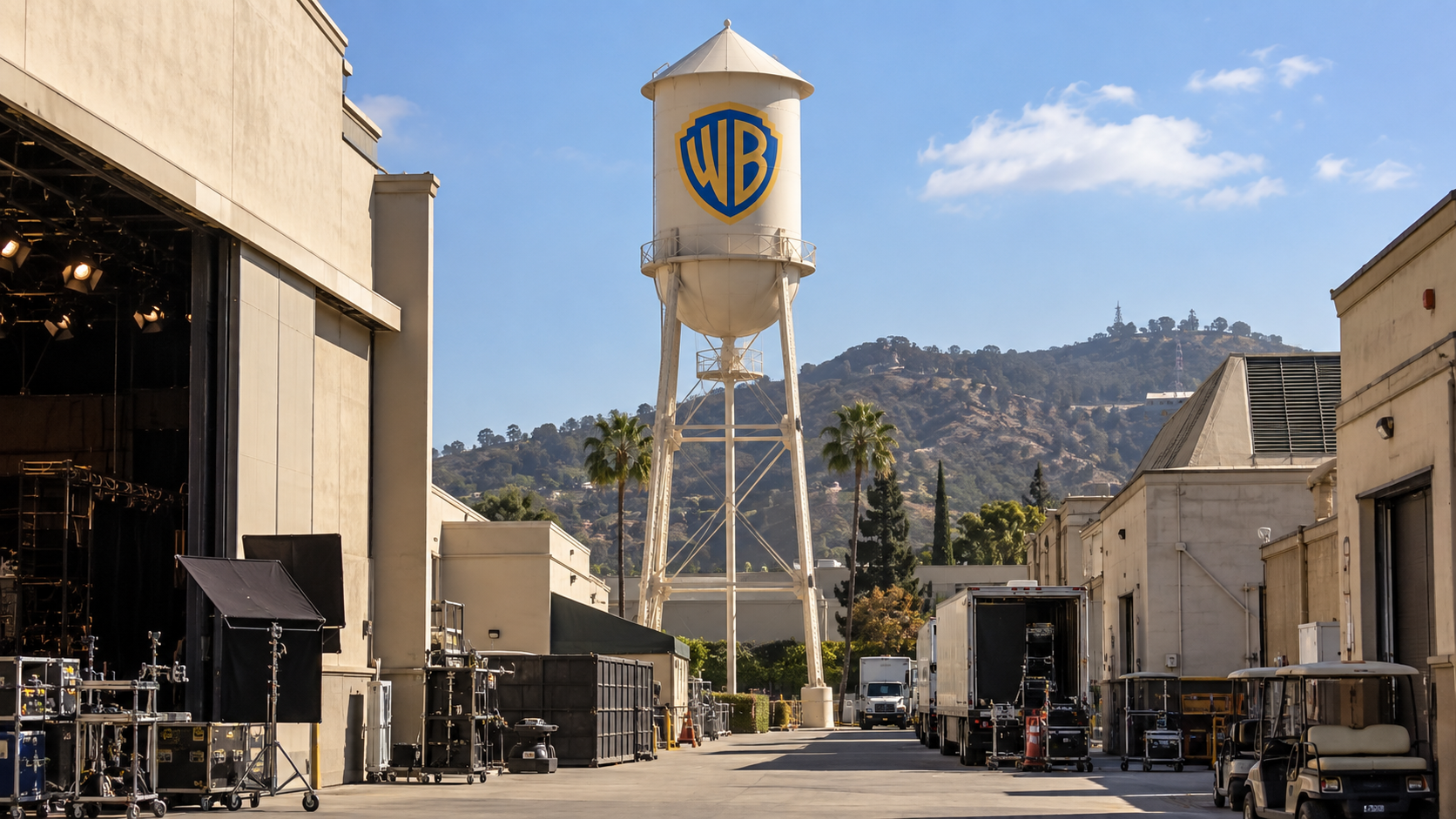
The combined company, now named Skydance Corp., owns the Paramount and Warner Bros. studios, CBS News and CNN. It enters public life with a 12-month share loss of about 50% and fixed commitments on film output.
Equity Markets · FinancialMarkets.com · October 6, 2026 · Tickers: SKYD, NFLX, DIS, CMCSA
For Skydance shareholders, the first day of owning Warner Bros. Discovery looked much like the year that preceded it. David Ellison's company completed the $110 billion acquisition on Tuesday, and its shares fell.
The combined business now carries the name Skydance Corp. and the ticker SKYD. Its shares fell about 4.7% to near $9.32 by early afternoon, from Paramount Skydance's Monday close of $9.775. Over the past 12 months, the stock has lost about half its value.
What the company owns
The combination puts two of Hollywood's oldest studios, Paramount and Warner Bros., under one owner, along with CBS News and CNN. It also gives Skydance control of roughly a third of basic cable programming in the U.S.
The path to closing
The deal cleared the Justice Department, the Federal Communications Commission, the European Commission and the U.K. Competition and Markets Authority. It also required a court-approved settlement with attorneys general from 12 states who had sued to block the merger. Under that settlement, the company committed to $1.5 billion of production spending and to releasing 30 theatrical films a year.
What changes for shareholders
Closing removes the risk that the deal falls apart. It replaces it with execution risk. Investors who held Paramount Skydance now own a much larger company, with two film studios, two newsrooms and a large cable portfolio to combine.
The settlement terms set a floor on output. A commitment to 30 theatrical releases a year and $1.5 billion of production spending could limit how far the company can cut studio costs to pay for the deal.
Reading the first session
A first-day decline after a large merger closes can reflect mechanical selling: arbitrage positions unwinding, index funds rebalancing and holders who wanted the deal, not the combined company, heading for the exit. It can also reflect a judgment on the business itself, with the 12-month loss of about 50% pointing to doubts that predate the closing.
First disclosures
The first combined financial statements and any cost-savings target will be the first hard numbers. How the stock trades over the next several sessions, once arbitrage and index flows settle, will separate mechanical selling from a verdict on the business.