
Seven ships were hit near Hormuz in a week, threatening a costly rebound in Gulf oil exports. JPMorgan says Nvidia's valuation needs 3 to 5 percent annual productivity growth. A record 72 S&P 500 companies guided profits above forecasts.
Everyone Expects a Payoff. Someone Has to Fund the Wait.
Futures opened near flat. A record 72 S&P 500 companies told investors to expect better third-quarter profits than analysts forecast.
Earnings season starts this week. The 10-year held near 5.28 percent and the 30-year stayed above 5.63 percent.
WTI fell despite continued Hormuz attacks, because September's surge may have been exporters' front-running escalation and the G-7 reserve release adds short-cycle supply. PTC (PTC) surged premarket after Schneider Electric agreed to buy it for $22.6 billion in cash. DraftKings (DKNG) jumped after an analyst upgrade.
Iran's parliament speaker said Hormuz will not reopen until Iran's conditions for ending the war are met. The US Air Force withdrew its B-1 bombers from a UK base after a planned terror attack was discovered.
Investor Signal
Friday's reversal in long yields, which closed higher after falling on the jobs report, suggests rates answer to more than the Fed. A 10-year near 5.3 percent raises the cost of every year a payoff takes. That weighs most on borrowers funding AI capacity with debt. This week's Treasury auctions will show whether buyers still want higher yields.
The markets are in a dramatically different place than they were in January.
The Fed is raising rates. Geopolitical instability and energy prices are pushing inflation up.
But S&P 500 earnings growth is still expected to continue — and our analysts have identified 10 stocks well-positioned to perform through Q4 and into year-end.
From tech powerhouses to fuel cell makers to reliable dividend growers — all 10 vetted by MarketBeat's analysts and featured in our just-updated 10 Best Stocks to Own: Fall 2026 report.
Tickers, trends, and growth potential. Yours free.
Gulf Crude Came Back at $15 to $20 a Barrel. Then the Attacks Resumed.
Seven vessels were struck near the strait since September 28.
Iran's Revolutionary Guard warned ships to avoid the south corridor and not trust the US Navy. A US official says Iran's targeting has improved. Iran's parliament speaker added the structural frame. Hormuz won't reopen until Iran's war conditions are met.
The recovery at risk was real. Regional crude exports excluding Iran hit near prewar levels through September 28.
But most of that crude moved via shuttle tankers transferring to ships waiting outside the strait, at $30 million to $40 million per round trip, or $15 to $20 a barrel before insurance.
Rory Johnston of Commodity Context estimates flows may already be down two to three million barrels a day. Ships running without transponders mean the data lags exactly when it carries the most weight.
Investor Signal
The G-7 reserve release adds diesel supply but does nothing for shipping security. Johnston's front-running point changes the read on September's export numbers. What looked like recovery may have been a one-time flush of inventory before a feared escalation. Iran's parliament speaker's statement is the new variable. A tactical ceasefire was always plausible. A structural reopening now requires ending the war.
Nvidia's Price Needs 3 to 5 Percent Productivity Growth. The CBO Sees 1.75 Percent.
JPMorgan calculated that justifying Nvidia's (NVDA) current valuation requires US productivity growth of 3 to 5 percent annually for a decade. The CBO's baseline is 1.75 percent.
The spending against that gap is already committed. PwC projects global data-center spending above $30 trillion by 2050.
Anthropic plans $518 billion, more than 100 times its 2025 revenue. Bain says the race needs more than $4.2 trillion in new revenue within five years. Van Nieuwerburgh puts the US figure at $3.55 trillion in annual revenue by 2032. Cambridge economist Diane Coyle notes past breakthroughs took 10 to 50 years to lift productivity.
Three estimates from different starting points point at the same gap. Van Nieuwerburgh's warning closes the loop on financing. Because much of the debt is leveraged, a relatively modest shortfall in demand or asset values produces losses much larger than the miss.
Investor Signal
Coyle's point is the consolation. Infrastructure survives a bust. Debt with a five-year maturity does not. A 10 to 50 year productivity payoff and a five-year loan maturity cannot coexist, and that is where the losses would land if the revenue doesn't arrive on schedule.
The REAL Reason Trump Is Invading Iran
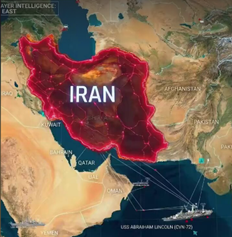
For a moment…
Forget about Trump’s ties to Israel.
Forget about reports of Iran’s nuclear program.
Because my research has led me to believe we’re risking World War 3 with Iran for a completely different reason.
Click here to find out what it is.
If you have even a single dollar invested in the U.S. stock market, this is going to directly impact you.
The Cheaper AI Model Took 952 Steps, Failed, and Cost 14 Times More.
Only 11 percent of companies could forecast their AI spending within 10 percent, per a survey of nearly 400 organizations.
Thirteen percent were off by more than half. Researchers ran models through more than 6,800 tasks across math, programming, and science. In 32 percent of cases, the lower-priced model cost more.
The example that lands hardest is the same prompt sent to a premium model and a cheaper alternative. The premium finished in 85 steps for about $1. The cheaper model ran 952 steps, queried a rival chatbot, searched a second engine, failed, and burned 14 times more in tokens doing it.
The standard fixes are spending caps, model-routing rules, and governance layers. All of them reduce consumption. That connection links this story to the one above. The revenue the buildout needs by 2032 gets paid by enterprise AI budgets that 89 percent of enterprises currently cannot set with confidence.
Investor Signal
The AI trade has been priced on supply , capex, chips, infrastructure. The demand side is most companies are unable to plan their budgets at all. Caps on unpredictable bills slow the revenue curve. If labs shift toward selling predictability over raw capability, the pricing model changes, and with it the revenue trajectory the whole buildout is financed against.
Guidance Hit a 20-Year Record. Big Tech's Ratings Lean on Those Same Forecasts.
Of 116 S&P 500 companies issuing third-quarter guidance, 72 came in above analyst estimates, the most since FactSet began tracking roughly 20 years ago.
Technology accounted for 44. Micron (MU) guided $4.5 billion above consensus.
The 30-year touched 5.69 percent and the 10-year topped 5.3 percent last week, both at 2002 levels. The S&P 500 trades near 19 times forward earnings, down from over 21 in May. The Nasdaq still set a record Friday. Franklin Templeton's Chris Galipeau put 6 percent on the 10-year as the point where the conversation changes.
Since 2023, when the 10-year last touched 5 percent, the largest tech companies have turned to debt at scale. Bloomberg Intelligence's Robert Schiffman said Meta, Amazon, Alphabet, Microsoft, and Oracle now have cash needs exceeding internal sources. Their ratings have held because rising earnings forecasts offset the added leverage. If growth slips, nothing offsets the debt.
Investor Signal
Record guidance is the input, not the output. Big-tech credit quality depends on the same earnings forecasts driving that guidance number. Gains are also narrow. The Nasdaq set a record Friday with four in five S&P 500 stocks below their 50-day averages. Results this month will show whether the companies that guided high can deliver.
There's a HUGE Downside to This Bull Market (And It's Not a Crash)
It's hard to deny we're in a bull market.
Stocks, real estate, gold, and bitcoin are hitting record highs month after month.
But one multi-millionaire investor says this is unlike any bull run we've seen before.
"There's a dark reason why so many assets are levitating—it's a sign we've entered the Most Terrifying Bull Market in History."
For the full story, click here.

Europe Enters Winter With Record-Low Gas Storage for the Season.
Europe's gas storage is 72 percent full, the lowest on record for this date. The 2022 to 2025 average was 90 percent. Germany is at 57 percent.
Qatar declared force majeure in March and has shipped 536 fewer LNG cargoes than a year earlier. European buyers let Asia take most Atlantic cargoes this summer, betting on a mild winter. Six One Commodities ran the past ten winters' weather against today's reserves. In three, storage would fall low enough to require emergency measures.
Qatar has not restarted its liquefaction plants, which is the most direct available signal about when it expects peace to come.
Investor Signal
Since 2022, Europe has filled storage early. This year it bet on the weather instead. Three-in-ten odds of emergency measures are currently priced at zero in gas forwards. The longer view runs the other way. A severe enough crunch accelerates every planned LNG project, and Six One's Aimie Parpia says a worse crunch now means a larger glut later, at prices that break long-term contract economics.
Corporate America has never guided this confidently. The weekend showed what waiting for the payoff costs.
Gulf producers pay $15 to $20 a barrel just to move crude past attacks that Iran now says will continue until the war ends on its terms. AI builders borrow against productivity gains that three separate estimates say history can't deliver on time. Most companies can't forecast their own AI bills. Big-tech ratings lean on the forecasts that record guidance is built from. And Europe is betting on warm weather with storage at a seasonal record low.
A weaker job market bought the Fed time. Everyone else is still paying for theirs.
3 Market Signals Most Investors Aren't Watching
The headline is usually the last place the story shows up.
By the time everyone is talking about a stock… the signals underneath it may have been changing for weeks.
• Institutional money moves.
• Options activity changes.
• Management confidence shifts.
• Fundamentals improve, or quietly begin telling a different story.
That’s exactly what our analysts found in three stocks where the evidence stopped agreeing with itself.
And in all three cases, the story is still developing.