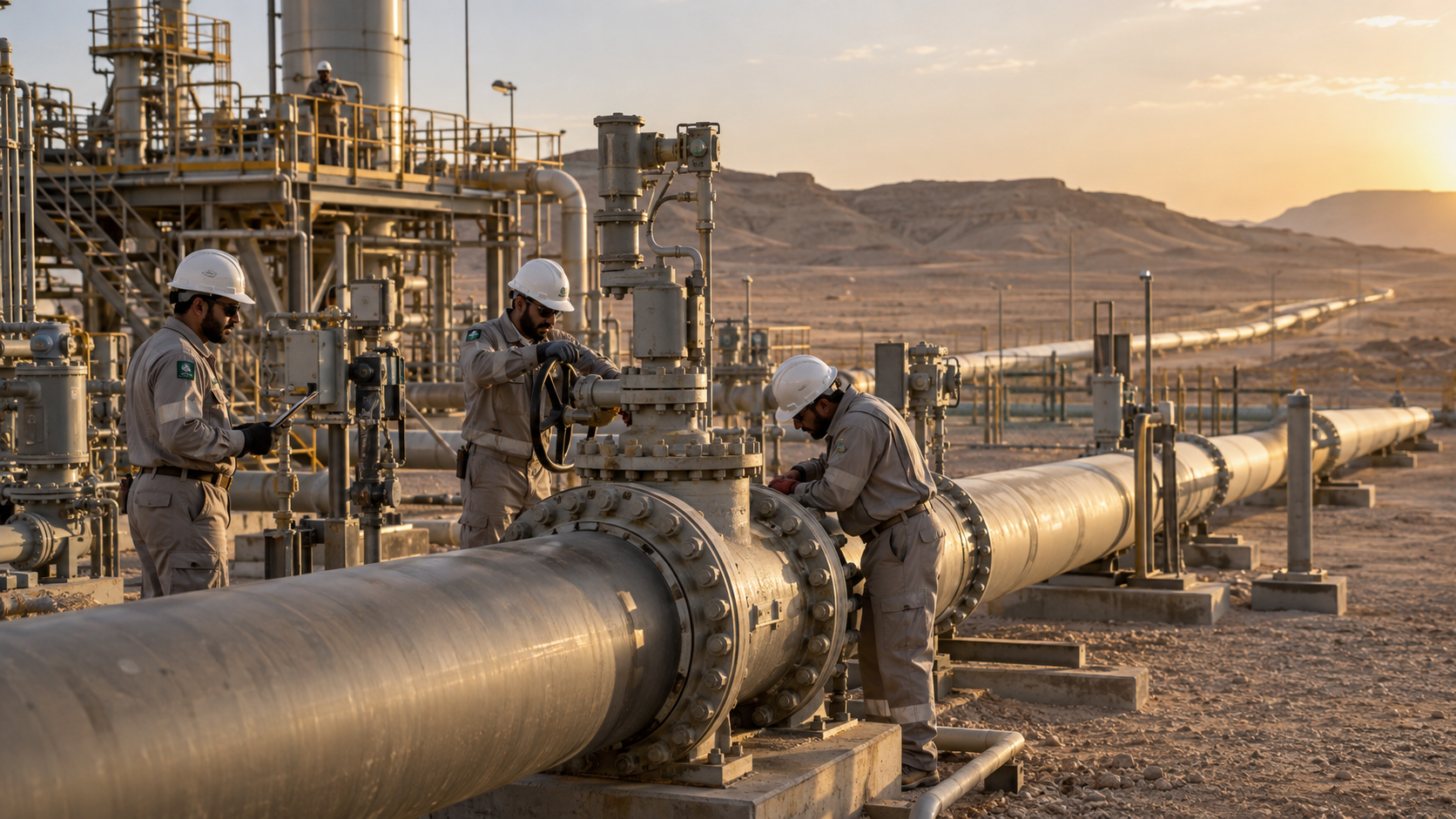
The East-West line that lets the kingdom ship crude without touching the Strait of Hormuz has restarted after a drone strike. The market is treating it as a finished repair. The timeline says otherwise.
Saudi Arabia has restarted the East-West Crude Oil Pipeline, the roughly 1,200-kilometer line that carries crude from the kingdom's Eastern Province fields to the Red Sea export terminal at Yanbu. The pipeline was knocked offline by a drone attack on September 10, and its return removes one of the most concrete physical constraints on Gulf supply that has built up during the conflict with Iran.
At full strength, the line can move about 7 million barrels a day, with roughly 2 million barrels feeding domestic refineries and up to 5 million available for export. That is the figure driving the market's enthusiasm. It is not what is flowing today. The restart is phased, with partial service routed around a damaged pumping station, and full restoration is expected to take roughly six weeks depending on the pace of repairs.
The gap between those two numbers matters because of how badly the outage hurt. With the pipeline down, Saudi exports fell to about 3 million barrels a day in August, a nine-year low. The kingdom was forced to redirect shipments through the Strait of Hormuz, supertankers holding about 14 million barrels sat at Gulf export terminals, and Saudi Aramco told at least two European refiners they would receive no crude allocations for October.
Those zeroed-out European allocations are the most direct test of how quickly the restart turns into physical relief. If Aramco restores October or November cargoes to those buyers, the pipeline is doing real work. If allocations stay tight through the six-week ramp, the price relief that accompanied the restart headline has run well ahead of the barrels.
The restart also arrived on the same day as the first direct U.S.-Iran talks in three months, and the two have been folded together in most market commentary. They are different stories. The talks are a negotiation whose outcome is unknown. The pipeline is a repair job that would be proceeding regardless of what was said in New York. Brent's slide below $100 overnight and its return above that level by Wednesday morning suggest traders are still working out how much of the recent decline belongs to each.
For investors, the practical read is that the East-West line restores Saudi Arabia's ability to route around Hormuz over the coming weeks rather than overnight. European refiners and tanker owners with exposure to Red Sea loadings stand closest to the benefit, and the pace of Aramco's allocation decisions is the clearest signal of how fast that benefit arrives.