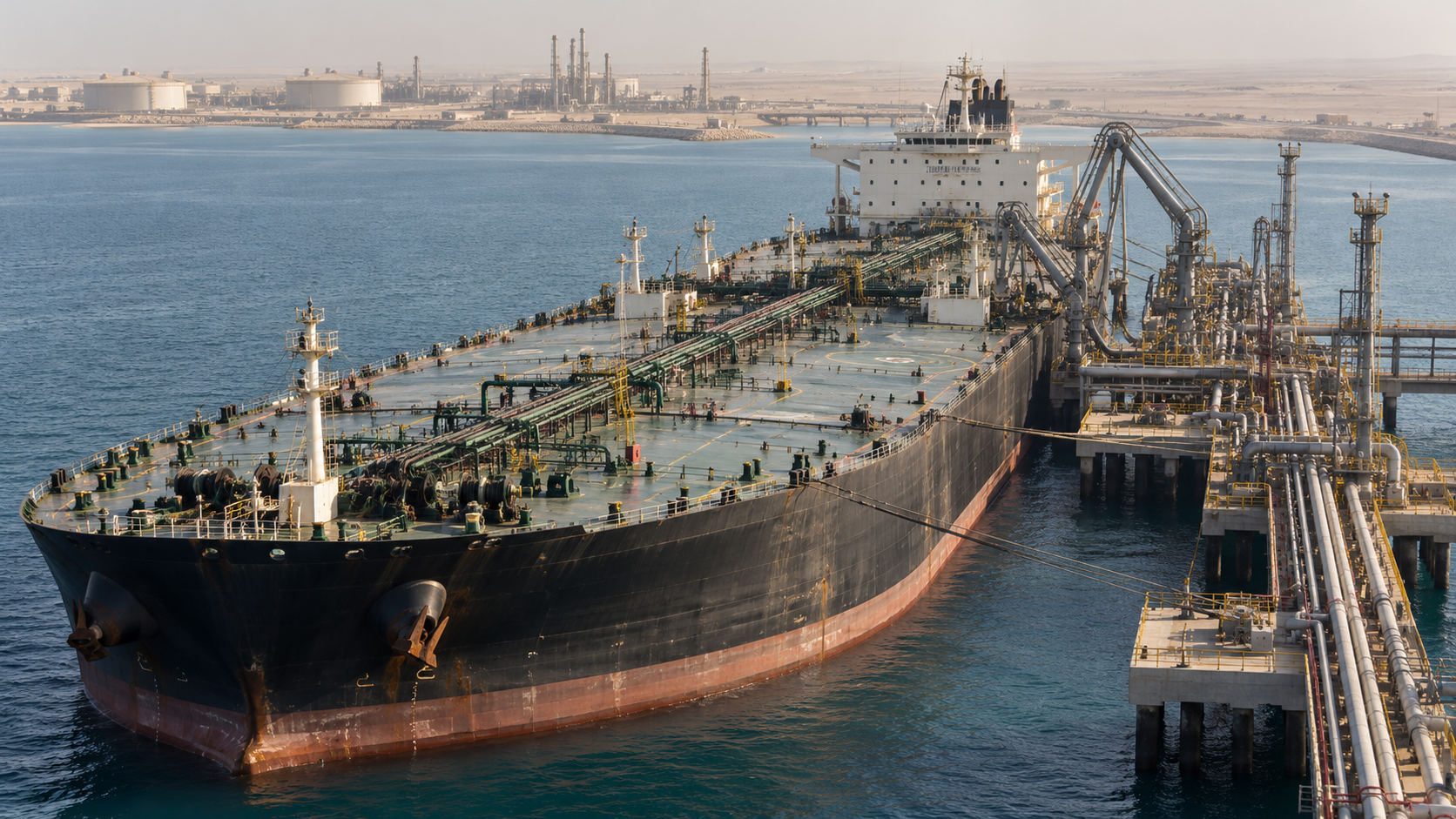
OPEC+ output rose by about 900,000 barrels a day last month, with Saudi Arabia the biggest contributor, and OPEC raised its 2027 demand forecast. Within hours, two senior Iranian officials described a new campaign against Hormuz shipping meant to hold prices up through the U.S. midterms.
The oil market received two signals in less than a day that cannot both set the price for long.
The first was about supply. OPEC+ produced an average of 39.07 million barrels a day in September, about 900,000 more than in August, according to OPEC's monthly report released Tuesday, which relies on secondary-source estimates. Saudi Arabia was the biggest contributor, though the size of its gain depends on who is counting. The kingdom told the cartel it pumped 8.372 million barrels a day, more than 2 million above its August rate, after Aramco stepped up loadings from its Gulf terminals. By OPEC's secondary-source estimates, Saudi output rose by about 744,000 barrels a day; the International Energy Agency puts the gain near 2.3 million. Russian output slipped by 38,000 barrels a day.
The second was about intent. Two senior Iranian officials said Tehran is using new tactics against ships in the Strait of Hormuz with the goal of keeping crude prices high and influencing the November elections; one said the change began about 10 days ago. Operations will expand to the Gulf of Oman and beyond, they said. "Just when they think they are getting close to the point where prices will fall, we will push them away from it. This is a game of chess," one of them said. "It will be complete closure soon," one of the officials said. The officials offered no detail that could be checked independently, and the Pentagon and Iran's Foreign Ministry did not immediately respond.
What the water shows
The physical record supports part of each story. Incidents are running at a pace of at least five in two days, according to maritime security data. On Tuesday alone, a tanker and a container ship inside the strait were hit by projectiles of unknown origin, according to the U.K. Maritime Trade Operations center. A U.S. military official said the Revolutionary Guard now uses unarmed spotters in small boats, but that Iran has been unable to stop a ramp-up in exports through the waterway. U.S. Central Command said American and partner forces "clearly control" the strait and helped move more than 19 million barrels through it on Monday.
Saudi Arabia's energy ministry said an Aramco administrative building in Dhahran was targeted on Tuesday evening, causing a "limited fire" and no casualties. It did not say who carried out the attack; the Houthis had named Aramco's Dhahran headquarters as a target. No damage to production or export facilities has been reported.
OPEC's own forecast
OPEC cut its 2026 demand growth estimate for a sixth straight month, to 180,000 barrels a day, but lifted 2027 growth to 2.55 million barrels a day, for total demand of 108.3 million. Its reasoning was inventory, not consumption. "This is assuming that oil demand in 2026 will indeed soften as currently expected and will be further bolstered next year by the need to replenish oil inventories," the group said.
That forecast cuts both ways. Barrels returning from the Gulf would first refill depleted tanks rather than flood the market, which supports prices even as supply recovers.
The tape
Brent settled at $105.69 on Tuesday, down about 0.9%, then rose more than $1 in early Asian trading before giving most of it back. It stood at $105.93 at about 4:45 a.m. Eastern on Wednesday, with U.S. crude at $94.57. On Polymarket, the contract on the U.S. blockade of Iran ending by Oct. 31 slipped to 12.5 cents from 13.5 cents overnight.
Market implications
One reading is that supply is winning. Saudi Arabia reported a jump of more than 2 million barrels a day in a single month, independent estimates also show a sizable increase, a U.S. official says exports through Hormuz are rising despite the attacks, and Brent gave back most of its early overnight gain.
A second reading is that the risk premium now has a declared defender. Iranian officials have stated a price objective with a deadline, attacks have returned to their recent peak pace, and an attack on an Aramco property, a site the Houthis had named as a target, shows the regional fighting reaching the kingdom's energy company. A premium that is actively defended erodes more slowly than one left to decay.
What to watch
The IEA Governing Board's meeting on Thursday, any further incident reports from the strait, and the Nov. 1 meeting of the seven OPEC+ producers that set voluntary output levels will show which signal sets the price into Election Day on Nov. 3.