Both defense contractors reported record backlogs and raised their earnings forecasts. RTX's beat included 25 cents a share of tariff-cost recoveries and its free cash flow fell 47%. Northrop rose about 5% while RTX gave back a premarket gain to trade slightly lower.
Two of the largest U.S. defense contractors reported on the same morning with the same headline: record backlog, higher forecast. The market treated them very differently.
Northrop Grumman shares were up 5.2% at $537.18 at about 2 p.m. Eastern, after rising as high as $550.89. RTX was down 0.4% at $191.37, having traded as high as $196.94 after gaining before the open.
Two strong quarters
RTX reported third-quarter sales of $24.97 billion, up 11%, with organic growth of 12%. Adjusted earnings were $2.26 a share, up 33% and well above the $1.78 LSEG consensus. Its backlog reached a record $340 billion, of which $176 billion is commercial aerospace and $164 billion defense. "Demand for our products remains robust with over $81 billion of new commercial and defense awards, resulting in a record backlog of $340 billion," Chief Executive Chris Calio said.
Northrop reported sales of $11.12 billion, up 7%, and diluted earnings of $7.89 a share, against a consensus estimate of $7.18. Its backlog reached a record $109.6 billion, up 15% from the end of last year, with orders running at 1.5 times sales. Aeronautics sales rose 14% and Defense Systems 12%.
Both raised their full-year earnings forecasts. RTX now expects adjusted earnings of $7.65 to $7.75 a share, up from $7.10 to $7.25, and sales of $97.0 billion to $97.5 billion, up from $95 billion to $96 billion. Northrop raised its range for mark-to-market-adjusted earnings to $29.35 to $29.75 a share from $28.60 to $29.10, while keeping its sales forecast at $43.75 billion to $44.25 billion.
Where they differ
The difference is in what sits inside the numbers. RTX's adjusted earnings include 25 cents a share from recoveries of tariff costs paid under emergency-powers tariffs. Excluding that, the quarter's adjusted earnings would be $2.01, still about 23 cents above consensus but a much smaller beat. The raised full-year cash forecast of $9.0 billion to $9.2 billion, up from $8.5 billion to $8.75 billion, is driven primarily by the same recoveries, according to the company. And free cash flow in the quarter fell about 47%, to $2.12 billion from $4.03 billion.
There were other drags. Pratt & Whitney's operating profit fell 19%, including a $363 million charge tied to a customer's bankruptcy.
Northrop's quarter had its own one-time help. Its adjusted free cash flow of $1.81 billion included $371 million from a one-time equipment sale, and its tax rate fell to 13.4% from 16.9%, flattering earnings. Its operating margin slipped 0.5 percentage point to 11.4%. But its forecast for the rest of the year rests on its operations, and its chief executive tied the backlog explicitly to future growth. "I'm confident our new record backlog, well-positioned portfolio and investments, and industry-leading performance will continue to drive sales and earnings growth as reflected in our 2027 outlook," Kathy Warden said. Accounts of the company's presentation put its 2027 sales growth outlook at 5% to 7%.
What the split says
The split is consistent with investors discounting gains that rely on recoveries and paying for growth that looks repeatable. RTX's bigger percentage beat and bigger backlog came with a halved quarterly cash flow and a raised forecast built partly on refunds. Northrop's smaller beat came with a growth outlook for next year. Neither stock's move can be pinned to a single cause.
That may be a useful guide for the rest of the defense reporting season. Both companies reported record backlogs, and RTX pointed to munitions demand. If the pattern holds, what distinguishes the stocks will be how much of this year's earnings comes from items that will not recur.
Market implications
One reading is that RTX is being undervalued for an accounting nuance. Its backlog is more than three times Northrop's, its growth is faster, and the tariff recoveries are real cash. Calio said munitions contracts provide "almost a decade of demand visibility."
A second reading is that the market is right to separate the two. RTX's cash flow fell by nearly half, part of its earnings and most of its cash guidance increase come from recoveries, and Pratt & Whitney's profit fell. Northrop's growth comes from its programs.
What to watch
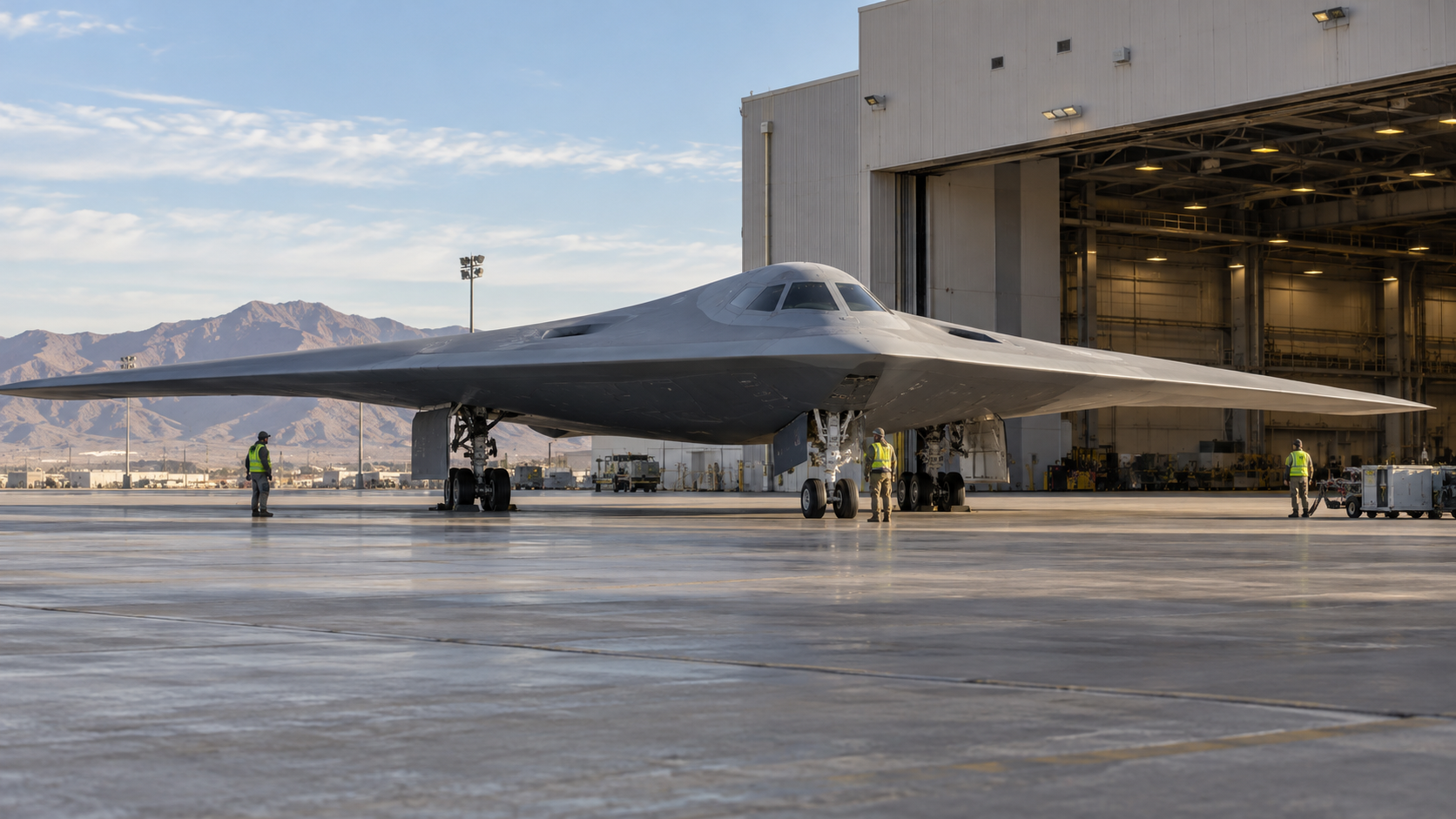
RTX's cash flow in the fourth quarter excluding tariff recoveries; Pratt & Whitney's engine repair and delivery pace; Northrop's B-21 production ramp and spending; defense budget timing, which Northrop said affects the low end of its 2027 range; and Lockheed Martin and General Dynamics results. A fourth-quarter RTX cash figure that recovers without help from recoveries would narrow the gap between the two stocks.