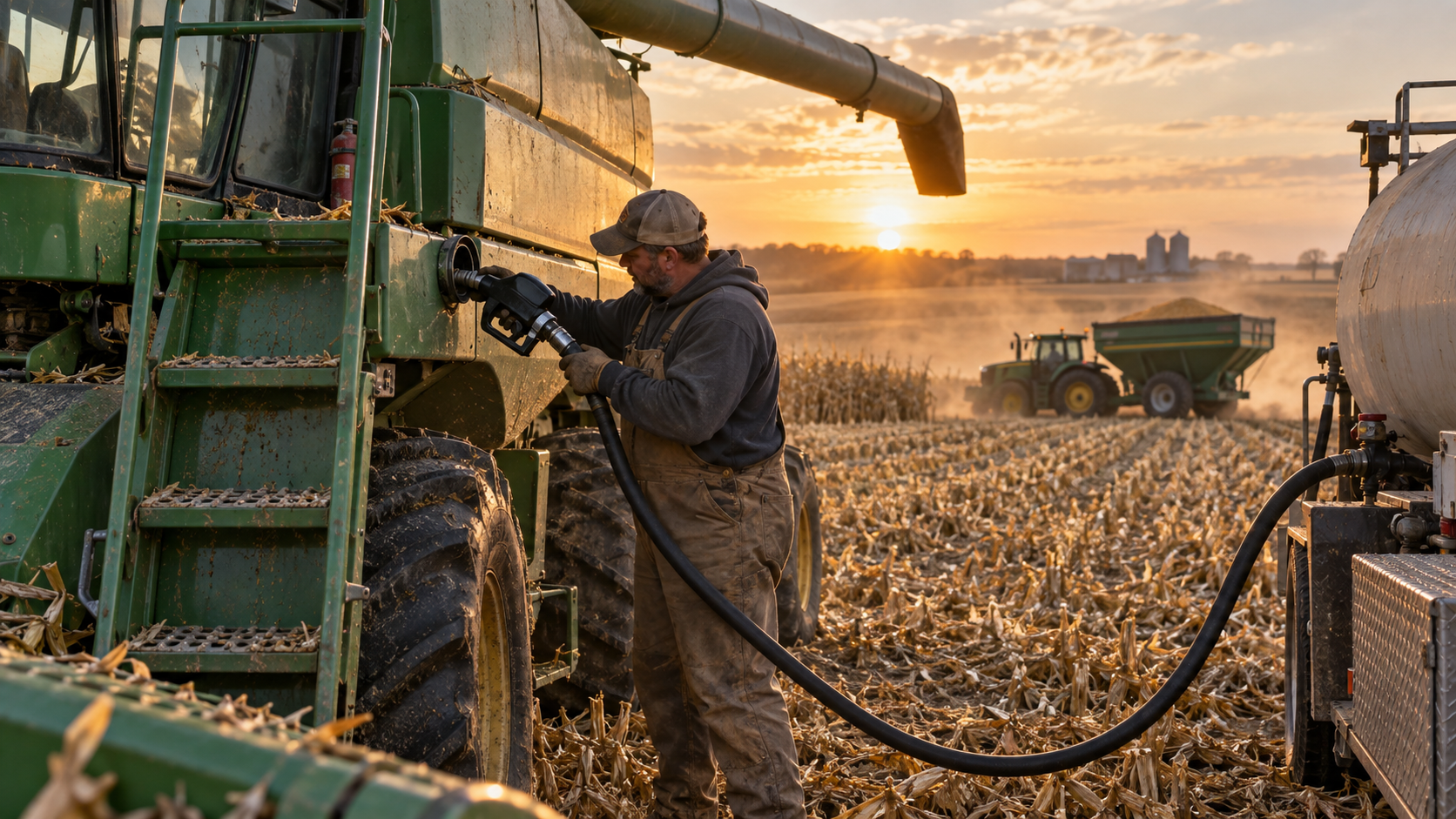
Diesel at $6.29 a gallon is already reshaping harvest-season decisions on the farm, and the cost is set to show up gradually, not immediately, at the checkout line.
U.S. diesel prices hit a record high this week, averaging $6.29 a gallon, up 68% from $3.74 a year earlier, according to Energy Information Administration data, arriving at the worst possible moment for farmers in the middle of harvest season. Global fuel supplies have tightened amid the broader U.S.-Israel conflict with Iran and Ukrainian attacks on Russian oil refineries, and the effects are now visible on individual farms across the country.
In northeast Missouri, a corn, soybean and cattle farmer said a single combine can burn through 300 gallons of diesel during harvest. In southeast South Dakota, a farmer growing soybeans and corn while raising cattle said he expects to spend as much as $1,500 a day fueling just one combine this season, roughly double what it cost him last year. In California, a vegetable grower said his fuel costs have climbed from about $5 to $7 a gallon, a roughly 40% increase, and the jump has been steep enough that he has put decades-old, gasoline-powered tractors from the 1950s back into service and parked one of his diesel trucks to save money. A Purdue University agricultural economist puts the added cost at roughly $11 per acre for corn and $7 per acre for soybeans compared with a year ago.
The pain is not confined to the field. Refrigerated freight rates for produce moving out of Washington state's Yakima Valley have hit a four-year high, and the cost to transport produce out of California is up 40% to 120% from a year ago, with diesel in some California cities topping $8 a gallon. One freight industry analyst warned the trucking sector may be approaching "diesel price driven bankruptcies" among independent haulers who have to pay for fuel upfront, before they are reimbursed by shippers.
Consumer food prices rose 2.7% year over year in August, a figure that predates the full brunt of this month's diesel spike. That gap matters for anyone trying to gauge what comes next. Higher fuel costs at the farm and on the highway do not show up at the grocery store overnight. They move through planting decisions, harvest logistics, freight contracts and processing costs before they ever reach a price tag, a process that typically plays out over months rather than days. That means the food inflation consequences of this diesel spike are still largely ahead of consumers rather than behind them.
Policymakers are beginning to take notice. A U.S. senator has formally asked the Agriculture Secretary for temporary relief measures for farmers facing the fuel cost spike, and the Department of Agriculture has said it is reviewing the situation. Whether that translates into meaningful relief before diesel costs work their way into food prices is an open question.
For investors, the read-through spans agriculture, transportation and food retail alike. Farm margins are being squeezed in real time, independent trucking capacity is under strain, and grocery prices have room to climb further before the current run of diesel costs is fully digested by the supply chain.