Two oil-major executives, on the same stage, gave investors two different answers about how fast Qatari gas actually comes back. Neither one is "weeks."
At the Gastech conference in Bangkok earlier this month, Shell's president of integrated gas, Cederic Cremers, was asked what happens to global LNG supply if the Strait of Hormuz reopens. His answer was more careful than the headlines that followed it. "Even if we would see a normalisation or reopening of the Strait of Hormuz, I don't think you would immediately go back to the type of flows that we saw before the war started," Cremers said, pointing to both production capacity and marine logistics as separate, multi-step problems.
ExxonMobil's senior vice president for LNG, Peter Clarke, sounded a different note at the same event, saying he expected Qatar to re-enter the market "rapidly" once the strait opens, citing undamaged production trains and Qatar's standing as, in his words, "one of the most reliable suppliers in the world."
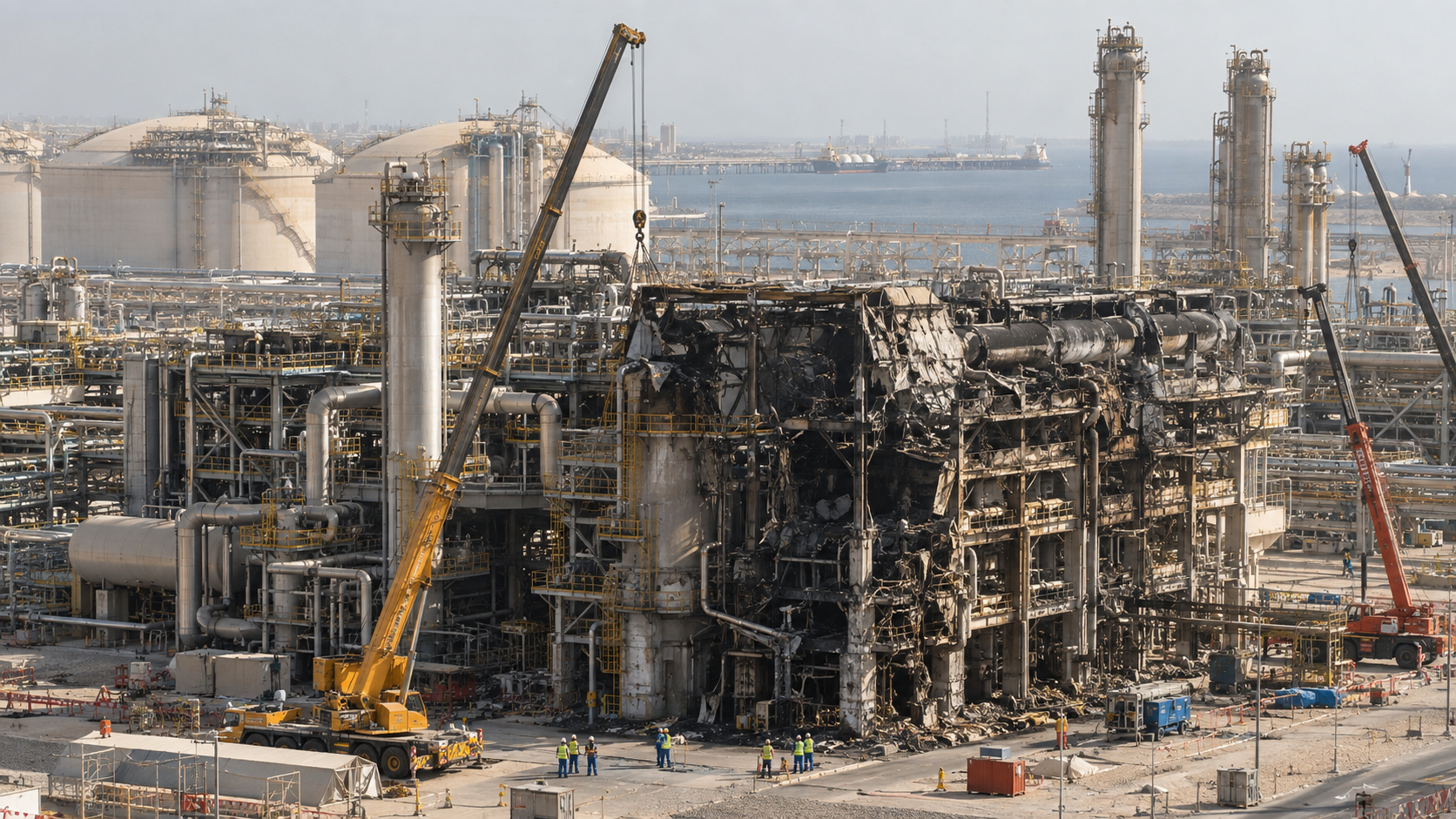
Both executives can be right, because they are answering different questions. Reopening the strait is a transit problem: existing, undamaged Qatari cargoes either can or can't sail through it safely, and that is genuinely a matter of weeks once the risk clears. But a meaningful share of Qatar's production capacity is not merely idled behind a blocked shipping lane. Iranian strikes destroyed two of the country's LNG export trains outright, taking out roughly 17% of national capacity, or about 12.8 million tonnes a year. QatarEnergy's own reported timeline to physically repair that capacity runs three to five years. Shell's own Pearl gas-to-liquids facility, separately damaged, isn't expected back online until around the end of the first quarter of 2027.
That distinction, transit risk versus destroyed capacity, is the part of this story that keeps getting flattened into a single "Hormuz reopens, gas flows again" headline. It is also consistent with how Qatar's state energy company is actually behaving: QatarEnergy has spent the past several weeks locking in multiyear supply agreements with U.S. buyers running through 2031, the kind of long-dated commercial commitment a supplier makes when it is planning around a genuine capacity shortfall, not merely waiting out a shipping detour.
For investors in LNG exporters, European utilities and Asian gas buyers, the practical read is this: a Hormuz reopening headline, whenever it lands, should be treated as a transit-risk relief event first and a supply-restoration event only partially. The gas that would have moved through the two destroyed export trains does not come back on any timetable a diplomatic breakthrough can touch. It comes back on Qatar's own repair schedule, which by its own account, runs into the back half of this decade.