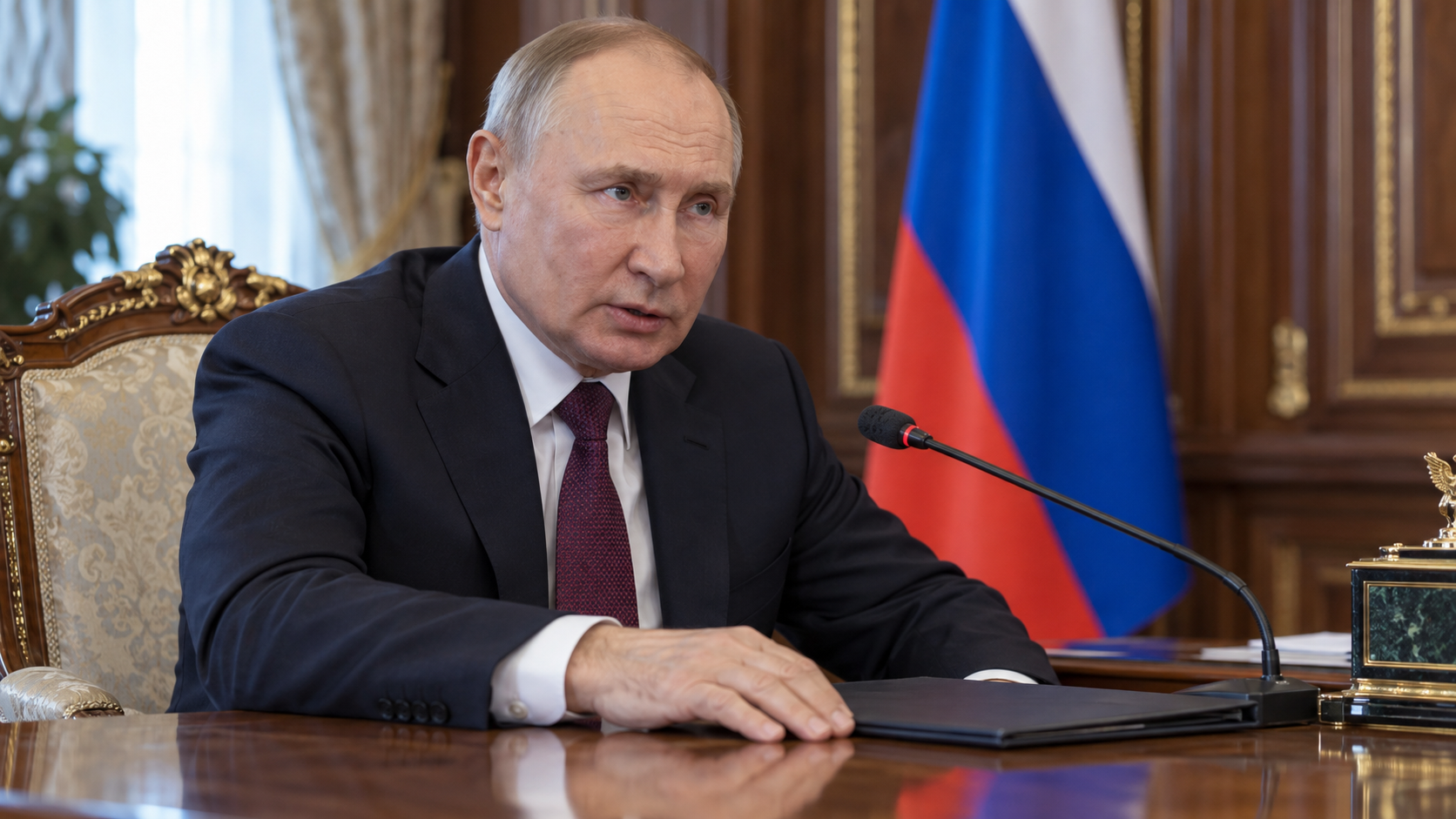
Russia's president has proposed a meeting with Presidents Trump and Xi Jinping at next month's APEC summit in Shenzhen, an idea first raised in the same call that produced the diesel deal, and the Kremlin says it is being discussed. Trump has not agreed. He defended the waiver on Sunday as a way to keep Russia at the table.
The Russia sanctions waiver looked open-ended on paper. A proposed summit gives it a possible deadline.
President Vladimir Putin has proposed a three-way meeting with President Trump and Chinese President Xi Jinping next month to negotiate an end to the war in Ukraine, with the Kremlin suggesting the sidelines of the Asia-Pacific Economic Cooperation summit in Shenzhen on Nov. 18 and 19. Putin first raised the idea in his Oct. 9 call with Trump, the same conversation that produced the agreement allowing Russian diesel back into the market, The Wall Street Journal reported.
Kremlin spokesman Dmitry Peskov confirmed the idea was being discussed. "There is no clear understanding yet regarding the meeting itself or its potential agenda, although all three parties acknowledge the hypothetical possibility," he said. A senior U.S. official said Trump has not agreed but could be receptive.
The waiver, defended
Trump defended his decision to waive the new sanctions and tariffs required by the Graham Act, a law he signed in September. He issued the waiver order on Friday, two days before the measures were due to take effect. "I am in the process of negotiating Peace in the war between Russia and Ukraine, and don't want to do anything that will drive, foolishly, Russia away from the bargaining table," he wrote on social media on Sunday. He also said Ukrainian President Volodymyr Zelenskyy "doesn't want to end this war."
Treasury Secretary Scott Bessent offered a different defense in a television interview on Sunday. "No sanctions were lifted Friday. No sanctions were lifted. There was a 60-day period. The only thing that has been lifted is the diesel embargo," he said. He also disclosed that Europe had refused a U.S. request this spring to put secondary tariffs on China and India. "So why should the U.S. bear the burden?" he said.
Zelenskyy, for his part, said in an interview that Washington was pushing Ukraine toward capitulation, while adding, "I am not saying that this is the goal our partners are pursuing." He cited restrictions on Starlink and delays to deliveries of Patriot interceptors, and offered to halt strikes on Russian oil refineries in exchange for Patriots.
Energy Secretary Chris Wright said any easing of Russian exports is limited to diesel and that Europe's response to U.S. requests to release diesel stockpiles has been slow.
Why the timing matters
The executive order keeps the waivers in place until the president or secretary of state decides otherwise, with no end date. Cabinet officials have referred to a 60-day review. A summit in mid-November would fall inside that window, and would make the sanctions question part of a wider negotiation that includes China, the largest buyer of Russian crude.
The war has not paused in the meantime. Ukrainian drones struck the Petersburg Oil Terminal and a depot near St. Petersburg on Oct. 18, and the regional governor confirmed impacts at the terminal. The volumes affected have not been disclosed.
The market read
Oil fell on Monday, and the waiver was one of several developments in the background. For buyers of Russian crude in India and China, the immediate threat of 100% U.S. tariffs on their exports is off the table while talks are being explored.
Market implications
One reading is that the waiver is a deferral with a deadline. A summit is now on offer, officials point to a 60-day review and Wright says the easing covers diesel only. On that view, the sanctions threat returns if talks fail, and mid-November to mid-December is a live window for the discount on Russian crude.
A second reading is that the easing is effectively open-ended. The order has no end date, Trump says he has not decided, Europe is slow to share the diesel burden, and a summit gives Moscow reasons to keep talking rather than settle. On that view, secondary tariffs on Indian and Chinese buyers are off the table for the foreseeable future.
What to watch
Any White House response to the summit proposal; Secretary of State Marco Rubio's talks with Indian Foreign Minister S. Jaishankar in Mumbai on Tuesday; the Treasury's written license terms; the discount on Russian crude and European diesel margins; and further strikes on Russian export terminals. A confirmed summit date would turn the waiver into a negotiating clock.