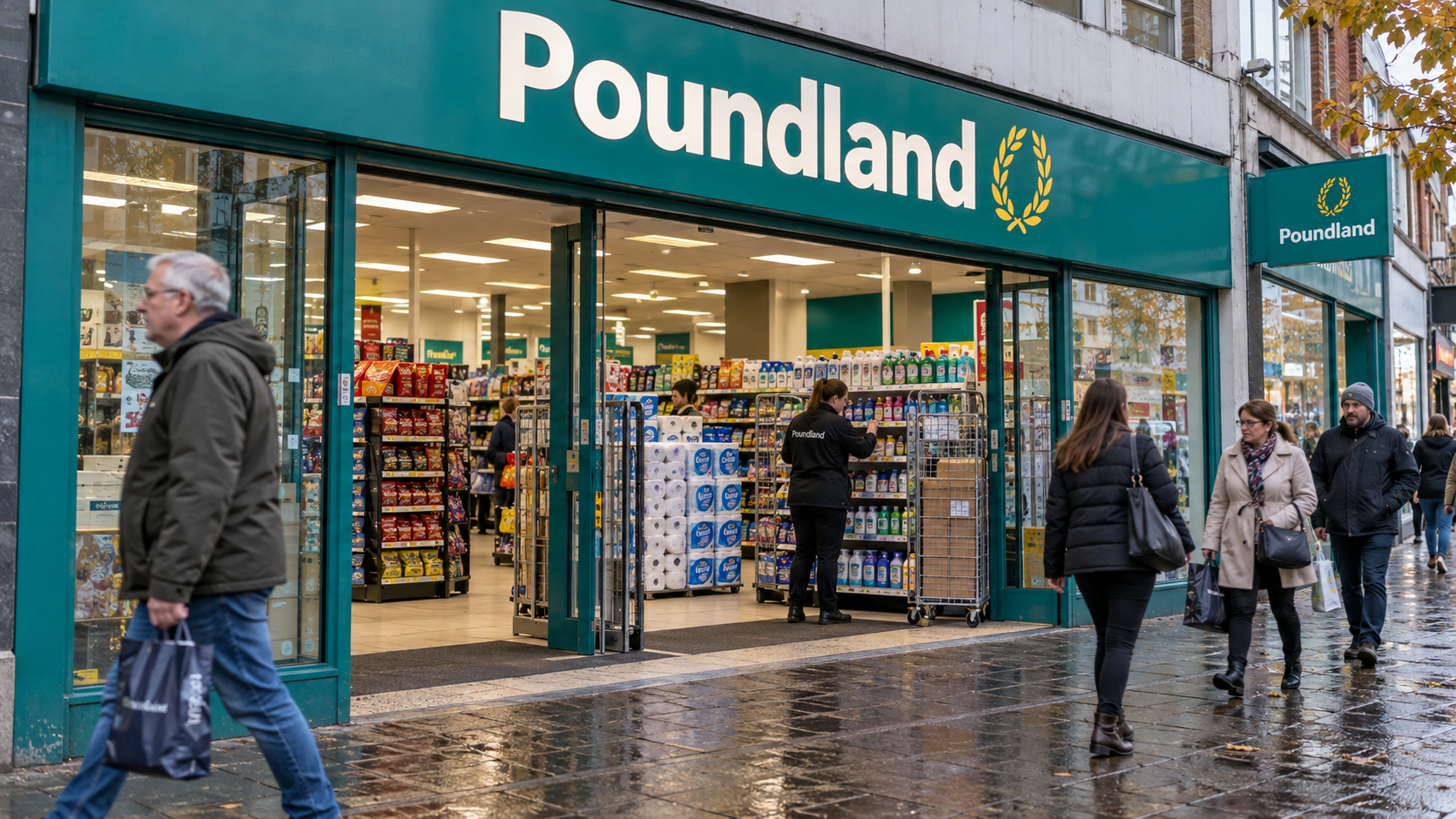
Gordon Brothers, which bought the discount retailer for £1 last year, turned down an offer from Martin Property Group and is reported to be preparing to appoint administrators. About 12,000 jobs and 600 stores are at stake.
A going-concern sale was on the table for Poundland. Its owner appears to prefer a different route, and the government has noticed.
Gordon Brothers, the distressed-investment firm that bought the British discount chain for £1 in 2025, rejected the only solvent offer for the whole group, from Martin Property Group, and is poised to file a notice of intention to appoint AlixPartners as administrator, the Guardian reported. Three independent directors have resigned. Business Secretary Jonathan Reynolds wrote to Gordon Brothers, and asked adviser David Bickerton to "establish the facts" on whether the owner is unnecessarily forcing the chain into administration, the Financial Times reported.
Poundland has about 600 stores and about 12,000 employees. As of Wednesday afternoon in London, it had not been confirmed that the company had entered administration.
The loan at the center
The dispute turns on a £30 million loan that Gordon Brothers inherited when it bought the business. City AM reported that Martin Property Group's bid stalled because it had not offered to repay that loan up front, and that Gordon Brothers would re-engage if it did. The loan's terms, including whether it is secured, have not been disclosed.
Martin Property Group has not ruled out an improved offer, City AM reported.
Why investors outside retail should care
The case puts a common private-capital strategy under political scrutiny. Distressed buyers often acquire struggling businesses cheaply, lend to them on secured terms and decide later whether to restructure, sell or wind them down. When the choice involves thousands of jobs, the government's interest can change the calculation, and a business secretary asking whether administration is necessary is a public test of that model.
The owner's case and the critics'
The owner's case, as reported, is that a buyer should repay the £30 million loan up front, that a whole-group bid that does not do so leaves it out of pocket, and that an administration can still result in parts of the chain being sold as going concerns.
The critics' case is that a solvent buyer was willing to keep the whole chain open, independent directors chose to resign rather than proceed, and an insolvency that protects the owner's loan at the expense of employees and suppliers invites the kind of intervention now under way.
What to watch
Whether a notice of intention to appoint administrators is filed, the outcome of the business secretary's fact-finding, any renewed bid from Martin Property Group, and the outcome for stores and jobs if an administration proceeds.