A $5 billion valuation, a sovereign wealth fund at the venture stage, and a two-tranche structure that says something about how these rounds are now being built.
Positron AI announced a $375 million Series C and a separate Series C-1 of up to $500 million on . The two tranches could total $875 million if the second is fully funded. The reported $5 billion post-money valuation applies to the Series C.
The structure is the part worth reading closely. The Series C is $375 million, with a reported $5 billion post-money valuation, and was co-led by NEA, Andra Capital, Atreides Management, Valor Equity Partners and SemiAnalysis Capital. A separate Series C-1 of up to $500 million was co-led by NEA and the individual investor Jim Clark.
The potentially larger tranche is the second one, and it carries a partially different lead investor set and an "up to" ceiling rather than a committed amount. That is a more granular capital structure disclosure than most late-stage rounds provide, and it describes a company layering tranches with different investor compositions rather than raising one flat round. The $5 billion valuation attaches to the Series C specifically.
Who else is in it
The participant list includes Qatar Investment Authority, DFJ Growth, Resilience Reserve, Arena Private Wealth, Natural Capital, Helena, 1517 Fund, Flume Ventures, Unless, Boardman Bay Capital Management, Fincadia Advisors, Banyan Ventures, U First Capital, VentureTech Alliance, Hudson River Trading, Cisco Investments and Naver Ventures. Individual allocations were not disclosed.
Two names carry information beyond capital. Qatar Investment Authority is a sovereign wealth fund participating at the venture stage, rather than at the pre-IPO or infrastructure-debt stages where sovereign capital has typically entered the AI buildout. SemiAnalysis Capital is the investment vehicle of a semiconductor analysis firm, and its presence as a co-lead implies specialist technical diligence rather than generalist venture underwriting.
Four directors joined with the round: Forest Baskett of NEA, Gavin Baker of Atreides Management, Thomas Jermoluk from Jim Clark's office, and Dylan Patel of SemiAnalysis Capital.
What the money is for
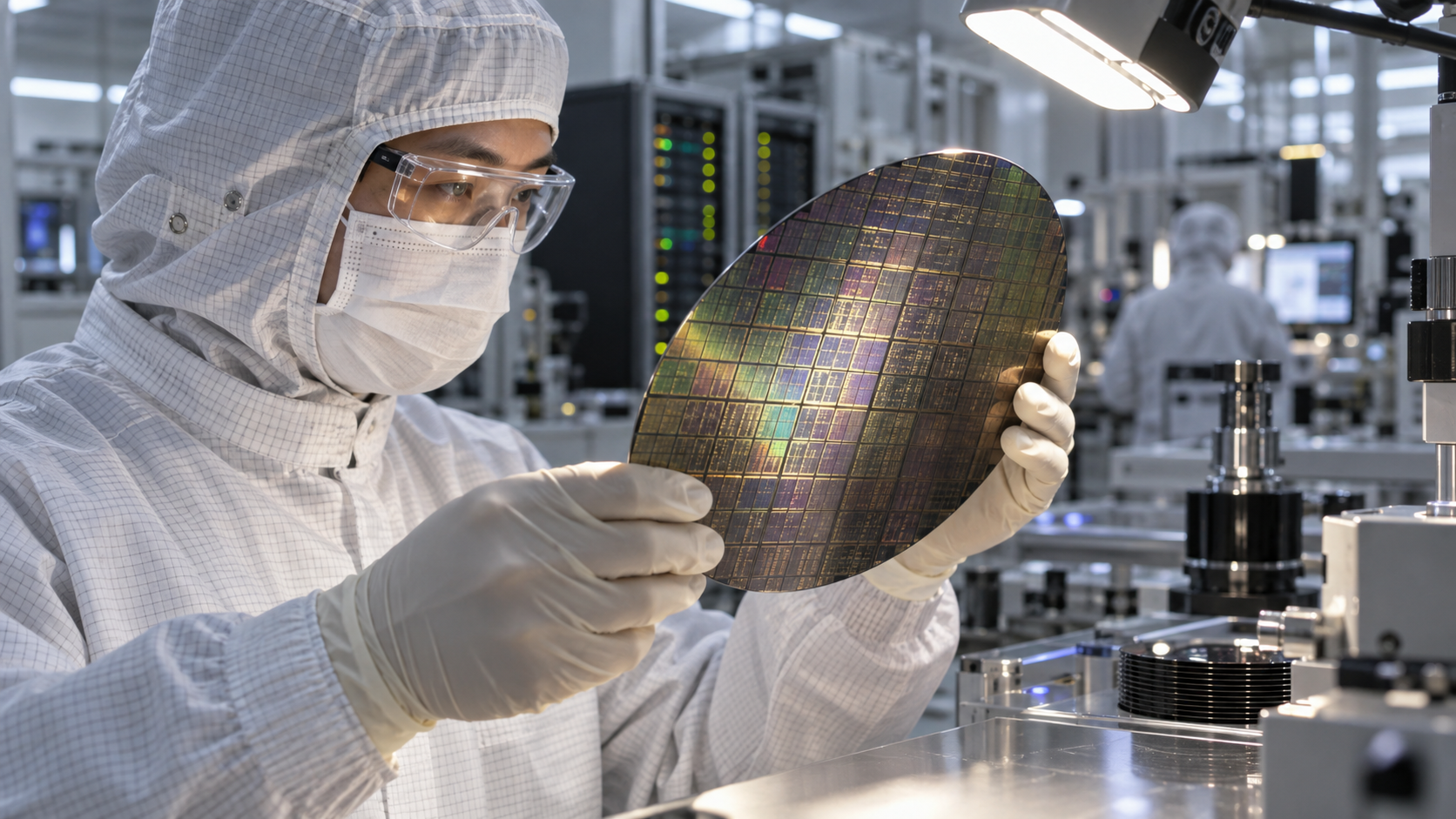
Proceeds are earmarked for the tapeout of the company's Asimov custom silicon, construction of an engineering data center of more than 2 megawatts, and production scaling of its Titan systems, including memory supply commitments and market expansion.
Tapeout is the point at which a chip design is committed to manufacture. Funding a tapeout means the silicon at the center of this valuation does not exist in production form yet.
The case and the objection
The case is that inference compute, as distinct from training compute, is a large and structurally separate market, and that a specialist challenger backed by investors who understand silicon can take a position in it. The valuation is a bet placed before production or revenue history exists.
The objection is the same fact stated differently. No revenue, shipped-unit, or customer-commitment figures were disclosed, which means a $5 billion valuation is currently supported by design, team and thesis rather than by demand evidence, against an incumbent with an entrenched software ecosystem and several other well-funded inference specialists competing for the same sockets.
The resolution is the tapeout. Until Asimov exists in silicon and Titan systems ship, everything about this round is a forecast.