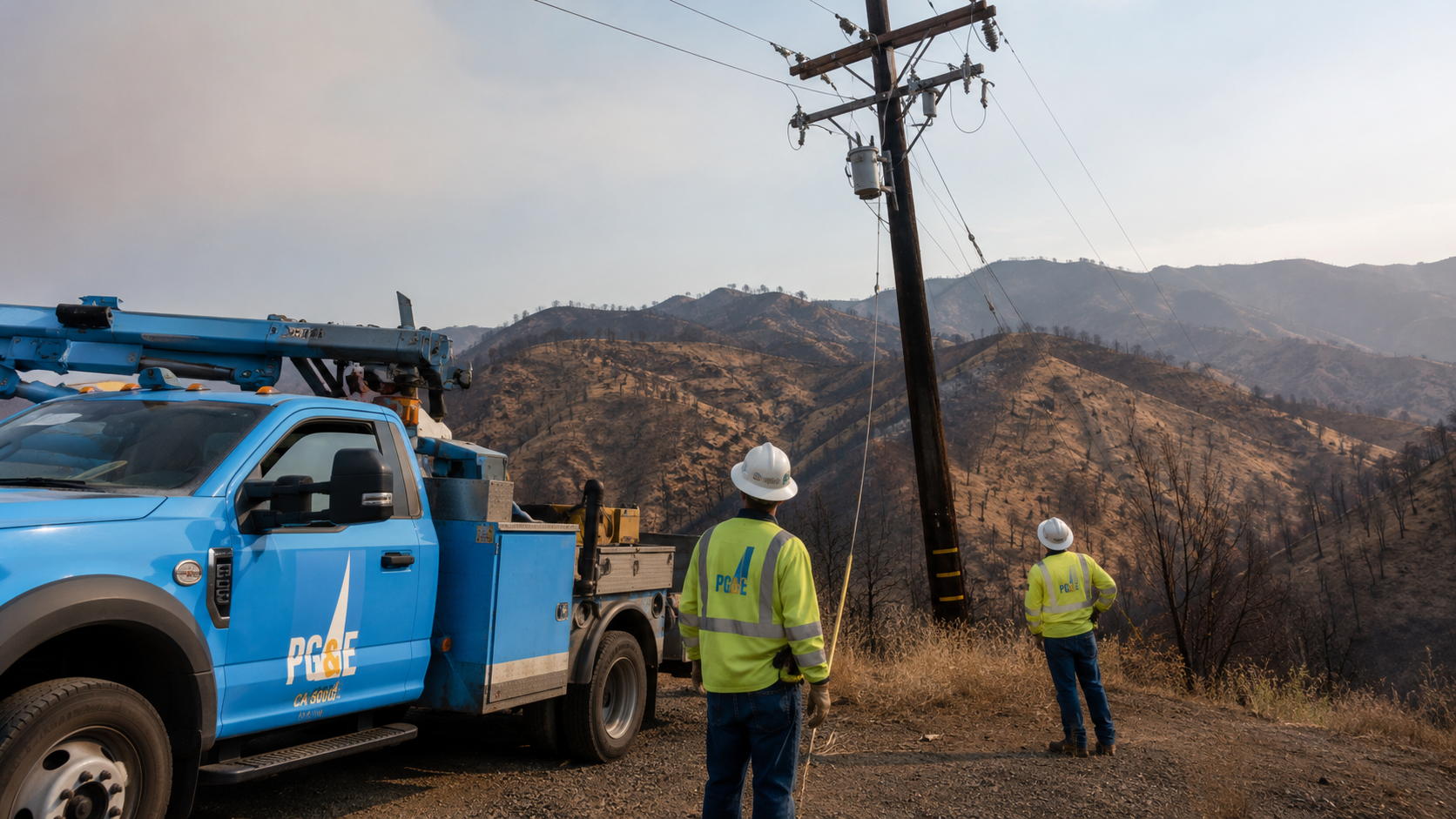
After a California wildfire-liability bill collapsed, PG&E is cutting $2 billion from next year's spending and reviewing how it is organized and financed, phrasing that carries real history for a utility that filed Chapter 11 in 2019.
California lawmakers failed to advance a bill that would have capped utilities' wildfire liability before their August 31 deadline, and PG&E's stock fell sharply the same day. Two days later, PG&E said it would defer roughly $2 billion of capital spending planned for 2027, cutting its stated capital plan to about $11.4 billion from about $13.4 billion, and that it was opening a review of "how the company is organized and financed." The company has not disclosed what businesses, assets or financing structures the review covers, or when it will conclude.
PG&E built extensive mechanisms after its 2019 bankruptcy, including securitized wildfire-recovery bonds and a state wildfire fund, specifically designed to insulate its balance sheet from exactly this kind of legislative setback. A capital deferral in response to a failed liability bill can read as that system working: a reversible, disciplined response rather than a distress signal.
It can also read differently. PG&E's 2019 Chapter 11 filing was triggered by wildfire liabilities, and "how the company is organized and financed" is unusually broad language for a business simply trimming next year's budget. The stock has fallen roughly 26% from its late-August level through the $13.33 close on September 2, a magnitude that suggests the market is pricing more than routine capital discipline.
Some of that decline isn't PG&E-specific. Utilities broadly underperformed the market on September 2 alongside a rise in Treasury yields that pressures the sector's valuations independent of any wildfire news, and peer Edison International fell 23% to 26% on the original bill-failure news two days earlier. Jefferies has argued the market may be overestimating Edison International's own wildfire-liability exposure, a view the firm has not extended to PG&E.
None of that resolves the question hanging over the stock: whether PG&E's own words describe careful balance-sheet management or the early stage of something more serious. The company hasn't said, and the review's scope and timeline remain undisclosed.